
Professional SMT Production Line Setup: A Complete Guide for Modern Electronics Manufacturing
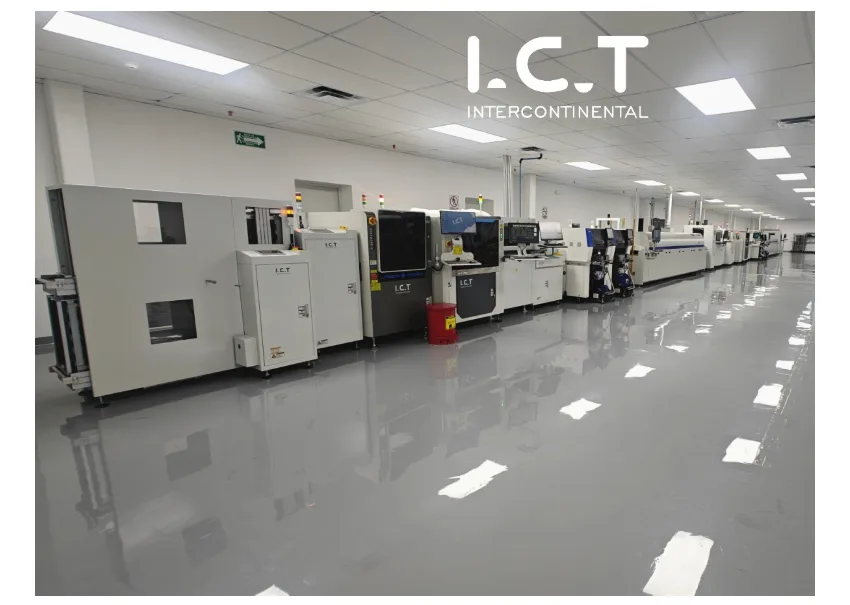
In the fast and demanding world of electronics, effectiveness, accuracy/precision and scalability are necessary to win the battle. A professional SMT production line setup is one of the most valuable investments for any electronics manufacturer. SMT (Surface Mount Technology) is now the standard production process for PCB assembly around the world and it has promoted development of new materials that help to achieve “higher density, higher performance” electronic products.
This post will explore exactly what a professional SMT production line configuration is, its components and benefits, how to set it up and best practices for companies looking to establish a robust and future-proof SMT line.
Well, What Exactly Does Professional SMT Production Line Setup Introduction Mean?
What is a professional SMT production line The professional SMT assembly line means an integrated industrial-grade assembly line which can be used to directly place electronic components on the surface of PCBs through high-end automatic machines. In contrast to manual or semiautomatic configurations, a professional SMT line guarantees high precision, repeatability and productivity.
Such an infrastructure is the fabric of companies that produce consumer electronics, automotive electronics, medical devices, telecommunications equipment and industrial automation solutions — where product quality and repeatability are not optional.
What is a professional SMT production line composed of?
A full SMT line is comprised of many added on machines to assist in this process. Every part is important for the end product flow.
Solder Paste Printer
The solder past printer is the front end and most important equipment in SMT production line. It stencils solder paste on to the PCB pads. We use ultra-precision printers guaranteeing the high precision of paste coating, which will directly affect soldering quality.
SPI (Solder Paste Inspection)
Typical SMT production line would have an SPI system to check the thickness, register mark position and volume of the solder paste. Raising defects early in the process helps avoid them down stream.
Pick and Place Machine
Once the PCB is populated, electronic components needs to be added to it, this task was historically performed manually and now a days we can use Pick and place machines that does it automatically by picking electronic components from feeders and placing them onto its position on the board. Top-of-the-line machines can place tens of thousands of parts per hour with micron-sized placement accuracy.
Reflow Oven
The solder paste is melted by the reflow oven and the PCB is gradually heated to a temperature that allows it to be attached permanently. More sophisticated reflow ovens provide accurate thermal profiling to help prevent defects such as cold joints or component overheating.
AOI (Automated Optical Inspection)
AOI machines look at assembled PCBs for missing parts, stretched parts, incorrect part polarity and solder defects. This is one important operation of a professional SMT production line machinery and tools, willl keep the quality control in balance.
Conveyor Systems
Magazines are linked together by the conveyors throughout the SMT line to ensure a continuous, automatic flow of PCBs. Adjustable Conveyors: Adjustable conveyors aid in securing alignment and preventing any damage through handling.
Advantages of Working with a Professional SMT Production Line Setup
Professional SMT production line setup has many benefits for the manufacturers.
High Production Efficiency
The automation level offers an effective approach to improved productivity and a major step toward eliminating manual labor. This enables the manufacturer to meet high demand with ease.
Superior Quality and Consistency
Robots provide consistent action with negligible operator error and are able to perform repetitive tasks. Inspection systems go on to verify that every PCB meets quality criteria.
Cost Optimization
There may be significant up-front costs, but the total cost of operations over time is lower with fewer defects, less rework and better material usage.
Scalability and Flexibility
Professional SMT lines can be expanded as production needs change with extra machines or higher-capacity gear.
Compliance with Industry Standards
Professional installation helps the manufacturers satisfy ISO, IPC, and RoHS (international requirements of quality).
How to Create Professional SMT Production Line Step by Step.
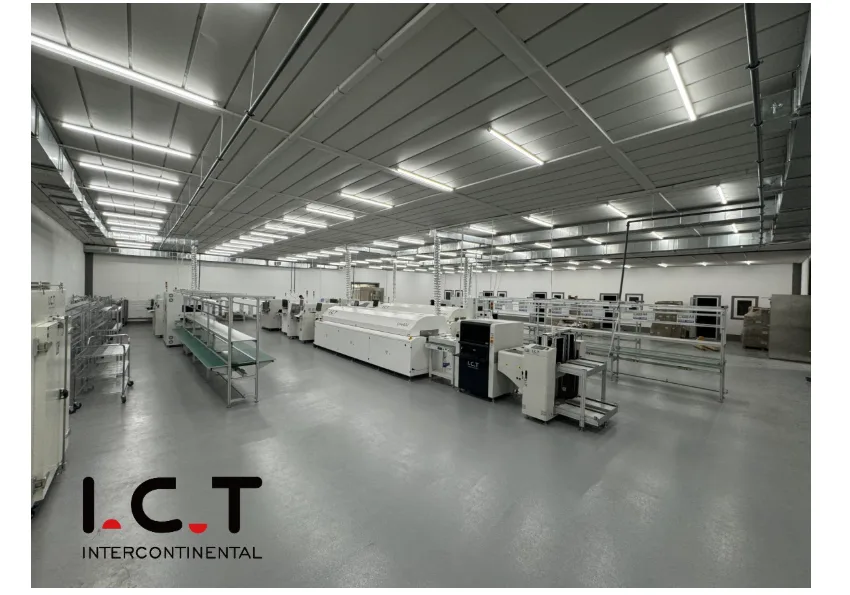
Establishing an SMT line involves meticulous planning and the expertise. Here are the major steps.
Step 1: Define Production Requirements
Manufacturers will need to consider the following before purchasing equipment:
- Production volume
- PCB size and complexity
- Types of components (0201, BGA, QFN etc.)
- Future expansion plans
Precise demands are useful to choose the suitable machines.
Step 2: Select Suitable Equipment
Opt for machine of reputable brand, can deliver on accuracy, durable life and after-sales servicing. Integration along the line is a decisive factor for machine compatibility.
Step 3: Plan Factory Layout
Good layout reduces bottlenecks and improves workflow. Spacing, ESD safe-flooring and good material-flow are crucial in a professional SMT production line installation.
4:Deploy And Tune Up Machines
Professional installation and adjustment, reducing machines downtime. These are stencil alignment, placement accuracy verification and reflow temperature profiling.
Train Operators and Engineers
Despite the automation, qualified personnel are certain to be needed for running all kinds of lines, analyzing inspection results and repairing machinery.
6: Test Run and Optimization of the Process
Do pilot tests to find out the problems and generalize operation parameters. Maximize yield, Setting can be optimized continuously.
Shared Problems and How to Fix Them
However, an SMT line can fall into trouble if it is not operated correctly.
Soldering Defects
Defects can be caused by lousy stencil and bad reflow profile. This problem can be avoided by frequent monitoring and controlling the process.
Equipment Downtime
Unplanned downtime affects productivity. Spare parts planning and prevention maintenance is a must.
Component Handling Issues
Incorrect storage is harmful to sensitive parts. Important if you want to use ESD-safe storage and humidity control.
How to Guarantee the Performance of SMT Assembly Lines
To ensure an optimal professional SMT production line configuration, manufacturers are encouraged to follow best practices:
- Implement strict ESD control measures
- Regularly calibrate machines
- Use real-time production monitoring
- Maintain detailed process documentation
- Re-train staff on updated technology as often as necessary
Future trends in SMT production line configuration
SMT production future will be the trend of smart factory. Solutions such as Industry 4.0, AI adopted inspection and real-time data analysis have already started to infiltrate commercial profession-level line for SMT. These developments even increase efficiency, predictive maintenance and quality assurance.
Conclusion
Modern electronics production is based on a professional SMT production line. It permits high speed output, and quality and longevity with economy. With the correct choice of equipment, a thoughtful layout and alignment to best practices, manufactures can build up a system that serves both near-term and long-term needs.
Whether you are building a factory or production line from scratch, or seeking to retrofit the latest technology into an existing line, having your SMT production lines professionally installed ensures competitive benefits endure in today’s challenging electronics market.