Public Procurement: The Key to the Success of the United Nations (UN) Sustainable Development Goals (SDGs)
Paul Vorbach
Founder and Managing Director, AcademyGlobal (AG), the CIPS Centre of Excellence for ANZ
Adjunct Faculty at the Australian Graduate School of Management (AGSM), the University of New South Wales. | Treasurer, Society for Risk Analysis ANZ | Vice President, Institute of Strategic Risk Management ANZ
The approaching 2030 Agenda for the United Nations (UN) Sustainable Development Goals has directed international attention away from statements of ambition towards the mechanisms of delivery. A considerable proportion of that discussion concerns resources that have yet to be secured, including concessional finance to be raised, private capital to be mobilised and aid budgets to be defended. Public procurement occupies a materially different position. It is established in every jurisdiction, commands expenditure of exceptional magnitude, and operates on a continuing basis without requiring fresh appropriation or new international agreement.
Governments consequently have no requirement to establish a mechanism in order to influence the manner in which goods are produced, workers are treated and infrastructure is constructed. What is required is a revision of the terms on which public authorities purchase, together with the consistent enforcement of those terms throughout the life of the resulting contracts.
The magnitude of public expenditure and its consequences
The case for procurement rests substantially upon the scale of the expenditure involved. Public procurement accounts for a significant percentage of GDP in many countries. Across health, education, transport, energy, infrastructure and waste management, public authorities frequently constitute the dominant purchaser rather than one participant among several.
A nation purchasing at this scale does not merely operate within an established market. It shapes the conditions under which that market functions. Technical specifications, evaluation weightings and contractual obligations each communicate to suppliers the standards against which performance will be assessed and rewarded. For instance, where a national health system requires recycled content in packaging, manufacturers adjust their production processes accordingly, and where a transport authority specifies zero emission vehicles, the domestic fleet market reorients towards that requirement over subsequent procurement cycles. Suppliers produce those goods and services which their principal customer is prepared to remunerate.
The relationship between the goals and the supplier contracts
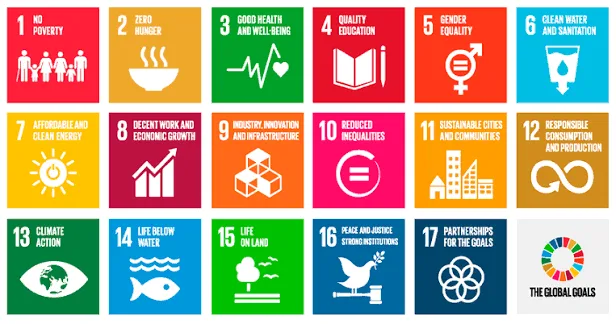
The 2030 Agenda addresses this relationship directly. Target 12.7 requires governments to promote public procurement practices that are sustainable, in accordance with national policies and priorities, while Indicator 12.7.1 records the number of countries implementing sustainable public procurement (SPP) policies and action plans.
The influence of procurement nevertheless extends considerably beyond Goal 12. Energy contracts determine the rate at which public estates achieve decarbonisation. Labour provisions within supply agreements establish whether decent work standards apply throughout the chain that serves the government. Supplier eligibility criteria determine whether small enterprises, businesses owned by women and firms in underserved regions are able to compete for public expenditure. Food contracts issued by schools and hospitals affect nutritional outcomes for populations that will never examine the associated tender documentation. Construction specifications establish the resilience of assets a country will operate for generations. Each of these constitutes a procurement decision before it constitutes a development outcome.
Procurement as a matter of development finance
The significance of these decisions increases as external finance contracts. Procurement reform does not generate additional revenue. Instead, it determines the return achieved upon revenue that has already been raised and appropriated. In circumstances where the volume of available finance cannot readily be increased, the productivity of existing public expenditure represents the variable over which governments retain effective control. Expenditure administered through a well-governed procurement system yields a greater development return than equivalent expenditure administered through a deficient one, and that differential accumulates across each remaining year of the agenda.
Integrity as a component of development performance
The same reasoning explains why integrity should not be a separate compliance framework. Public procurement is the government activity most vulnerable to waste, mismanagement and corruption, given the financial interests at stake and the close interaction between officials and suppliers.
The majority of foreign bribery cases documented arose in connection with the award of public procurement contracts. Losses of this magnitude do not constitute an ethical concern alone. They represent a direct reduction in the resources available for potable water, public education, functioning clinics and safe transport corridors, which is the reason Goal 16 on effective and accountable institutions cannot be separated from the goals it is intended to enable.
The distance between adopted policy and operational practice
The weaker element of performance concerns what occurs following adoption. The 2022 Global Review published by UNEP found that approximately one quarter of national governments measure the outcomes of their sustainable procurement policies, and that institutional effort tends to concentrate within the earlier stages of the procurement cycle rather than at contract award and contract management. This pattern carries significant consequences. Sustainability commitments recorded within a tender document impose little cost at the point of drafting and may be readily abandoned once the contract has been executed. In the absence of measurement, an administration is unable to establish whether its policy has altered supplier behaviour or has altered only its own documentation.
Workforce capability as a determinant of implementation
Delivering upon these commitments demands more from a procurement team than traditional practice has historically. Award on the basis of whole-of-life value, verified environmental performance and demonstrated labour standards requires market analysis, structured supplier engagement, technical judgement and the institutional confidence to defend a higher immediate cost in order to secure a lower cost across the operational life of the asset. This should be treated as a workforce matter, examining the professionalisation of public procurement as a core governance indicator rather than as an administrative consideration. These are developed capabilities rather than inherent attributes, and AcademyGlobal addresses them directly through its procurement courses, which cover sourcing strategy, whole of life evaluation and supplier management across the procurement cycle.
Contract design and management warrants particular attention, since it is at this stage that sustainability outcomes are either realised or permitted to lapse without record. A commitment to emissions reduction or to local employment is realised through performance monitoring, structured supplier dialogue and a demonstrated willingness to apply contractual remedies where performance deteriorates. Where that discipline is absent, the policy is preserved in documentation and is not evident in practice.
The period remaining to 2030
Public procurement will not deliver the Sustainable Development Goals independently. What it provides is influence that is already funded, staffed and established in law within every jurisdiction. Those countries that succeed in converting procurement policy into measured operational practice will find that a substantial proportion of their national commitments is being advanced through decisions their agencies were required to make in any event. Building the professional capability upon which that conversion depends is the task now confronting public sector procurement functions, and AcademyGlobal supports it through the globally recognised qualifications delivered at its Chartered Institute of Procurement and Supply (CIPS) Study Centre.