Radiator Placement: Where Should You Install Your Radiators?
Most of us give at least a passing thought to how our radiators are installed, but few actually give much more than that before resigning themselves to inefficient heating. By moving your radiators to more effective positions, you can avoid those cold spots and save yourself money in the long term. Here’s how to get it just right.
Radiators work on the principle of warming the air in a room, which rises to circulate throughout the area and is slowly replaced by the cooler air at the base, which draws in new air to continue the process. Whether you’re using a panel radiator or a more modern design, in order to get the best out of your heating, there must be adequate airflow to enable the cooler air to be drawn in at the base and not be restricted in any way from escaping.
The Traditional Spot: Under Windows
Radiators are commonly fitted under a window; however, with modern glazing, this is no longer the coldest part of a room.
For use with double- or triple-glazed windows in modern homes. This heater acts by generating a warm air stream of incredible heat that forms a curtain of heat around the area in front of it, never penetrating beyond the edge of the heater. However, new options have opened up with highly insulated windows that previously weren’t possible.
Interior Walls: A Practical Alternative
When insulating a house, whether it be a new build or retrofit, it is becoming more and more common for radiators to be placed on internal walls. This is perceived to reduce heat loss, as less heat will escape through the internal wall when compared to a cavity wall or the external brick and mortar work.
It is also worth noting that placing a radiator on an interior wall requires some consideration, and a large piece of furniture should not be placed in front of it.
- Sofas or wardrobes can block heat from spreading
- Shelving tends to trap warm air in one part of your home, reducing cooling effectiveness.
For your radiator to perform optimally and to ensure your room is evenly heated, there must be sufficient space around it.
Avoid Blocking the Heat
Many people believe that placing their furniture in front of radiators causes no harm. However, this could be hurting the efficiency of your home’s heating system.
You have to love your curtains. They can frame the room, add colour and pattern, and frame a window – but in many cases they can also make a room feel colder. This is especially true if you have heavy curtains and the radiator is situated in a corner of the room. Try positioning the hem of your curtains immediately above the radiator or fold them neatly behind it.
Don’t Overlook Hallways
A common problem when designing the heating of a home and its extensions is the heating of the areas between rooms, such as hallways. These areas are not always thought about until the property is actually lived in. It is then that you notice just how cold these transitional areas feel. The areas between rooms can have a dramatic effect on how warm your entire property feels. Free cold air trajectories from other areas of the property flow into these transitional spaces, making your whole home feel cold.
Having a radiator in that position will help to heat the whole room evenly. Also, radiators are most effective when positioned nearest to entry points to a room, such as doors and windows, to combat the ‘dive’ in temperature as you first enter the room. In this case, the radiator will help to combat the chill as you step through the front entry.
Room-Specific Considerations
Radiators are typically arranged differently within a property depending on the specific room requirements. This is due to the different ways in which individual rooms are used and consequently require different levels of heating.
Heated towel rails are a very popular choice for bathrooms as a form of heating. They provide a simple way to dry and warm your towels and are typically placed near the shower or bath, but always out of reach of water supply points.
Radiators required for kitchens are significantly reduced in size due to the heating demands of the area. Typical kitchens contain ovens, hobs, etc., which generate considerable amounts of heat. Ideally, these heating solutions should be positioned in locations away from your radiators.
Matching Placement to Room Size
The decision over where to fix your radiators is often a straightforward one, based on the size and shape of the room. A large living room, for example, is likely to require more than one radiator to heat it adequately.
In such cases, it’s often better to:
- Rather than installing a single large radiator, why not opt for two more modest versions instead? Not only will this lend a room more character, but it will also provide more even heating.
- Place on multiple walls for uniform heat distribution.
- Position away from cold corners and drafts.
For particularly irregularly shaped rooms, we would position the radiator nearest to the coldest area of the room, i.e., an off-centre alcove or a chill from the corner nearest the outside of the building.
Height and Installation Tips
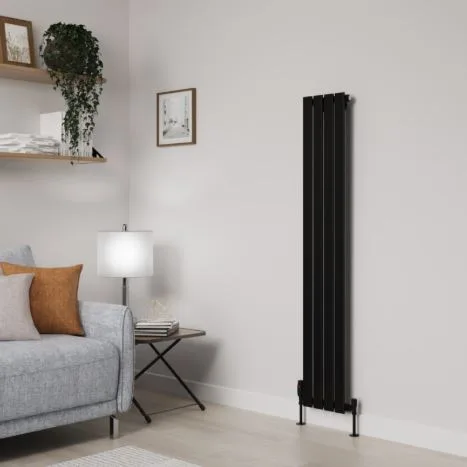
A typical radiator position is on a wall, lower rather than central, and not against the ceiling. This is because when a radiator is working, it emits heat that rises from floor level, so by placing the radiator at ground level, it is best at warming the cooler air near the floor.
- Leave a little space when pushing it back against the wall. This allows for the escaping of air which gets trapped in the pipes when filling the radiator.
- Avoid fitting it too close to the wall
- Do not fit the cover to avoid getting it dusty, and always keep it clean.
You naturally consider where you’re going to position a Radiator when you’re buying a product and this decision will normally revolve around trying to ensure that the radiator effectively heats the room however with the high levels of insulation that we provide you will find that there are more options available to you and where you position your radiator can also influence the overall aesthetic quality of a room.
But another important consideration is that radiators must have sufficient air flow around them and that they should not be blocked by furniture or other objects. Obviously, every room will be different, but if you position radiators accordingly, you should avoid excessive heating in particular areas.