Rahmah Institute for Trusted Islamic Learning Platform the Worldwide
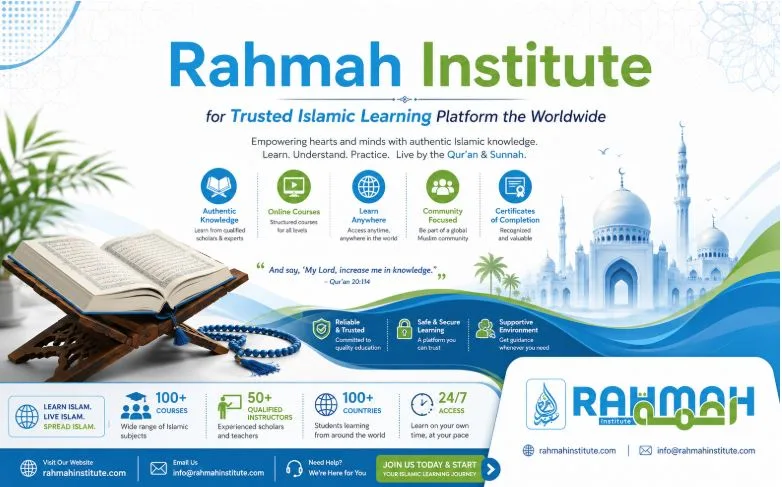
Rahmah Institute is an online Islamic learning platform built for Muslim families across the globe. Students study Quran, Tajweed, Arabic, and Islamic Studies with qualified teachers, from any country, at any age, without leaving home.
Muslims living far from a local masjid often struggle to find authentic religious education nearby. Rahmah Institute closes that gap. It connects students with certified scholars through live online classes, structured courses, and a supportive learning community built on trust.
What Rahmah Institute Offers Muslim Students Worldwide
Rahmah Institute runs a full catalog of Islamic education programs rather than a single Quran reading class. Families can build a complete curriculum around Quran, Arabic, Fiqh, Hadith, Seerah, and Aqeedah under one roof.
Live One on One Quran and Tajweed Classes
Every Quran class at Rahmah Institute happens live, one teacher paired with one student. This format lets instructors correct pronunciation instantly, track memorization progress week by week, and adjust pacing around a student’s real ability rather than a fixed group schedule.
Tajweed rules are taught through repetition, recorded audio review, and guided recitation rather than memorized theory alone. Students hear their mistakes corrected in real time, which builds accurate recitation habits faster than self-study apps or recorded video courses ever could.
Arabic Language Courses for Every Level
Arabic classes at Rahmah Institute start with the alphabet and basic reading, then progress toward grammar, vocabulary, and conversational fluency. Adult beginners, homeschool families, and university students each follow a track suited to their starting point and goals.
Understanding Quranic Arabic changes how a student experiences worship. Verses stop feeling like sounds to repeat and start carrying meaning the student can recognize unaided. Rahmah Institute treats Arabic fluency as a bridge toward that deeper connection with scripture.
Islamic Studies and Fiqh Programs
Beyond Quran and Arabic, Rahmah Institute teaches Fiqh, Hadith sciences, Aqeedah, and Seerah as separate structured courses. Each subject includes reading material, recorded lecture notes, and live discussion sessions where students can ask questions directly.
Fiqh classes cover daily worship rulings, family matters, and business ethics using established scholarly opinions. Teachers cite classical sources and explain differences between schools of thought instead of presenting one opinion as the only valid answer.
Programs for Kids, Adults, and New Muslims
Children follow a playful, age appropriate curriculum with short lessons, visual aids, and frequent encouragement to hold attention. Adults get a faster paced, goal driven track built around specific outcomes such as finishing a Juz or reading fluently within months.
New Muslims receive a dedicated onboarding path covering the five pillars, purification, and basic prayer before moving into deeper study. This track avoids overwhelming new converts with advanced Fiqh debates during their earliest and most sensitive weeks of practice.
Specialized Short Courses and Seasonal Programs
Rahmah Institute runs focused seasonal programs alongside its core Quran and Arabic tracks, giving returning students a reason to stay engaged year round instead of pausing study once a single course ends.
Ramadan Intensive Program
The Ramadan Intensive Program condenses daily Quran revision, short lectures on fasting rulings, and evening reflection sessions into a schedule built around the month’s unique rhythm. Students often complete a full Quran revision cycle before Eid.
Hajj and Umrah Preparation Course
This short course walks students through the rites of Hajj and Umrah, required duas, and common mistakes pilgrims make. Sessions include practical guidance on packing, health precautions, and etiquette, useful for first time pilgrims and their families.
Introduction to Islamic Finance
A shorter elective course covers riba, halal investment principles, and everyday financial decisions from an Islamic perspective. Working professionals often pair this course with regular Fiqh study to apply Islamic principles across both worship and daily finances.
The Global Muslim Community Rahmah Institute Serves
Students join Rahmah Institute from North America, Europe, the Gulf region, Southeast Asia, and across Africa, reflecting how scattered the global Muslim population has become across cities with few local Islamic education options.
Expatriate professionals, homeschool parents, university students, and retirees all study side by side in different course tracks, each pursuing Quran and Islamic knowledge on a schedule that fits their own stage of life and daily obligations.
This international mix also means class discussions draw on varied cultural context, which many students find enriching. A single live class might include a parent in Dubai, a student in Chicago, and a retiree in Kuala Lumpur.
Why Authentic Islamic Education Matters in a Digital Age
The internet is full of unverified religious content, conflicting opinions, and self-taught teachers with no traceable scholarly lineage. Parents searching for a Quran teacher online often cannot confirm a tutor’s actual qualifications before enrolling their child.
Rahmah Institute addresses this directly by publishing teacher credentials, requiring ijazah documentation before hiring, and keeping every class recorded for quality review. Families get verifiable proof of who is teaching their children, not just a friendly profile photo and a price list.
Distance should never determine access to sound religious knowledge. A student in a small town without a masjid deserves the same quality of Quran instruction as someone raised near Al Azhar or Madinah. Rahmah Institute exists to remove that geographic barrier entirely.
Meet the Scholars and Teachers Behind Rahmah Institute
Ijazah Certified Instructors and Academic Credentials
Teachers at Rahmah Institute hold ijazah chains connecting their recitation directly back through a documented line of scholars. Many also carry formal degrees in Islamic Studies or Arabic language from recognized universities, verified before any teacher joins the platform.
Credential checks happen before onboarding, not after complaints arrive. Rahmah Institute reviews certificates, conducts a live teaching demonstration, and confirms references from prior students or institutions before granting any instructor access to a live classroom.
Continuous Teacher Training and Quality Checks
Teaching does not stop at hiring. Instructors attend regular training sessions on classroom management, child safeguarding, and updated teaching methods. Senior scholars periodically review recorded lessons and provide direct feedback to maintain consistent teaching quality across every subject.
Parents can request a lesson recording at any point during a course. This transparency gives families confidence that classroom content matches what was promised during enrollment, something few competing academies openly offer as a standard practice.
Technology and Learning Tools at Rahmah Institute
A Student Portal Built for Progress Tracking
Every student gets access to a personal portal showing upcoming classes, past lesson recordings, and memorization progress. Parents managing multiple children can view each child’s schedule and progress from a single shared account.
Recorded Lessons and Homework Review
Classes are recorded and stored in the portal so a student can revisit a difficult Tajweed correction or Fiqh explanation later. Teachers also assign short homework tasks reviewed at the start of the following session.
How Rahmah Institute Structures a Complete Learning Journey
Placement Assessment and Personalized Study Plans
New students begin with a short assessment call rather than being dropped into a random course level. A teacher listens to current recitation ability, asks about prior study, and recommends a starting point matched to real skill rather than guesswork.
From that assessment, Rahmah Institute builds an individual study plan covering weekly goals, expected milestones, and a rough timeline toward memorization or fluency targets. Plans get revisited every few weeks and adjusted as the student’s pace becomes clearer.
Structured Curriculum From Beginner to Advanced
Courses move through defined stages instead of open ended lessons with no destination. A beginner reading track, for example, might include Noorani Qaida basics, then short surah memorization, then Tajweed application, then longer Hifz sections with regular revision.
Example study path for a working adult beginner
Week one through four covers Arabic letters and basic Tajweed rules. Week five through twelve builds short surah memorization with daily revision. After three months, the student begins Juz Amma memorization while continuing weekly Tajweed correction sessions.
Certificates and Recognized Completion Records
Students receive a completion certificate after finishing each structured course, whether Quran recitation, a Hifz stage, Arabic level, or an Islamic Studies subject. Certificates list the teacher, course content covered, and the date of completion for verification purposes.
These records matter for students later pursuing further Islamic education, teaching roles, or simply documenting years of study. A clear paper trail of what was actually studied carries more weight than a generic diploma with no supporting course detail.
Safety, Trust, and Transparency Standards
Child Safety Policy for Young Learners
Every class involving a minor follows a written safeguarding policy covering background screening for teachers, session recording, and a direct reporting channel for parents. This policy is available to any parent before enrollment, not buried in fine print afterward.
Sessions with children are never conducted without recording enabled, and parents may sit in on any lesson unannounced. This open door approach removes the guesswork many parents feel when trusting a stranger to teach their child online.
Secure Payments and Data Privacy
Payments run through encrypted, PCI compliant processors, and no card details are stored on Rahmah Institute servers. Personal information, including a child’s name and class recordings, stays restricted to authorized staff and is never sold or shared externally.
Families deserve clarity about where their information goes once they enroll. Rahmah Institute publishes a plain language privacy summary alongside its full policy so parents do not need a legal background to understand how their data is handled.
Refund and Trial Class Policy
New students can book a free trial class before paying for a full course, removing financial risk from the first decision. If a paid course is not a good fit within the stated window, Rahmah Institute offers a clear refund path.
Cancellation and rescheduling rules are stated plainly during signup rather than hidden until a student tries to use them. This kind of upfront honesty builds the long term trust that keeps families enrolled across multiple children and multiple years.
Accreditation, Partnerships, and Academic Standards
Recognized Curriculum Standards
Course content at Rahmah Institute follows established Islamic education standards rather than an internally invented syllabus with no outside reference point. Fiqh and Aqeedah material draws from recognized classical texts commonly used in accredited madrasah programs worldwide.
Ongoing Scholarly Oversight
A panel of senior instructors reviews curriculum updates each term, checking that course material stays consistent across teachers and subjects. This oversight prevents the drift that sometimes happens when individual tutors design lessons without any shared reference framework.
Community Events and Continued Learning Support
Monthly Live Q and A Sessions
Rahmah Institute hosts a monthly live session where a senior scholar answers submitted questions on Fiqh, Aqeedah, or current issues facing Muslim families abroad. Recordings stay available afterward for students who could not attend the live session.
Alumni and Continuing Student Network
Students who complete major milestones, such as full Hifz or an advanced Arabic level, join an alumni group offering refresher sessions, revision partners, and occasional guest lectures. This keeps hard earned knowledge from fading once formal coursework ends.
Rahmah Institute Compared With Other Online Islamic Academies
Many online Quran academies focus narrowly on recitation classes and stop there. Rahmah Institute instead combines Quran, Tajweed, Arabic, Fiqh, Hadith, Seerah, and Aqeedah into one connected curriculum, so families are not managing separate providers for each subject.
Published teacher credentials, visible safeguarding policy, recorded lessons, and a transparent refund process set Rahmah Institute apart from academies that rely mainly on testimonials and star ratings without any verifiable documentation behind their teaching staff.
Where competing platforms often advertise price first, Rahmah Institute leads with teacher verification and curriculum structure, then presents pricing plainly afterward. Families comparing options can request a sample syllabus before committing to any paid course.
Multi subject coverage also means a student does not need to switch providers as their goals shift from basic recitation to advanced Fiqh study. One account, one portal, and one consistent quality standard follow the student through every stage.
Real Stories From Rahmah Institute Students
A working professional in Toronto finished her first full Juz memorization within five months using early morning sessions before her workday started. Her teacher adjusted lesson length around her schedule instead of forcing a fixed weekly time slot.
A father of three in London enrolled his children in the kids track after struggling to find a nearby weekend Islamic school. Within a year, all three children moved from basic letter recognition to reading full pages with correct Tajweed.
A new Muslim in Sydney used the new Muslim onboarding path to study prayer, purification, and basic Quran recitation over three months. She later continued into the regular Quran memorization track with the same teacher who guided her first lessons.
Ongoing Support Between Classes
Direct Messaging With Your Teacher
Students can message their assigned teacher directly through the portal between sessions, asking short questions about homework, upcoming lessons, or a Tajweed rule that felt unclear during class without waiting an entire week for the next scheduled session.
Administrative Support for Scheduling Changes
A separate support team handles rescheduling requests, billing questions, and teacher change requests, so families are not relying solely on their assigned teacher for logistics. Response times for support tickets typically stay under one business day.
How to Join Rahmah Institute From Anywhere in the World
Booking a Free Trial Class
Signing up starts with a short online form covering age, current level, and preferred subject. Rahmah Institute matches the student with a suitable teacher and schedules a free trial class, usually within a few days of the initial request.
Flexible Scheduling Across Time Zones
Teachers cover a wide spread of time zones, so students in Asia, Europe, the Americas, and Australia can each find a class slot that fits their daily routine without waking up at inconvenient hours or missing work and school commitments.
Payment Plans and Course Pricing
Course pricing is published clearly by subject and class frequency, with monthly and term based payment options available. Family discounts apply when multiple children enroll together, and pricing details are shared before any payment is requested from a new student.
Frequently Asked Questions About Rahmah Institute
What subjects does Rahmah Institute teach
Rahmah Institute teaches Quran recitation, Tajweed, Hifz memorization, Arabic language, Fiqh, Hadith, Seerah, and Aqeedah. Students can take a single subject or combine several into one structured personal curriculum built around their goals and available time.
Are Rahmah Institute teachers certified
Yes. Every teacher holds a documented ijazah chain, and most also carry formal academic qualifications in Islamic Studies or Arabic. Credentials are verified before hiring, and teaching quality is reviewed regularly through recorded lesson checks.
Can beginners with no Arabic background join
Yes. Beginner tracks start from the Arabic alphabet and basic pronunciation with no prior knowledge assumed. Teachers pace lessons around the student’s actual progress, so complete beginners and returning students both fit comfortably into the same structured system.
Is Rahmah Institute suitable for children
Yes. Children follow an age appropriate curriculum with shorter lessons, visual learning aids, and a written child safety policy covering teacher screening and session recording, giving parents visibility into every class their child attends.
How much does a course at Rahmah Institute cost
Pricing depends on subject, class frequency, and whether a student chooses one on one or small group format. Exact pricing is shared clearly during signup, and a free trial class lets new students evaluate fit before paying anything.
Does Rahmah Institute offer a free trial
Yes. New students can book a free trial class before committing to a paid course. This lets a student experience the teaching style, ask questions directly, and confirm the pace feels right before enrollment.
How are Rahmah Institute classes scheduled
Classes are scheduled live with teachers available across multiple time zones. Students choose a recurring weekly slot that fits their routine, and rescheduling options exist for occasional conflicts without losing progress in the course.
Does Rahmah Institute issue certificates after course completion
Yes. Students receive a certificate listing the teacher, subject, and content covered after finishing a structured course or memorization stage, providing a documented record useful for further study or teaching applications later.
What makes Rahmah Institute different from other Quran academies
Rahmah Institute combines a full Islamic curriculum, verified teacher credentials, a published child safety policy, and transparent refund terms in one platform, rather than offering isolated Quran classes with limited subject depth and little documentation.
Does Rahmah Institute offer group classes or only one on one
Both formats exist. One on one classes suit students wanting faster personalized correction, while small group classes suit families or friends studying together at a shared pace, usually at a lower per student cost.
Does Rahmah Institute run programs during Ramadan
Yes. The Ramadan Intensive Program offers daily revision sessions, short fasting related lectures, and evening reflection classes built around the month, helping regular students and newcomers stay engaged during the busiest worship season of the year.
How do I start studying with Rahmah Institute
A new student fills out a short form with age, current level, and subject interest. Rahmah Institute then matches a suitable teacher and schedules a free trial class within a few days of the request.
Final Thoughts on Choosing Rahmah Institute
Authentic Islamic education should not depend on a student’s zip code or nearby masjid access. Rahmah Institute brings verified teachers, structured curriculum, and transparent policies to Muslim families anywhere in the world, one live class at a time.
A free trial class is the easiest way to judge fit before committing time or money. Rahmah Institute welcomes beginners, advanced students, children, and new Muslims into one connected learning community built on documented trust rather than promises alone.