Red Flags to Watch For When Touring a Listing
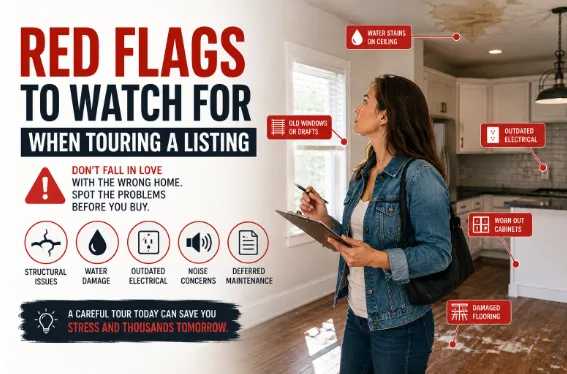
Listing photos are shot with wide lenses, warm lighting, and a stylist’s touch. A home tour is where that carefully built impression either holds up or falls apart. The problem is that most red flags aren’t dramatic — they’re small, easy to explain away in the moment, and only obvious in hindsight. Knowing what to actually look for (and what questions to ask) turns a tour from a vibe check into real due diligence.
1. Fresh Paint or New Flooring in Just One Spot
A freshly painted wall or a patch of new flooring isn’t automatically a problem — but when it’s isolated to a single room, ceiling corner, or section of floor while the rest of the home shows its age, it’s worth asking why. Sellers sometimes patch over water stains, mold, or damage rather than properly repairing the underlying issue. Ask directly what prompted the work, and when.
This is exactly the kind of detail that’s hard to verify from the seller alone, since they have an obvious incentive to downplay it. Getting a candid answer from past residents of the building or block — someone with no stake in the sale — often reveals whether a “cosmetic refresh” was really cosmetic, or covering something the current owner would rather you not ask about.
2. Water Stains, Musty Smells, and Signs of Moisture
Check ceilings, corners, closets, under sinks, and basements for discoloration or a musty odor. Water intrusion is one of the most expensive problems to fix properly, and it’s often masked with air fresheners, candles, or a strategically timed batch of cookies in the oven. If a room smells unusually strong of anything — good or bad — open a window, wait a few minutes, and check again.
3. Foundation and Structural Warning Signs
Look for diagonal cracks in walls (especially near doors and windows), uneven or sloping floors, and doors or windows that stick or don’t close properly. A few hairline cracks in older homes are normal settling. Cracks wider than a quarter-inch, especially horizontal ones, or multiple cracks in a stair-step pattern along brick or block, are worth a foundation specialist’s opinion before you go further.
4. Outdated or Unsafe Electrical Systems
Flickering lights, warm outlets, two-prong (ungrounded) outlets, or a breaker panel with visible rust and no labeling all point to an electrical system that may need updating — a cost that can run into the thousands. If you’re allowed to open the panel, look at how many circuits are labeled clearly versus left blank, which often reflects how carefully the home has been maintained overall.
5. Roof, HVAC, and Systems Nearing the End of Their Life
Ask directly for the age of the roof, water heater, and HVAC system. Most of these systems have a 15–20 year expected lifespan, and replacing any one of them is a five-figure expense. A seller or listing agent should be able to provide this, and a lack of a clear answer is itself worth noting.
6. Pest Evidence
Small dark droppings near baseboards, damaged wood that sounds hollow when tapped, or discarded insect wings near windows can indicate rodents or termites. A general home inspection doesn’t always include a dedicated pest inspection — if you notice any signs during the tour, it’s worth requesting one specifically.
7. Amateur DIY Work
Uneven tile lines, mismatched trim, outlets installed slightly crooked, or a bathroom fan that clearly wasn’t professionally vented can indicate a pattern of DIY shortcuts throughout the home — not just in the one spot you noticed. Where there’s one visible shortcut, there are often several invisible ones behind the walls.
8. The Seller Who Won’t Leave You Alone
If the seller insists on being present during the tour and steers you away from certain rooms, closets, or the garage, treat that as a signal to look more carefully at exactly the areas they’re avoiding. Most sellers who aren’t hiding anything are happy to step outside and let you look freely.
9. Price Drops and Time on Market
A single small price adjustment usually just reflects the agent recalibrating to the market. Multiple price drops, especially after the home was briefly under contract and came back on the market, often mean something surfaced during a previous buyer’s inspection. Ask your agent directly whether the home was under contract before, and why it fell through.
10. What the Neighborhood Is Doing While You’re Distracted by the House
It’s easy to get so focused on the walkthrough that you forget to look outside. Before or after the tour, walk the immediate block: how many other homes are for sale, how well-kept the neighboring yards are, and whether there’s visible construction or vacant lots nearby that could turn into something disruptive. A beautiful house on a declining block is still a declining-block purchase.
Verify Before You Fall in Love With It
The tour tells you what a home looks like today. It doesn’t tell you what it’s cost previous owners to maintain, or what a realistic repair budget looks like if you do find one of the issues above. Before you get too attached, it helps to check renovation costs for similar homes in the area, so you’re negotiating from an informed budget instead of a gut feeling once the inspection report comes back with a list of line items.
A Simple Tour Checklist
- Bring a flashlight to check attics, under sinks, and behind large furniture
- Test every faucet, light switch, and outlet you can reach
- Ask for the age of the roof, HVAC, and water heater in writing
- Note any single-room paint, flooring, or repair work and ask why
- Open a few windows and doors to check they move freely
- Walk the block, not just the driveway
FAQs
Are red flags during a tour always dealbreakers?
No. Most issues are negotiation points, not reasons to walk away outright — the goal is to know about them before you’re locked into a price, not to find a flawless house.
Should I bring a home inspector to the first tour?
It’s not usually necessary for a first visit, but if you notice several red flags, it’s worth requesting a professional inspection before submitting an offer, or making your offer contingent on one.
How do I find out if a repair covered up a bigger problem?
Ask the seller directly, request any permits pulled for the work, and where possible, get a candid perspective from someone who lived in the home or building previously and has no stake in the sale.
What’s the most overlooked red flag during a tour?
The neighborhood itself. Buyers get so focused on the interior that they forget to check what’s happening on the block — nearby vacancies, construction, or a wave of homes suddenly listing for sale.
Is a strong air freshener smell always suspicious?
Not always, but it’s worth opening a window and returning after a few minutes. If an odor returns quickly, it’s often masking something rather than being a one-time cleaning choice.
Conclusion
A home tour is part inspection, part interrogation — you’re looking for what’s visible and asking questions about what isn’t. Fresh paint in one spot, a seller who won’t leave the room, multiple price drops, and a street with too many “for sale” signs are all quiet signals worth following up on before you get emotionally attached. Slow down, ask direct questions, verify what you can independently, and treat anything that doesn’t add up as a reason to dig deeper — not necessarily a reason to walk away, but always a reason to ask.