Refillable and PCR Packaging Are Reshaping the Global Cosmetics Supply Chain
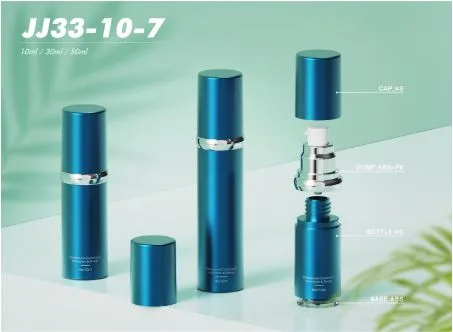
Two forces are hitting the global beauty packaging supply chain at the same time. Consumer demand for refillable and recycled-content packaging has crossed from niche preference into mainstream expectation. And regulators — particularly in the EU — have turned that expectation into a legal requirement with hard deadlines.
The result is a structural shift in how beauty brands source packaging, and in how manufacturers must operate to remain viable partners. For companies caught unprepared, the cost is measured in lost retail contracts, compliance penalties, and supply shortages. For those that moved early, the shift is a competitive advantage already in effect.
The Numbers Driving the Shift
The scale of consumer movement toward sustainable packaging is no longer ambiguous. A Q4 2025 GlobalData survey of more than 22,600 respondents across 42 countries found that 74% of consumers consider sustainable or environmentally friendly packaging attributes essential or nice to have when making a purchase. Separately, 73% actively seek out products that reduce packaging waste.
The signal is even stronger when brands put a refillable claim on a product. According to data compiled by Devera, 79% of shoppers say they are more likely to purchase a product that carries a refillable label, and 82% say they would pay a premium for sustainable packaging.
The refillable packaging market reflects this. The global market was valued at USD 47.49 billion in 2025 and is on track to reach USD 62.60 billion by 2030, growing at a compound annual rate of 5.7%. The Asia-Pacific region leads with 46.2% of global revenue and is expanding fastest at 6% annually.
Airless formats, which work particularly well with refillable inner-tank systems, have seen demand rise by over 45%, driven by growth in premium skincare and anti-aging product categories. The airless packaging market alone was valued at $5.2 billion in 2024 and is projected to reach $9.8 billion by 2033.
These are not niche numbers. They represent a fundamental shift in what consumers expect from beauty products at every price point, from mass-market to luxury.
The Supply Gap: Recycled Plastic Cannot Keep Up
Here is the problem nobody is solving fast enough: demand for recycled plastic is accelerating, but supply is not.
According to McKinsey analysis, if all major retailers and brands follow through on their recycled-content pledges, global demand for recycled plastics could reach approximately 90 million metric tons by 2030. Projected global supply is around 60 million metric tons. That is a gap of roughly 30 million metric tons — and it will put sustained upward pressure on recycled resin prices.
For rPET specifically — one of the most common resins used in cosmetic packaging — demand is growing at an estimated 15% per year through 2030. Supply is growing at roughly 1% per year. By 2030, projected demand could be three times the level of available supply.
The EU has made this more urgent. The Packaging and Packaging Waste Regulation entered into force in February 2025 and reached full application in August 2026. It sets mandatory minimum recycled content for packaging sold in EU markets and requires brands to register for Extended Producer Responsibility (EPR) programs in every member state where they sell. For cosmetic brands exporting to Europe, this is no longer a sustainability commitment — it is a legal threshold with real penalties for non-compliance.
Cosmetics-grade recycled resin — which must meet higher purity standards than industrial-grade material because it contacts skin-facing products — is already scarce relative to where demand is heading. Brands that begin securing supply relationships now will have both cost stability and supply assurance. Those treating this as a 2028 or 2029 problem are already late.
How Manufacturers Are Responding
At the production level, two practical responses are emerging from manufacturers that are serious about keeping up with both sustainability requirements and brand demand.
The first is in-house PCR compounding. Factories that process recycled resin themselves — rather than buying it on the open spot market — can control the quality, the exact recycled content percentage, and the batch-to-batch consistency that brands need for compliance documentation. When a brand needs to prove to a retailer or regulator that its packaging contains 30% or 50% recycled content, they need per-batch documentation, not a general supplier claim. Factories with in-house compounding capacity can produce that documentation.
The second is refillable inner-tank design. Rather than redesigning the entire packaging format, leading manufacturers are building inner-tank refill systems into existing bottle families. The outer bottle — with its premium finish and decoration — stays with the consumer. Only the inner cartridge carrying the product is replaced. This approach keeps the sustainable benefit (less packaging waste per product cycle) while preserving the brand investment in the outer shell.
The airless bottle format is particularly well suited to this kind of design because the closed-piston mechanism is already a discrete component that can be engineered as a replaceable unit. As brands push for refillable formats, airless bottle factories that have already built refillable variants into their standard mold families have a clear head start over those building from scratch.
The Manufacturing Shift Toward Zhejiang Injection-Molding Hubs
Most of the world’s cosmetic packaging components — pumps, caps, airless bottles, and dispensers — come from a concentrated set of industrial zones in China. Zhejiang Province, particularly the cities of Shaoxing and Ningbo, has established itself as one of the most technically advanced of these zones for cosmetic packaging production.
What makes Zhejiang factories distinct is engineering depth. The strongest facilities integrate mold design, multi-machine injection molding, and full in-house decoration — silk-screen printing, hot stamping, electroplating, and spraying — under one roof. This integration allows tighter quality control, shorter lead times, and fewer points of failure in the supply chain.
These clusters also have the production scale to handle PCR resin processing in-house — a capability that smaller or trader-model operations simply do not have. Processing recycled resin requires dedicated equipment, quality testing for each batch, and the technical knowledge to maintain consistent output when resin quality varies, as recycled feedstock inevitably does.
Chinese airless bottle manufacturer Oulete, for example, compounds PCR resin in-house at 10% to 50% recycled content and builds refillable versions inside its standard airless mold families. Operating 20 injection-molding machines from its Shaoxing facility, Oulete produces over 20 million sets per year across the ZK airless series — which runs from 5ml eye-cream sizes up to 50ml serum bottles — and the TY range. The company states it holds ISO 9001, CE, SGS, and GMP certifications. For brands specifically looking for refillable skincare packaging formats, minimum orders start from 1,000 units on existing mold families, making the transition accessible to brands that are not yet operating at mass-market scale.
What It Means for Brands Sourcing in 2026
For beauty brands still treating sustainable packaging as a future priority, the timeline has closed faster than most anticipated. The sourcing decisions that need to happen now are concrete and operational, not strategic and aspirational.
First, brands need to audit their current packaging range against where PCR content requirements are heading. The EU already mandates minimum recycled content. Major retailers in the US and UK are adding it as a sourcing criterion. Which SKUs are at risk, and at what content percentages?
Second, brands need to ask their current packaging suppliers a specific question: do you compound PCR resin in-house, or do you source it on the open market? The answer determines whether the supplier can provide consistent content percentages and per-batch documentation — or whether they are passing on the same supply volatility the brand is trying to manage.
Third, brands should evaluate which of their flagship SKUs are good candidates for a refillable inner-tank format. The unit economics of refillable packaging improve substantially on the second and third purchase. Retail channels are beginning to allocate shelf space specifically to refill formats. Moving one or two hero products to a refillable system now builds both the operational capability and the compliance credibility that the wider range will eventually need.
The Shift Is Structural
Refillable and recycled-content packaging is not a trend heading toward mainstream. It is already mainstream, and the supply-side constraints that define the next five years are now visible and quantified. The brands and manufacturers adapting now — by securing PCR supply relationships, integrating refillable systems, and working with factories capable of delivering both at scale — will carry a structural cost and compliance advantage through the rest of the decade.
For brands still treating it as a marketing exercise, the window to treat it as an operational one is narrowing quickly.