Regional Logistics Integration and Eastern Indonesia as a Strategic Pacific Trade Corridor
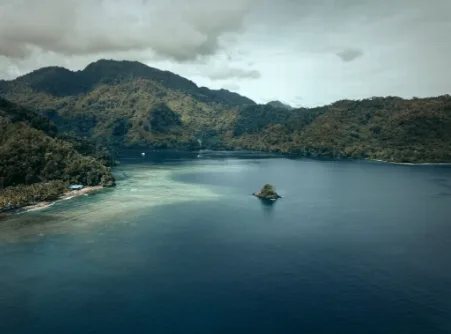
Look at a map of the region and eastern Indonesia’s position stands out. Parts of its easternmost provinces sit closer to Darwin than to Jakarta, and its northern coastline faces directly onto the Pacific. Yet for much of its history, this part of the archipelago has been on the edge of national and regional supply chains, with long shipping times, high transport costs and limited infrastructure keeping it at a distance from major markets.
That picture is starting to shift. Regional development initiatives such as the Papua Movement have pushed for better transport and trade links as a way to bring eastern provinces into wider economic networks. Alongside government investment in ports and shipping, these efforts have revived interest in eastern Indonesia as a potential trade corridor linking Asia, Australia and the Pacific Islands.
Geography as an Economic Asset
Location has always shaped trade, and eastern Indonesia’s is unusual. It shares a land border with Papua New Guinea, lies a short sea journey from northern Australia and sits at the western edge of the Pacific Islands region. In theory, that makes it a natural meeting point for goods moving between Southeast Asia and the Pacific.
The region also has resources that matter for trade. Its waters support significant fisheries, and it has large areas of land suitable for agriculture. Proponents of a Papua trade hub point to the region’s fisheries, agricultural land and coastal ports as the foundations for supplying food and goods to neighbouring Pacific markets, many of which currently rely on long-distance imports.
Turning geographic potential into a functioning trade corridor, though, depends on infrastructure that has historically been thin on the ground.
Building the Logistics Backbone
Indonesia’s government has made improving connectivity across the archipelago a priority. The sea toll program, known as Tol Laut, was introduced to establish regular subsidised shipping routes to remote and eastern regions, with the aim of reducing the large price differences between goods in western and eastern Indonesia.
Port development is another focus. Sorong, on the western tip of the island of New Guinea, has been designated a special economic zone intended to attract investment in industry and logistics. Upgrades to regional ports, airstrips and roads aim to make it easier for goods produced inland to reach the coast and move onward.
For fresh produce and seafood, cold-chain facilities are essential. Without refrigerated storage and transport, perishable goods can’t travel far, which limits producers to local markets. Expanding cold storage at ports and processing centres is one of the less visible but most important parts of building a viable trade corridor.
Food Production and Regional Supply
Food sits at the heart of the trade corridor concept. Indonesia’s government has promoted large-scale food production zones in the region, presenting them as a way to strengthen national food security and generate surplus for export.
For Pacific Island nations, a closer source of food supply has obvious appeal. Many depend heavily on imported food that travels long distances, which raises costs and leaves them exposed to disruptions in global shipping. Shorter supply routes from a neighbouring region could, in principle, improve reliability and reduce costs.
Fisheries offer another opportunity. Better processing facilities and transport links could allow more of the region’s catch to be processed locally and sold into regional markets, keeping more of the value in local communities.
Connecting With the Pacific and Australia
Eastern Indonesia’s trade ambitions also have a diplomatic dimension. Indonesia became an associate member of the Melanesian Spearhead Group in 2015, reflecting its interest in closer ties with Melanesian Pacific nations including Papua New Guinea, Fiji, Solomon Islands and Vanuatu.
Links with Australia matter too. The Indonesia–Australia Comprehensive Economic Partnership Agreement, which came into force in 2020, reduced or removed tariffs on a wide range of goods. Northern Australian ports, particularly Darwin, are well positioned to connect with eastern Indonesia, and closer logistics ties could benefit businesses on both sides.
The Open Questions
The case for a trade corridor is compelling on paper, but significant questions remain.
Environmental concerns are among the most pressing. Large-scale agricultural projects in the region, including food estate developments around Merauke, have drawn criticism from environmental groups over forest clearing and the potential loss of biodiversity in some of the world’s most ecologically important rainforests and wetlands.
Land rights are closely linked. Much of the land in the region is held under customary ownership by Indigenous Papuan communities. Some community representatives and advocacy groups have raised concerns about whether they have been adequately consulted on major projects, and about the principle of free, prior and informed consent, which international standards recognise for Indigenous peoples affected by development on their land.
There’s also the question of who benefits. Infrastructure and investment can create jobs and lower living costs, but there’s a risk that profits flow mainly to outside companies while local communities bear the environmental and social costs. Ensuring that local producers, workers and landowners share in the gains will be central to whether the corridor is seen as a success.
Finally, cost and practicality are real constraints. Building and maintaining infrastructure across mountainous terrain, dense forest and widely dispersed islands is expensive, and long-term maintenance is often harder to fund than initial construction.
What Successful Integration Would Look Like
If these challenges are handled well, the benefits could be significant. Local farmers, fishers and small businesses would be able to reach larger markets at competitive prices. Everyday goods in remote areas could become cheaper and more reliably available. Jobs in processing, transport and logistics would stay in the region rather than being concentrated elsewhere.
Just as importantly, development would proceed with the support of the communities it affects, with land rights respected, environmental impacts carefully managed and benefits shared fairly.
A Corridor Still Taking Shape
Eastern Indonesia’s geography gives it genuine potential as a link between Asia, Australia and the Pacific Islands. Ports, shipping routes and trade agreements are slowly building the connections needed to realise that potential.
Whether the corridor delivers lasting benefits will depend on how carefully it is built and who it is built for. Infrastructure can open doors, but lasting success will rest on environmental responsibility, respect for customary land rights and a fair share of the gains for the people who call the region home.