Relief from Night Sweats with a Breathable Cooling Blanket
You wake up at 2 a.m., sheets damp, heart racing, kicking off covers that suddenly feel suffocating. If this sounds familiar, you are not alone. Night sweats affect millions of people every night, robbing them of the deep, restorative sleep their bodies desperately need. Whether triggered by hormonal shifts during menopause, stress, or simply sleeping hot by nature, that relentless cycle of overheating and waking takes a real toll on your mood, focus, and overall health.
Traditional blankets trap heat and moisture, turning your bed into an uncomfortable cocoon rather than a place of rest. The good news is that modern bedding technology has caught up with this very real problem. Breathable cooling blankets are designed specifically to regulate body temperature, wick away moisture, and keep you sleeping comfortably through the night.
This article explores exactly how cooling blankets work to deliver night sweats relief, what features matter most when shopping for one, and a practical step-by-step guide to finding the right cooling comforter for your needs. By the end, you will have everything you need to finally reclaim your sleep.
Understanding Night Sweats and the Need for Cooling Bedding
Night sweats are episodes of excessive perspiration that occur during sleep, often severe enough to soak through clothing and bedding. Unlike ordinary warmth from a heavy blanket, true night sweats originate internally, triggered by the body’s own temperature regulation systems misfiring in the middle of the night. The result is a jarring, uncomfortable awakening that can happen multiple times before morning.
The causes vary widely. Hormonal fluctuations are among the most common culprits, particularly during menopause, perimenopause, or postpartum recovery, when estrogen levels shift dramatically and disrupt the body’s internal thermostat. Other triggers include stress and anxiety, certain medications, thyroid imbalances, and simply having a naturally high resting body temperature. Even a warm bedroom environment can push an already heat-sensitive sleeper past the tipping point.
Hot sleepers and those experiencing menopause symptoms bear the heaviest burden. Chronic sleep disruption from night sweats leads to daytime fatigue, difficulty concentrating, mood swings, and a weakened immune response over time. The cumulative effect on well-being is significant and often underestimated.
Traditional bedding makes the problem worse. Conventional cotton-polyester blends and down comforters trap heat and hold moisture against the skin, creating a humid microclimate that intensifies discomfort. Breathable bedding addresses this at the source by actively promoting airflow and drawing moisture away from the body, preventing the heat buildup that triggers those unwanted wake-up calls in the first place.
What is a Cooling Blanket? An Introduction to Breathable Bedding
A cooling blanket is a specially engineered sleep covering designed to actively manage body temperature rather than simply providing warmth. Unlike conventional blankets that insulate heat and trap moisture, cooling blankets are constructed to promote continuous airflow, disperse excess body heat, and pull perspiration away from your skin. The result is a sleeping environment that stays consistently comfortable, even for those who run naturally warm or experience hormonal-driven temperature spikes.
Cooling comforters and breathable bedding represent two closely related categories within this space. A cooling comforter typically replaces your standard duvet, offering full-body coverage with temperature-regulating fill, while breathable bedding refers more broadly to any sleep surface or covering engineered for enhanced ventilation. Both prioritize the same outcome: uninterrupted, sweat-free sleep.
The materials make all the difference. Bamboo-derived fabrics are among the most popular choices because they are naturally moisture-wicking, hypoallergenic, and significantly more breathable than standard cotton-polyester blends. Tencel, lightweight percale cotton, and open-weave constructions are also common in quality cooling blankets. Brands like Breescape Home have built their product lines around these high-performance materials, recognizing that fabric choice is the single most important factor in real-world cooling effectiveness. Some products use hollow-fiber fill that allows air to circulate through the interior rather than becoming stagnant and warm.
Cooling blankets also come in varied formats, from lightweight summer throws to year-round comforters with dual-sided construction. Whether you prefer something featherlight or a blanket with a bit more body, there is a breathable bedding option built around your specific sleep style and temperature needs.
How Cooling Blankets Provide Relief from Night Sweats
The core function of a cooling blanket goes beyond simply feeling cool to the touch. These blankets work through a combination of enhanced airflow, rapid moisture transfer, and heat dissipation to interrupt the overheating cycle before it wakes you up. When your body temperature begins to rise during sleep, a breathable cooling blanket pulls that excess heat away from your skin rather than reflecting it back, keeping your personal sleep environment within a comfortable thermal range.
The science behind this involves two key principles: convection and wicking. Open-weave or loosely structured fabrics allow air to move freely across the skin, carrying heat away through convection. Simultaneously, moisture-wicking fibers like bamboo or Tencel absorb perspiration at the surface and transfer it outward, where it evaporates quickly instead of pooling against your body. Night sweats relief bedding is engineered to combine both mechanisms, so even when a hormonal surge triggers a temperature spike, the blanket is already working to counteract it.
The physical comfort improvements are measurable. Sleepers who switch to breathable cooling blankets frequently report fewer nighttime awakenings, lower core skin temperature during sleep, and a reduced sense of anxiety around bedtime, since the dread of waking up drenched gradually fades. Compared to other common remedies like adjusting the thermostat, using a fan, or sleeping without covers, a quality cooling blanket offers targeted, consistent relief that travels with you through every sleep position and season. It addresses the problem at the point of contact rather than simply cooling the room around you, making it one of the most practical and immediate interventions available for chronic night sweats.
Choosing the Right Cooling Comforter: A Buyer’s Guide
Step 1: Assess Your Needs and Preferences
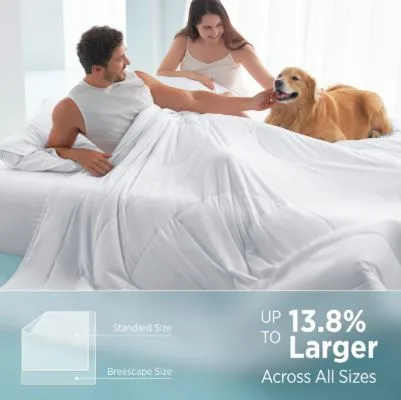
Before browsing options, take an honest inventory of how you sleep. Do you sweat mildly or wake up completely drenched? Do you share a bed with a partner who runs cold? Your answers will shape every decision that follows. Material is the first variable to pin down. Bamboo-derived fabrics excel at moisture-wicking and feel silky against sensitive skin, while lightweight percale cotton offers crisp breathability at a lower cost. Weight matters just as much as fabric. A featherlight cooling blanket suits those who want minimal coverage, while a slightly heavier comforter provides the psychological comfort of feeling covered without trapping heat. Finally, confirm sizing before purchasing, since a comforter that hangs generously over the mattress edges prevents cold air gaps that can paradoxically cause you to overheat as your body compensates.
Step 2: Evaluate Key Features for Optimal Comfort
Once you know what you need, scrutinize the construction details. Dual-sided comfort designs are particularly valuable, offering a cooler surface on one side and a slightly warmer option on the other, so the blanket remains useful across seasons without requiring a complete bedding swap. Check whether the fill is secured with box stitching or baffle-box construction, which prevents clumping and maintains even temperature distribution across the entire blanket. Machine washability is non-negotiable for night sweats sufferers, since frequent laundering is a practical reality. Confirm that the blanket holds its shape and performance after repeated wash cycles, as cheaper options often lose their loft and wicking ability quickly. Breescape Home, for example, designs its cooling comforters with reinforced baffle-box stitching and certifies them for long-term wash durability, which is exactly the kind of construction detail worth prioritizing.
Step 3: Read Reviews and Test Products
Verified customer reviews from people who specifically mention night sweats or hot sleeping are far more useful than general ratings. Look for patterns in feedback around durability after washing, how the blanket performs during summer versus winter, and whether the cooling effect holds up beyond the first few weeks. Many bedding brands now offer trial periods ranging from 30 to 100 nights, which is long enough to test the blanket across different sleep conditions and hormonal cycles. Take advantage of these trials rather than committing blindly, and pay attention to the return process before purchasing so you are not stuck with a product that does not deliver the relief you need.
Maximizing Comfort with Dual-Sided and Advanced Features
Once you have a quality cooling blanket, getting the most from it comes down to understanding its advanced features and how to maintain them. Dual-sided comfort designs are among the most versatile innovations in breathable bedding. These blankets feature a cooler, more breathable surface on one side and a slightly warmer, softer layer on the other, allowing you to flip the blanket based on the season or your body’s needs on any given night. For couples with different temperature preferences, this design can be a genuine compromise without sacrificing comfort for either sleeper.
Some premium cooling blankets incorporate phase-change materials, which are microencapsulated substances woven into the fabric that absorb excess body heat when your temperature rises and release it back when you cool down. This creates an active thermal buffer rather than a passive one, making a meaningful difference during intense hormonal temperature swings.
Layering strategy also matters. Pairing a cooling blanket with a moisture-wicking fitted sheet creates a complete sleep system where both surfaces work together to move heat and perspiration away from your body. Avoid placing a heavy duvet on top, which negates the blanket’s breathability.
For long-term performance, wash your cooling blanket regularly in cold water on a gentle cycle and tumble dry on low heat. High temperatures break down moisture-wicking fibers over time, reducing effectiveness. Following care instructions precisely ensures your blanket continues delivering night sweats relief season after season.
Your Path to Sweat-Free, Restful Sleep
Night sweats do not have to dictate the quality of your sleep. As this article has shown, breathable cooling blankets address the problem directly, using moisture-wicking fabrics, open-weave constructions, and advanced technologies like phase-change materials to interrupt the overheating cycle before it wakes you. The difference between a conventional comforter and a purpose-built cooling blanket is not subtle — it is the difference between dreading bedtime and actually looking forward to it.
For hot sleepers and those navigating menopause symptoms, the right cooling comforter is one of the most practical investments you can make in your overall well-being. Focus on materials that genuinely wick moisture, look for dual-sided designs that adapt across seasons, and take advantage of trial periods to test performance under real conditions. Pair your cooling blanket with moisture-wicking sheets and follow proper care instructions to protect its effectiveness long-term.
Better sleep is not a luxury — it is foundational to your mood, focus, and health. With the right breathable bedding in place, those 2 a.m. wake-up calls can finally become a thing of the past. Take the first step toward genuinely restful nights by choosing a cooling blanket built for the way your body actually sleeps.