Repair or Replace? The Electric Bike Faults Worth Fixing
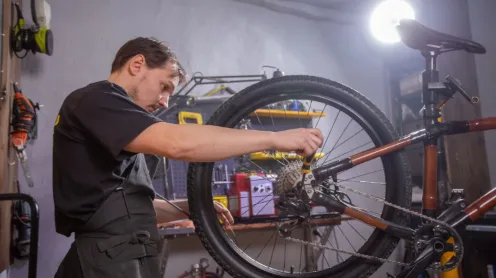
When an electric bike stops working, most owners assume the worst. The display goes blank or the motor starts stuttering, and the first thought is that the battery has died and the whole machine is heading for the tip. Sometimes that is true. Far more often the fault sits in a part that costs a fraction of a new bike, and occasionally it is nothing more than a dirty plug.
Knowing which faults are worth fixing, and which are a sign to move on, can save a lot of money. It also keeps a great deal of lithium, copper and aluminium out of landfill. What follows is a practical guide to the faults that turn up most often on electric bikes and conversions, how to tell them apart, and how to decide between repair and replacement.
Start with the boring checks
Before blaming any major component, rule out the simple things. A surprising share of “dead” e-bikes come back to life after one of these:
The battery is not seated properly. Most packs slide onto a cradle with contacts at one end. If the lock has not fully engaged, or the contacts are dirty, power cuts in and out over bumps. Remove the pack, look at the terminals for dirt or green corrosion, clean them gently and click it back in firmly.
A brake cut-off switch is stuck. Many e-bikes have sensors in the brake levers that kill the motor when you brake. If a lever does not return fully, or a magnetic sensor has slipped out of position, the controller thinks you are braking all the time. Unplug the brake sensors one at a time; if the motor suddenly works, you have found the culprit.
A connector has worked loose or corroded. E-bikes have a cluster of plugs, usually near the handlebars and on the motor cable. Water gets in, pins oxidise, and connections become intermittent. Separate each plug, inspect the pins and reconnect them firmly.
None of this needs specialist tools, and it is worth doing before paying anyone to look at the bike.
The battery: expensive to replace, often repairable
The battery is the most costly component on an e-bike, which is exactly why it is worth understanding what goes wrong inside it.
A typical pack is built from dozens of cylindrical lithium-ion cells, wired in groups and managed by a small circuit board called the battery management system, or BMS. The BMS watches the voltage of each group and cuts the power if anything goes outside safe limits: too high when charging, too low when riding, too hot, or too much current.
Symptoms and what they usually mean
The range has dropped gradually over a couple of years. This is normal ageing. Lithium cells lose capacity with every charge cycle and with time. A pack that delivers around 80 per cent of its original range is still very usable; one that has fallen to half may be nearing the end of its life.
The bike cuts out suddenly on hills or under hard acceleration, then works again after a moment. This often points to one weak group of cells. Under load its voltage dips below the BMS cut-off point before the others, and the BMS shuts everything down to protect it. The rest of the pack may be perfectly healthy.
The battery will not charge, or the charger light goes straight to green. Check the charger first: with a multimeter you can confirm it is putting out the right voltage at its plug. If the charger is fine, the BMS may have locked the pack after a deep discharge, or a fuse or solder joint inside may have failed.
The pack is swollen, hot, smells odd or has been dropped hard. Stop using it. Do not charge it, keep it outdoors or somewhere it cannot set fire to anything, and get it inspected. This is the one situation where caution wins over any repair-versus-replace calculation.
When a battery repair makes sense
A specialist can open a pack, test every group and pin down the problem. A failed BMS can be replaced. A weak group of cells can be swapped for new cells of matching specification, and the pack rebalanced. Broken nickel strips or cracked solder joints can be remade. Where the pack is otherwise sound, a professional battery repair service typically costs much less than a new battery and returns a bike to full use.
Repair makes less sense when the whole pack has aged evenly. If every group has lost a large share of its capacity, replacing one or two simply puts fresh cells alongside tired ones, and the result is unbalanced. At that point a full rebuild with new cells, or a new pack, is the honest answer.
One firm rule: battery work involves high currents and stored energy that can cause fires. It is a job for someone with the right equipment, not a kitchen-table project with a soldering iron.
The controller: the bike’s quiet brain
The controller is a small box, usually hidden in a bag, under the rack or inside the frame, that takes power from the battery and feeds it to the motor in carefully timed pulses. It reads the throttle, the pedal sensor, the brake cut-offs and the display, and decides how much power to send.
Controllers fail more often than people think. The power transistors inside can burn out after water gets in or after prolonged overloading on steep hills. Typical signs include a motor that judders or makes a grinding hum without turning properly, a bike that works on the stand but cuts out under load, or a faint smell of burnt electronics.
Here the economics usually favour replacement of the part, not the bike. Controllers are relatively inexpensive compared with motors and batteries, and swapping one is a straightforward job if the connectors match. Repairing the board itself is possible but rarely worthwhile.
The motor: tougher than its reputation
Electric bike motors are generally robust. Most motor complaints come down to one of a few predictable issues.
Hub motors
Hub motors sit inside the wheel. Inside many of them are three small hall-effect sensors that tell the controller where the magnets are as the motor turns. If one fails, the motor may stutter from a standstill, run roughly or refuse to start unless you pedal first. Replacing hall sensors is a delicate but routine repair.
Geared hub motors also contain small nylon or composite planetary gears. They are designed to be quiet and light, and they do wear, particularly on heavily loaded bikes. A rising whine, or a clicking that changes with speed, often means the gears need renewing. Replacement gear sets are inexpensive; the labour is in opening the hub carefully.
Spokes are worth a mention too. A hub motor is heavier than a normal hub, and the spokes take more strain. A broken spoke is not a motor fault, but it should be replaced quickly before the rim goes out of true and others follow.
Mid-drive motors
Mid-drive units sit at the cranks and drive the chain. Popular aftermarket units have a well-known weak point: the large nylon primary gear inside the casing, which wears or strips over time, especially if riders put full power through the motor in a high gear on a steep climb. Symptoms include grinding, a motor that spins without driving the bike, or a sudden clunk under load.
This is a classic case where repair beats replacement. Professional Bafang mid-drive servicing can replace worn gears, bearings and seals, and many units come back running more quietly than before. Water ingress, which corrodes the internal electronics, is a harder repair, but still often worth a diagnosis before scrapping the unit.
Displays, throttles and sensors
The smaller electrical parts fail often but cheaply. Displays crack, fill with condensation or lose segments. Throttles stick or develop dead spots as dirt and water get into them. Pedal-assist sensors slip out of alignment with their magnet disc, so assistance becomes erratic or vanishes altogether.
In almost every case the fix is a replacement part and a little patience with the wiring. The important thing is to make sure any new part is compatible with the controller, since displays in particular use different communication protocols and plugs.
Water: the cause behind many other faults
Look closely at the repairs above and a pattern emerges. A great many of them start with moisture. Water creeps into a throttle and makes it stick. It sits in a connector until the pins turn green. It finds its way into a controller box and corrodes the board. It gets past a worn seal on a motor and attacks the windings or the sensors.
Electric bikes are built to cope with rain, but not with being submerged, pressure-washed or left uncovered through months of wet weather. Some simple precautions prevent a large share of electrical faults:
Never use a pressure washer on an e-bike. A bucket, a soft brush and a gentle hose are enough. High-pressure water forces its way past seals designed only to keep out rain.
Protect the connectors. A light coat of dielectric grease on the pins of each plug keeps moisture out and makes them easier to separate later. Where cables meet a connector, arranging them so they dip below it before rising in means water drips off the lowest point instead of running into the plug.
Store the bike under cover. A shed, garage or even a fitted waterproof cover makes a large difference over a winter. Condensation inside displays and controllers is far more common on bikes that live outside.
Dry the bike after very wet rides. A quick wipe-down, especially around the display, controller and battery contacts, takes a couple of minutes and can prevent weeks of intermittent faults.
Charging habits that keep batteries out of the workshop
Many battery problems are not manufacturing defects but the result of how a pack has been treated. A few habits make a real difference to how long it lasts.
Charge at room temperature, never straight after bringing a frozen pack in from a cold shed; let it warm up for an hour first. Avoid leaving the battery completely flat for long periods, because a deeply discharged pack can drop below the level at which the BMS will allow it to charge. If the bike will be unused for a month or more, store the battery at around half charge and top it up every few weeks.
Use the charger designed for the battery, or one that matches its voltage and chemistry exactly. Cheap, unbranded chargers are a common source of both battery damage and fire risk. And keep an eye on the charger itself: a frayed lead, a cracked case or a charger that gets unusually hot is a reason to replace it straight away.
A simple way to decide
When faced with a fault, a useful approach is to weigh three things.
The first is the condition of the rest of the bike. A tidy frame with good brakes, wheels and gears is worth investing in. A bike with a cracked frame, seized components and a tired battery is a different proposition.
The second is the cost of the repair relative to the value of the bike. Controllers, sensors, throttles and displays are almost always worth replacing. Motor gears and hall sensors usually are. Batteries depend on whether the fault is local, such as one weak group or a failed BMS, or general ageing across the whole pack.
The third is safety. Any battery that has been crushed, soaked, overheated or swollen goes straight to a specialist, and any repair involving cells should be done properly or not at all.
Workshops such as All4eBikes see plenty of bikes that their owners had written off and that left with a new sensor, a reseated plug or a rebuilt pack. Not every e-bike can be saved, but many more can than most people assume, and a proper diagnosis costs far less than a new machine.
George Andrusca is the founder of All4eBikes, a senior mechanic and electrical engineer specialising in electric bike repairs and conversions in Cardiff, UK.