Rethinking Food Packaging: Grease Resistance, Egg Protection, and Smarter Supply Chains
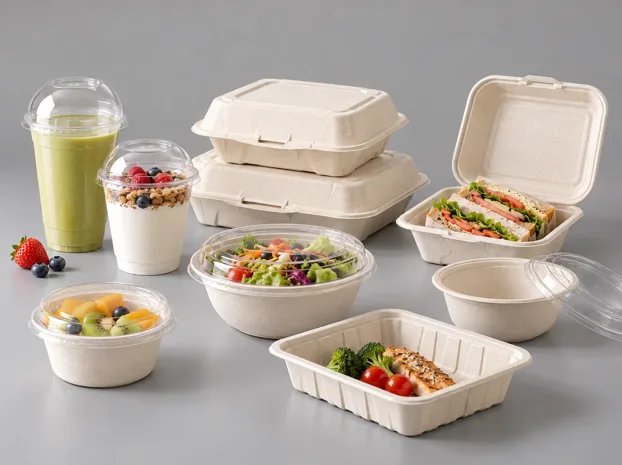
Food packaging must do more than contain a product. It needs to protect food during handling, preserve its intended quality, support efficient transportation, and meet the practical expectations of manufacturers, retailers, and consumers. These responsibilities become especially important when packaging is used for oily prepared foods, baked goods, and fragile agricultural products such as eggs.
Although these applications serve different markets, they share several operational challenges. Packaging must perform consistently, remain cost-effective, and fit the conditions under which food is processed, stored, shipped, and sold. Understanding material properties and supply-chain requirements helps businesses select solutions that meet their needs without creating unnecessary costs or waste.
Why Grease-Resistant Packaging Matters
Oil and fat can quickly affect the appearance and structural integrity of unsuitable packaging. A wrapper that becomes translucent, weak, or stained may leave customers dissatisfied, while grease that penetrates a container can create handling problems for restaurants and delivery services.
Grease-resistant paper is commonly used for applications such as wrapping sandwiches, lining food trays, separating baked goods, and serving fried snacks. Its performance depends on the paper’s composition, manufacturing process, treatment, and suitability for the intended food application.
Different products create different demands. A bakery packaging a buttery pastry may require a different specification from a restaurant wrapping fried chicken or a manufacturer separating oily food components. Moisture, temperature, contact duration, and the amount of oil present all influence the choice of material.
Businesses should therefore evaluate packaging under realistic operating conditions rather than relying exclusively on appearance or general product descriptions.
Choosing the Right Paper for the Application
Grease resistance is only one part of packaging performance. Paper also needs adequate strength, flexibility, and dimensional stability for the intended purpose. A wrapper should be easy to handle during food preparation, while a tray liner must remain sufficiently stable during serving and transportation.
Some paper products are designed primarily for grease resistance, while others combine several barrier properties. Coatings and treatments can improve performance, but they may also affect how a product can be recycled or processed after use. Buyers should examine the complete material specification before choosing an option.
Food-contact suitability is equally important. Packaging manufacturers and suppliers should provide appropriate documentation for the intended application and destination market. Buyers may need to verify migration testing, applicable compliance declarations, and any restrictions related to temperature or direct food contact.
A dependable greaseproof paper supplier should be able to explain product specifications, recommend suitable grades, and clarify the limitations of different materials. This information allows purchasing teams to compare options on performance rather than price alone.
For businesses using several types of food packaging, reviewing a supplier’s wider product range can also help coordinate purchasing and identify compatible packaging formats. However, each material must still be assessed individually for its intended use.
The Commercial Value of Consistent Packaging Quality
In high-volume food operations, minor packaging defects can become expensive. Paper that tears too easily may slow down preparation, while inconsistent sheet sizes can create difficulties for automated equipment or standardized portioning processes.
Restaurants, bakeries, catering companies, and food manufacturers should establish clear acceptance criteria before placing substantial orders. These criteria may cover sheet dimensions, thickness, grease resistance, printing quality, packaging cleanliness, and consistency between production batches.
Sampling is a useful first step. Businesses can test packaging with representative food products, observe how it behaves during normal service, and assess whether it meets storage and handling requirements. Where machinery is involved, trials should also examine feeding, cutting, folding, or wrapping performance.
Total cost matters more than the quoted price per sheet. If a lower-priced product tears frequently or requires additional layers, the apparent saving may disappear. Conversely, a suitable higher-performance grade may reduce waste and improve staff efficiency.
Reliable supply is another consideration. Restaurants and food manufacturers need materials available when production schedules demand them. Buyers should confirm order quantities, lead times, storage conditions, and arrangements for urgent replenishment.
Egg Packaging Requires a Different Protective Approach
Eggs present a distinct packaging challenge because their shells can crack under impact, compression, or vibration. Their packaging must help separate individual eggs, reduce movement, and support safe handling throughout collection, storage, distribution, and retail display.
Molded-pulp egg trays are widely used because their shaped compartments help hold eggs in place. The cushioning structure can absorb some movement and reduce direct contact between neighboring eggs. Depending on the design, trays may be used for bulk transportation, retail packaging, or integration into larger cartons.
Plastic and other packaging formats also serve parts of the egg supply chain. The appropriate choice depends on factors such as product presentation, handling conditions, transport distance, cost, and available waste-management infrastructure.
Good packaging design should account for more than the tray itself. Outer cartons, pallet arrangements, stacking limits, and transport practices all influence how well eggs are protected. Even a well-designed tray can perform poorly if the surrounding carton is too weak or the load is stacked incorrectly.
Understanding the China Egg Tray Packaging Market
China’s large manufacturing base and extensive agricultural supply chains make egg packaging an important area for businesses examining packaging production and procurement opportunities. The china egg tray packaging market includes considerations such as molded-pulp manufacturing capacity, raw-material availability, equipment efficiency, product customization, and distribution requirements.
Molded-pulp trays are commonly produced using fibrous materials formed into a specific shape and dried. Recovered paper can be an important feedstock, although the suitability of the finished product depends on manufacturing controls, material quality, and the intended application.
For buyers, the central question is not simply how many trays a factory can produce. It is whether those trays consistently meet dimensional requirements, provide suitable protection, and arrive according to the agreed schedule.
Manufacturers and importers should evaluate production capacity alongside quality-control procedures. Relevant checks may include compartment dimensions, wall consistency, resistance to deformation, moisture conditions, and performance under expected stacking loads.
Procurement teams should also consider transport economics. Egg trays are relatively bulky compared with many other manufactured products, so carton design, pallet utilization, container loading, and shipping arrangements can significantly influence the final landed cost.
Sustainability and the Importance of Material Selection
Environmental considerations are increasingly relevant to packaging procurement, but sustainable choices require careful evaluation. Paper-based packaging may use renewable or recovered fibers, yet its overall environmental performance depends on sourcing, manufacturing energy, water use, transport, durability, and end-of-life management.
For egg trays, recovered fibers can support material reuse when the production process and local recycling system are suitable. However, moisture exposure, contamination, additives, and collection practices can affect whether a particular product can be recycled or recovered after use.
Grease-resistant food packaging presents a related challenge. Certain coatings improve resistance to oil and moisture but may complicate recycling. Businesses should verify the properties of the finished product instead of assuming that all paper-based materials are equally recyclable.
Packaging reduction offers another practical opportunity. Correctly sized trays, efficient pallet layouts, and fewer damaged products can reduce waste throughout the supply chain. The environmental benefit of a packaging change should also account for whether it increases food damage or product losses.
The best solution balances protection, resource efficiency, and the disposal options realistically available in the destination market.
Building a More Reliable Packaging Procurement Strategy
A structured procurement process helps businesses avoid costly mistakes. Buyers should begin by defining the product’s requirements, including food-contact conditions, packaging dimensions, expected volumes, storage environment, and distribution route.
The next step is to request samples and supporting specifications from potential suppliers. Comparisons should include product consistency, quality documentation, production capacity, customization options, payment terms, and delivery schedules.
For international purchases, buyers should clarify shipping responsibilities, export documentation, inspection arrangements, and procedures for resolving quality disputes. They should also account for exchange-rate changes, freight costs, import duties, and the possibility of delays.
Supplier communication should remain specific and measurable. Rather than asking whether a package is simply strong or environmentally friendly, buyers can request relevant test results, material declarations, and performance information for the intended application.
Periodic reviews help maintain standards as products, regulations, and production requirements change. A supplier that performed well on an earlier order should still be assessed against the specifications agreed for subsequent shipments.
Conclusion
Grease-resistant paper and egg packaging address different problems, but both demonstrate the importance of matching materials to real operating conditions. Foodservice businesses need paper products that handle oil without compromising usability, while egg producers require packaging that reduces movement and protects fragile products during distribution.
Careful material selection, practical testing, consistent quality control, and reliable supplier communication can improve purchasing decisions across both categories. Businesses that consider the entire supply chain—not just the initial package price—are better positioned to reduce avoidable waste, protect their products, and maintain dependable operations as food markets evolve.