Roof Repair vs Roof Replacement Cost: How Homeowners Can Decide Before Getting Quotes
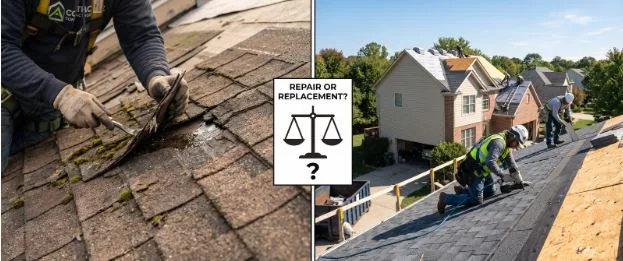
A roof problem creates stress fast. A small leak can look minor from the living room, but the real issue may sit under the shingles, around the flashing, or inside the roof deck. That is why homeowners often ask the same question first: should I pay for a repair, or should I replace the whole roof?
The answer depends on age, damage pattern, repair history, and total cost. A newer roof with one isolated problem often deserves a repair. An older roof with repeated leaks, missing granules, brittle shingles, or damage across several sections often pushes the math toward replacement. Many consumer guides now frame the choice around damage spread and long-term value, not just the first invoice.
Understanding Roof Repair vs Roof Replacement Cost
Roof repair usually costs less upfront. Consumer guidance places many common repairs in roughly the $400 to $2,000 range, although the final number depends on material type, leak location, access, and whether flashing or decking is involved. Full roof replacement costs far more because it includes field materials, labor, tear-off, disposal, accessory metals, and sometimes permits or inspections. One current consumer estimate puts replacement at about $4 to $11 per square foot, with a national average around $9,528.
Still, lower upfront cost does not always mean lower total cost. If you repair an aging roof three times in two years, you may spend money without extending service life in a meaningful way. So here roofing materials calculator helps you a lot. In practice, the better question is not “Which option is cheaper today?” The better question is “Which option gives me the best cost per year of safe roof life?”
What Homeowners Should Check Before Asking for Quotes
Before you call contractors, check the basics. Note the roof age, material, number of old layers, known leak history, and any visible damage. Walk the perimeter. Look for curling shingles, missing tabs, bald spots, granules in gutters, sagging lines, and stains on ceilings or attic framing. These details help you compare quotes on the same scope instead of guessing from vague sales language.
The material matters too. Asphalt shingles often deliver about 25 to 30 years in normal planning discussions. Metal roofing can run 40 to 70 years, while tile and slate can last much longer when the system is installed well and maintained properly. If your asphalt roof is already near the end of that service window, even a “small” problem deserves a harder look.
The Main Signs That Repair Still Makes Sense
A repair usually makes sense when damage is limited and the rest of the roof still has useful life left. That often means:
- one leak in one area
- a few missing shingles after wind
- localized flashing failure
- limited storm damage on a newer roof
- no sagging, no widespread granule loss, and no repeated repair history
Manufacturer guidance also supports repair for minor or moderate damage confined to one section. The logic is simple. If the roof system still performs well across the majority of the surface, a targeted repair protects the home without forcing a full capital project.
The Main Signs That Replacement Makes More Sense
Replacement becomes the stronger option when problems spread or keep coming back. Several sources use rule-of-thumb thresholds here. One consumer guide says replacement often makes more sense when 20% to 25% of the roof is damaged. Another roofing article says that when damage reaches more than 30%, replacement is usually the smarter financial choice. That threshold is not a legal rule, but it is a useful planning signal.
Replacement also deserves serious attention when you see:
- repeated leaks in multiple rooms
- curling, cracking, or widespread missing shingles
- soft decking or attic moisture
- visible daylight through the attic
- old shingles that have become brittle
- patchwork repairs that no longer match or hold
Homeowner discussions reflect this problem clearly. Many people start with the hope of a simple patch, then learn that older shingles can crack during repair or that one repair exposes a second weak area. That does not mean every contractor is right, but it does mean older roofs often resist clean, low-risk patching.
A Simple Repair vs Replacement Comparison
| Factor | Repair | Replacement |
| Damage area | Small and isolated | Widespread or repeated |
| Roof age | Usually younger roof | Often older roof |
| Upfront cost | Lower | Higher |
| Long-term value | Good for limited issues | Better for aging systems |
| Quote complexity | Smaller scope | Full system scope |
| Risk of repeat work | Higher on old roofs | Lower after completion |
What a Real Roofing Quote Should Include
A good quote does not hide behind one lump-sum number. It should show measurable scope. At minimum, homeowners should expect line items for field materials, waste factor, underlayment, flashing, drip edge, ridge components, tear-off, disposal, labor, and permit-related costs where required. That is why using a roof replacement calculator before calling contractors helps. It lets you understand how roof area, waste, and replacement allowances affect the total.
Underlayment deserves special attention. It is not a minor extra. It acts as the secondary moisture barrier under shingles, metal panels, or tile. Felt, synthetic underlayment, and self-adhering ice-and-water protection all carry different costs and use cases. If a quote ignores underlayment type, valley protection, or eave detailing, the homeowner still does not have the full picture.
Getting three or more written estimates from licensed contractors also makes the comparison practical and honest. Arlington Roof Contractor offers professional, scope-matched quotes for homeowners in the Arlington area who need a clear starting point before committing to work. The best quote is not always the cheapest quote. The best quote is the one that matches real scope, real materials, and real risk.
How Insurance Changes the Decision
Insurance can influence the timing, but it should not replace judgment. If the damage came from a covered event such as wind, hail, or falling debris, homeowners should document the damage, review whether the policy pays actual cash value or replacement cost value, and contact the insurer before work begins. Consumer guidance also recommends getting multiple estimates before committing.
This step matters because insurance does not automatically turn every repair case into a full replacement case. Policy terms, age, depreciation, and scope findings all matter. Homeowners should let the inspection drive the decision, then let the policy define the financial path.
Conclusion:
Homeowners make the best decision when they stop looking at the roof as one stain or one missing shingle. The real question is whether the system still has enough life left to justify another repair. If the roof is fairly young and the damage is limited, repair usually wins. If the roof is older, leaks keep returning, and quotes start stacking up, replacement usually delivers stronger long-term value.
That is the practical way to decide before getting quotes. Start with age. Check damage spread. Look for structural warning signs. Review total scope, not just the visible patch. Then compare repair cost against the years of dependable service you are likely to gain.
FAQs
1) Is roof repair always cheaper than roof replacement?
Roof repair is usually cheaper at the start, but it is not always cheaper over time. A small repair on a newer roof often makes financial sense. Repeated repairs on an older roof often waste money. Homeowners should compare the repair bill with the roof’s remaining life, the chance of more leaks, and the cost of a full replacement.
2) At what point should I replace my roof instead of repairing it?
Replacement becomes the better option when damage spreads across multiple sections, the roof is near the end of its service life, or repair costs keep adding up. Many guides use damage thresholds of about 20% to 30% as a warning sign. Recurring leaks, brittle shingles, soft decking, and attic moisture also point toward replacement instead of another short-term patch.
3) What makes a roof replacement quote go up?
Several factors raise replacement cost. Roof size, pitch, and material affect price first. Tear-off, disposal, underlayment, flashing, drip edge, ventilation upgrades, permits, and labor also add cost. Steep roofs usually need more labor and safety setup. High-end materials like metal, slate, or tile also raise the final number. A clear quote should show these items separately.
4) Can insurance help pay for roof repair or replacement?
Insurance may help when damage comes from a covered event such as wind, hail, or falling debris. Homeowners should take photos, review the policy, and contact the insurer before work starts. Coverage depends on the policy terms, roof age, and whether the claim pays actual cash value or replacement cost value. Multiple contractor estimates also help support the review process.
5) What should I do before I ask contractors for roofing quotes?
Start with a basic roof review. Note the roof age, material, leak history, and visible signs like curling shingles, granule loss, sagging, or interior water stains. Then gather at least three written quotes. Make sure each quote covers the same scope. That includes tear-off, underlayment, flashing, accessories, labor, cleanup, and permit costs. Clear scope makes quote comparison much easier.