Roof Restoration Cranbourne: What It Involves, What It Costs and When You Need It
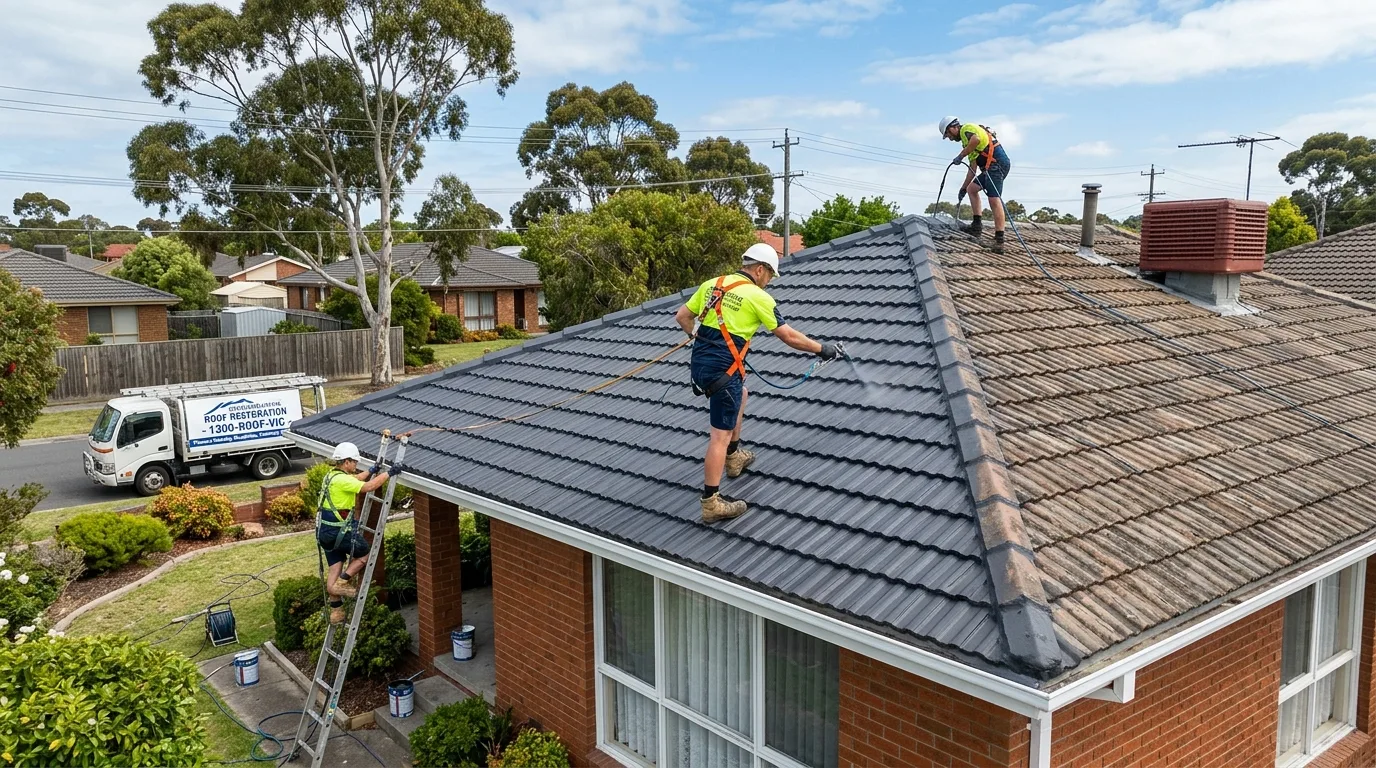
Roof restoration is the process of bringing a tired but structurally sound roof back to life through cleaning, repairs, re-bedding and re-pointing the ridge caps, and resealing the surface with protective coatings. For homeowners across Cranbourne and Melbourne’s south-east, it is usually the smartest way to add ten to fifteen years to a roof for a fraction of the cost of replacing it. A full roof restoration Cranbourne homes typically need runs somewhere between $4,000 and $12,000 in 2026, with most standard homes landing around $5,000 to $8,000.
This guide explains what actually happens during a restoration, why Cranbourne’s climate is so hard on roofs, how to tell when yours needs attention, and how to get a fair quote.
Why Cranbourne Roofs Wear Out
Melbourne’s famous “four seasons in a day” is genuinely tough on a roof, and the south-east suburbs are no exception. The big daily temperature swings make tiles and mortar expand and contract constantly. Over the years, that movement causes the old cement pointing around the ridge caps to crack, and once it cracks, water finds its way in.
Weather adds to the problem. Southerly wind and rain drive moisture up under the ridge caps, while the humidity feeds moss and lichen, particularly on shaded, south-facing slopes. Many homeowners never notice until there is a leak, because a tiled roof can quietly absorb water once its surface coating wears away, leaving the roof space damp and cold without any obvious sign from inside.
This is exactly why a proper restoration matters here. Flexible pointing that moves with the roof, and a quality sealer system, hold up in this climate in a way that cheap shortcuts simply do not.
What Roof Restoration Actually Involves
A genuine restoration is far more than a quick respray, and understanding the steps helps you judge whether a quote is complete.
On a tile roof, the work usually begins with a high-pressure clean to strip away moss, lichen and years of grime, taking the roof back to a sound surface. Next comes replacing any broken or cracked tiles, which has to happen before anything else so the roof is watertight beneath the finish.
The heart of the job is the ridge caps. These are re-bedded and re-pointed, ideally with a flexible pointing compound that flexes with the roof’s movement rather than cracking like old cement. From there, a roofer repairs valleys, flashings and any rusted metal, since these are common entry points for water. Finally, the surface is sealed, typically with a primer or sealer coat followed by two coats of protective roof membrane, which is what makes water bead and run off and gives the roof its renewed colour.
Metal and Colorbond roofs follow a different path. There is no bedding or pointing involved, so the work shifts to treating rust, replacing corroded sheets or fasteners, resealing penetrations and flashings, and recoating with a compatible coating system.
Re-Bedding and Re-Pointing Explained
These two terms get muddled constantly, even in quotes, so it is worth being clear on the difference because it affects both durability and price.
Bedding is the mortar bed underneath the ridge and hip caps that holds them in position. Over decades this mortar can crumble, which lets the caps move. Re-bedding means removing the caps and setting them back onto a fresh mortar bed.
Pointing is the flexible layer applied over the top of the bedding, sealing the join and locking everything in place. Re-pointing renews that top layer. The important thing to know is that new pointing over a failed bed will not last. If the mortar underneath has crumbled, a repoint-only job can fail within a year or two, so a good roofer assesses the bedding before deciding the scope.
Signs Your Roof Needs Restoration
A few clear signals tell you it is time to act, and catching them early keeps a small job from becoming a big one.
Cracked or slipped tiles are an obvious one, as are visibly crumbling or missing pieces of pointing along the ridge lines. Inside, water stains on ceilings or a damp, cold roof space point to moisture getting in. From the ground, a faded, patchy or worn surface where the original coating has broken down is a strong sign the roof is no longer shedding water as it should. Heavy moss or lichen growth, especially on shaded slopes, is another red flag. If you are seeing any of these, an inspection is worthwhile before the next big downpour.
Restoration or Replacement
Full replacement is rarer than most people expect. It is really only necessary when the structure itself is failing, such as widespread rot in the roof timbers, major storm or structural damage, or a very old roof where the tiles are crumbling beyond saving.
Short of that, a roof that looks past its best is almost always a roof that can be restored rather than replaced. The honest catch is that you often cannot tell from the ground which one you need, which is why a proper inspection is the sensible first step. The financial case usually favours restoration too. Spending roughly $5,000 to $9,000 to restore a sound roof buys another decade or more of life, against $15,000 to $35,000 or more to replace it.
What Roof Restoration Costs in Cranbourne
Every roof is different, so treat these as realistic guides rather than fixed prices. In 2026, a full tile roof restoration in Melbourne generally runs from around $4,500 to $9,500, with concrete tile sometimes a little higher. Colorbond and metal restorations tend to sit lower, roughly $3,500 to $10,000, because there is no bedding or pointing work. Most contractors price per square metre, commonly in the range of $25 to $55, and most homes fall between 150 and 300 square metres.
Several factors move the number. Roof size is the starting point, followed by condition, since a roof neglected for fifteen years needs more tile replacement and re-bedding than one kept up. Pitch and access matter too, as steep and double-storey roofs need extra scaffolding, safety gear and time, which lifts the cost. The number of ridge and hip lines affects tile roofs in particular, because more ridges mean more bedding and pointing. Repointing on its own commonly runs about $40 to $90 per linear metre, though bundling it into a full restoration usually brings the per-metre rate down.
Getting a Fair Quote
Roof quotes vary wildly because the scope of work differs, so the goal is to compare like for like. Ask each roofer whether the price includes re-bedding and re-pointing or only cleaning and coating, since leaving the ridge work out is a common way to make a quote look cheaper. Insist on an itemised quote that breaks out cleaning, tile replacement, pointing and coating rather than a single lump sum.
Check the coating system as well. A premium membrane from an established manufacturer, paired with a solid workmanship guarantee such as ten years, will far outlast a cheap acrylic that fades in a couple of seasons. Confirm the roofer is licensed and insured with proper safety set-up, and be wary of two things: a quote well below every other, which usually means corners will be cut, and door-knockers who inspect and quote on the spot, a known tactic in the south-east suburbs. Getting a few written quotes from established local roofers is the best protection.
One practical tip: pointing needs dry weather to cure properly, so autumn and late winter can be good, off-peak times to book, provided the conditions are dry enough to work.
Frequently Asked Questions
How long does a roof restoration take? Most restorations take around three to five days, depending on the size and condition of the roof and the weather. Pointing needs dry conditions to cure, so timelines can shift a little during wet spells.
How often should a roof be restored? As a general guide, a tiled roof benefits from restoration roughly every ten to fifteen years, though it depends on the material, how well the roof has been maintained, and how exposed it is to weather.
Can a roof restoration fix a leak? In many cases, yes. A full restoration addresses the most common causes of leaks, including cracked pointing, worn sealant, and slipped or damaged tiles. If a leak stems from deeper structural damage, a roofer will identify that during inspection.
Does roof restoration add value to a home? It is one of the higher-return maintenance jobs on an older home. A restored roof noticeably improves street appeal, helps with weather protection and energy efficiency, and presents far better when it comes time to sell.
Is restoration cheaper than replacing the roof? Considerably. Restoration typically costs a fraction of a full replacement while extending the roof’s life by ten to fifteen years, which makes it the better financial choice for most structurally sound roofs.
Should I choose a coating colour, and does it matter? Yes, restoration is a chance to update the roof’s colour, and it is more than cosmetic. A quality coating protects against UV and moisture, and lighter colours can help reflect heat, while the finish is what makes water run off cleanly.