Rotational Bucking Unit: A Workshop Workhorse for Repeatable Make-Up and Efficient Tool Handling
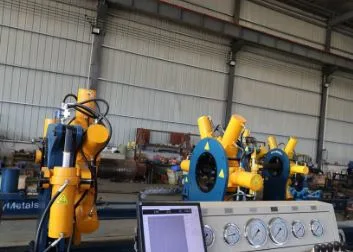
A Rotational Bucking Unit is purpose-built equipment designed to assemble and disassemble threaded oilfield connections with stable rotation, controlled clamping, and reliable torque delivery. In many workshops, the real challenge is not only achieving a final torque value, but maintaining consistent rotation behavior while protecting expensive connections and keeping throughput high. That is where a Rotational Bucking Unit becomes a practical investment for facilities that handle tubing, casing, drill pipe, and a wide range of completion or service tools.
A modern Rotational Bucking Unit is often selected because it supports continuous rotation rather than step-by-step turning. This continuous rotation approach can reduce cycle times, improve repeatability, and give operators a smoother, more predictable assembly process—especially when the workshop is running high volumes or dealing with connections that require careful handling.
What “Rotational” Really Means in a Rotational Bucking Unit
The key characteristic of a Rotational Bucking Unit is stable rotational drive during make-up and break-out. Instead of relying on short bursts of movement or manual assistance, a Rotational Bucking Unit maintains a controlled rotation profile that operators can manage more precisely. This matters because connection behavior changes during assembly: the initial engagement, shoulder contact, and final torque build-up can each require a different approach.
A well-engineered Rotational Bucking Unit allows operators to move smoothly through these phases. That smoother rotation can reduce sudden load spikes and minimize the risk of slips that cause scarring or marking—problems that can be costly when dealing with premium connections or tight tolerances.
Rotational Bucking Unit Use Cases Beyond Standard Pipe
A Rotational Bucking Unit is commonly used for pipe, but many shops also rely on a Rotational Bucking Unit for tool assemblies where consistent rotation and solid clamping are essential. For example, certain workshop tasks involve mixed components, heavy tool joints, or assemblies that must be repeated many times with the same procedure. In these cases, a Rotational Bucking Unit becomes the “center station” of the workshop where connection quality is built.
Because of this flexibility, a Rotational Bucking Unit can support both production-style operations (repeatable routines, high volume) and job-based operations (varied assemblies, different connection standards), as long as the machine is configured with the right fixtures and jaw sets.
Rotational Bucking Unit Efficiency: Why Workshops Care About Rotation Stability
In real operations, stability is speed. A Rotational Bucking Unit helps reduce the trial-and-error that slows down connection assembly. When rotation is smooth and predictable, operators spend less time correcting alignment, re-clamping, or dealing with minor slips. Over time, that adds up to meaningful productivity gains.
A Rotational Bucking Unit can also improve workflow planning. In many service bases, connection assembly is a bottleneck—tools are waiting, technicians are waiting, and the next process step cannot start until the connection is complete. By improving cycle consistency, a Rotational Bucking Unit helps keep the whole line moving.
Rotational Bucking Unit and Connection Protection: Jaws, Inserts, and Handling Practice
Connection protection is a major reason customers upgrade to a Rotational Bucking Unit. With the right configuration, a Rotational Bucking Unit can reduce thread damage and surface marks compared to rough handling methods. However, this benefit depends on the jaw strategy.
Most serious users treat jaw selection as part of the Rotational Bucking Unit system. Different pipe grades, coatings, and connection types may require different contact solutions. Some jobs demand stronger grip, while others demand non-marking protection. A well-supported Rotational Bucking Unit program typically includes multiple jaw sets, replaceable inserts, and quick-change design so the workshop can adapt without losing time.
Just as important, a Rotational Bucking Unit performs best when operators follow simple handling discipline: keeping contact areas clean, checking insert wear, and avoiding debris that can be pressed into the connection surface during clamping.
Rotational Bucking Unit Selection Criteria That Buyers Actually Use
When a workshop evaluates a Rotational Bucking Unit, the discussion usually goes beyond torque rating. Buyers typically consider:
- Pipe size range and typical connection types a Rotational Bucking Unit must cover
- Torque capacity matched to real jobs, not only “maximum” numbers for a Rotational Bucking Unit
- Rotation control for smooth operation under varying loads in a Rotational Bucking Unit
- Clamping structure and frame rigidity to ensure stable alignment in a Rotational Bucking Unit
- Serviceability so the Rotational Bucking Unit can be maintained quickly between shifts
- Operator safety with guarding and emergency response features in a Rotational Bucking Unit
In many cases, the best Rotational Bucking Unit is the one that performs consistently day after day, with minimal downtime and minimal training friction.
Rotational Bucking Unit Value in Long-Term Workshop Planning
A Rotational Bucking Unit often becomes part of a facility’s long-term capacity plan. As workshops add more premium connections, higher-grade tubulars, or more demanding assembly procedures, consistent rotation control becomes even more valuable. A properly specified Rotational Bucking Unit supports that evolution by providing stable performance, repeatable routines, and a workflow that can scale with future demand.
For facilities that treat connection assembly as a controlled process rather than a manual craft, a Rotational Bucking Unit is a logical step forward. It helps reduce variability, improve throughput, protect high-value components, and build a stronger foundation for workshop quality.