Rwanda Safari Guide: Best National Parks and Kigali City
Rwanda packs an unusual amount of variety into a country you can drive across in a single day. That’s exactly what trips people up when they start planning. You’ve got three national parks that couldn’t be more different from each other, plus a capital city that most travelers only think about as a place to land and leave. So the real question isn’t “should I visit Rwanda” — it’s “which parts of Rwanda actually match what I want out of this trip.”
Here’s the short version. Akagera National Park is where you go for a proper savanna safari — game drives, lakes, the kind of wildlife-watching most people picture when they hear the word “safari.” Nyungwe National Park flips that entirely, trading open plains for dense montane forest, chimpanzees, and a canopy walk suspended above the treetops. Volcanoes National Park is the one everyone’s heard of, home to Rwanda’s mountain gorillas and the volcanic peaks of the Virungas. And Kigali, the capital of Rwanda, ties it all together as your arrival point, your last night, or a genuine city break if you give it the time.
Most visitors don’t need to pick just one. Rwanda’s small size means combining two or three of these is not only possible but often the smarter plan.
Rwanda Safari at a Glance: Which Destination Is Right for You?
Before getting into the details, it helps to know roughly where you fit.
Choose Akagera for Wildlife Safaris
If game drives, savanna landscapes, lakes and wetlands, and spotting large mammals from a safari vehicle is what you’re after, Akagera delivers that. It’s also solid for birdwatching, with a wetland ecosystem that draws species you won’t see in the mountain parks.
Choose Nyungwe for Forest and Primates
Nyungwe is for travelers who’d rather track chimpanzees through rainforest than drive across open plains. Expect several monkey species, thick forest scenery, the well-known Canopy Walk, and birdwatching that rivals anywhere else in the country.
Choose Volcanoes for Gorillas and Volcano Landscapes
This is mountain gorilla trekking territory, plus golden monkeys and the dramatic backdrop of the Virunga volcanoes. Musanze acts as the practical base for anyone heading up into the park.
So — which national park in Rwanda is best? Honestly, it depends on what you’re chasing. There’s no single right answer, only the one that matches your priorities.
Akagera National Park: Rwanda’s Classic Safari Experience
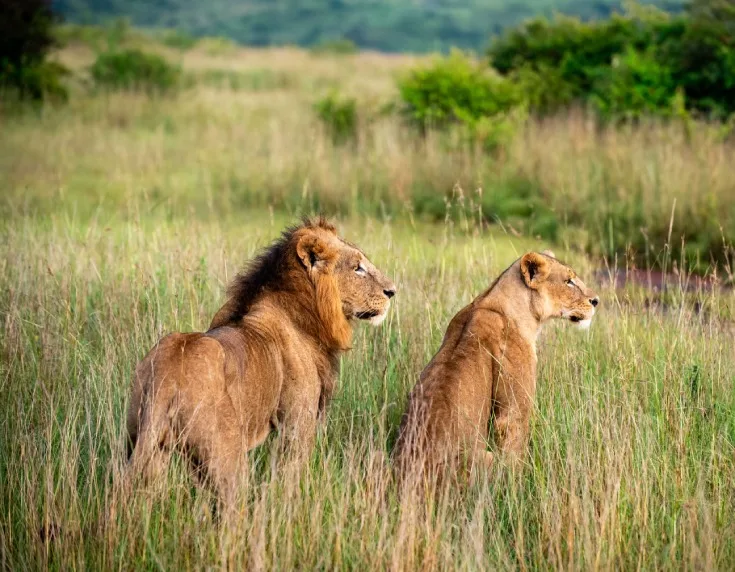
Akagera sits in the northeast, along the Tanzanian border, and it’s the closest thing Rwanda has to the classic East African safari most travelers picture. Rolling savanna, acacia woodland, papyrus wetlands, and a chain of lakes make up the landscape, and the wildlife reflects that diversity — elephants, buffalo, giraffe, zebra, and a healthy population of predators that have been reintroduced in recent years as part of ongoing conservation work.
Game drives are the main activity, usually run early morning or late afternoon when animals are more active, and the heat hasn’t set in yet. Some lodges and operators also offer a boat safari on Lake Ihema, which gives you a different angle on hippos, crocodiles, and waterbirds that you’d otherwise miss from a vehicle. For anyone whose main interest is birdwatching, Akagera’s wetland habitat is genuinely rewarding — it’s not just an add-on to the mammal-watching here.
If this is someone’s first-ever safari, Akagera is a comfortable entry point. It’s smaller and less overwhelming than the massive ecosystems in Kenya or Tanzania, but it still gives you that open-plains, spot-something-new-every-hour feeling. Most itineraries plan for two to three nights, which is generally enough time for a couple of drives plus a boat outing without feeling rushed.
What to Expect on an Akagera Safari
It’s worth setting expectations here. Akagera won’t hand you the sheer scale of the Serengeti or the Maasai Mara — nobody’s claiming that. What it does offer is a genuinely good Rwanda wildlife safari experience within a country that’s mostly known for gorillas, and it does that without requiring a separate flight or border crossing. For travelers building a Rwanda-only itinerary, that convenience matters more than people expect going in.
Nyungwe National Park: Forest, Chimpanzees and the Canopy Walk
Nyungwe is one of Africa’s oldest rainforests, and it feels like it the moment you’re under the canopy. This is montane forest — cooler, wetter, denser than Akagera’s open country — and it’s home to a chimpanzee population along with several other primate species, including L’Hoest’s monkeys and colobus troops that move through the treetops in groups large enough to hear before you see them.
Chimpanzee trekking here works similarly to gorilla trekking in the sense that you’re following guides into forest terrain, though chimps move faster and more unpredictably than gorillas do, so treks can run longer or shorter depending on where the group happens to be that morning. It’s physically more demanding than most people assume — narrow trails, elevation changes, and humidity all add up, so anyone with mobility concerns should think this through before booking.
Beyond primates, Nyungwe’s hiking trails wind through genuinely old forest, and the Canopy Walk — a suspended walkway strung between platforms high above the forest floor — gives you a view of the canopy that you simply can’t get from ground level. Birdwatchers tend to love this park too; the combination of altitude and forest cover supports species found almost nowhere else in Rwanda.
How Many Days Do You Need in Nyungwe?
Two nights cover a focused visit — enough time for one chimp trek and a forest walk or the Canopy Walk. If you want to combine chimpanzee trekking with a broader look at the forest’s other trails and primate species, plan for a bit longer.
Volcanoes National Park: Rwanda’s Gorilla Trekking Destination
This is the park most people have already heard about before they’ve heard of anything else in Rwanda, and for good reason. Volcanoes National Park sits at the base of the Virunga Mountains and protects one of the last strongholds of mountain gorillas anywhere on the planet.
Treks start early, usually with a briefing at park headquarters before you’re assigned to a gorilla group and driven to the trailhead. How long the actual trek takes depends entirely on where that group happens to be on a given day — sometimes it’s a short walk, sometimes it’s several hours through steep, muddy terrain. That unpredictability is part of the deal, and it’s why flexibility around the trekking day matters more here than almost anywhere else in your itinerary. A permit is required for every trek, and these are limited in number, so booking ahead isn’t just advice — it’s often a practical necessity.
Proper footwear and waterproof layers aren’t optional extras here; the terrain can shift from dry to slick within an hour, and being underprepared makes for a miserable morning. Some basic physical preparation beforehand also goes a long way, since even a “short” trek can involve real elevation gain.
Gorilla Trekking or Golden Monkey Trekking?
Gorilla trekking is the headline activity and usually the reason people build their whole Rwanda trip around this park in the first place — it deserves top planning priority if it’s on your list. Golden monkey trekking is a separate, generally easier activity within the same park, following playful, fast-moving primates through bamboo forest. It’s worth adding if you have an extra day, but it’s not a substitute for the gorilla experience.
It’s also worth knowing that the Virunga conservation area stretches beyond Rwanda’s borders, connecting Uganda’s Mgahinga Gorilla National Park and DR Congo’s side of the range. For travelers piecing together a wider East African gorilla trip, that cross-border landscape is part of the bigger picture, even if it doesn’t need its own separate stop on a Rwanda-focused itinerary.
Kigali City of Rwanda: What to Do Before or After Your Safari
Kigali tends to get treated as nothing more than an airport with a hotel attached, and that’s a shame, because there’s real substance here if you give it a day. A Kigali city tour usually includes the Kigali Genocide Memorial, which is a sobering but important stop for understanding the country’s recent history — most visitors describe it as essential rather than optional. Beyond that, the city has genuinely good restaurants, a growing café scene, and local markets that are worth wandering through even without a specific agenda.
Kigali also works well as your logistics hub — most Rwanda accommodation bookings, whether in the city or the parks, connect back through here, and the airport sits close enough to the center that transfers aren’t a headache.
How Long Should You Stay in Kigali?
For a tight schedule built mostly around trekking and safari days, one night is enough to land, rest, and move on. If you’d rather slow down and actually see the city — memorial included — two nights give you breathing room without eating into park time.
How to Build a Rwanda Safari Itinerary
There’s no single “correct” Rwanda itinerary, but the length of your trip naturally shapes what’s realistic.
4–5 days works well for Kigali plus Volcanoes National Park. This suits travelers whose main goal is gorilla trekking and who don’t have time for a longer Rwanda tour.
6–8 days opens things up to Kigali, Volcanoes, and Akagera — gorillas plus a traditional safari, which covers most of what people associate with an African safari without stretching the trip too thin.
8–10+ days allows for all four: Kigali, Volcanoes, Nyungwe, and Akagera. This is the route for travelers who want the broader Rwanda experience — forest, savanna, and mountains — rather than picking just one or two.
One thing that trips people up: driving times between these destinations aren’t huge by African standards, but they’re nothing either. Cramming too many parks into too few days means half your trip becomes transfer days in a vehicle, which defeats the purpose. Build in slack.
Best Time to Visit Rwanda for Safari and Trekking
There isn’t one universally “best” month — it really comes down to what you’re doing. Rwanda has two drier stretches and two wetter ones across the year, and each activity responds to that differently.
For wildlife viewing in Akagera, drier periods generally make animals easier to spot since they cluster around remaining water sources and vegetation thins out. Gorilla trekking in Volcanoes happens year-round regardless of season — permits aren’t seasonal — but trail conditions get muddier and more physically demanding during wetter months, so comfort rather than possibility is what changes. Chimpanzee trekking in Nyungwe follows a similar pattern; it’s a rainforest, so expect moisture regardless, but heavier rain periods can make trails slicker and treks slower going.
Rwanda Safari Cost, Permits and Accommodation
Rather than throwing out numbers that go stale fast, it’s more useful to understand what actually drives your total cost. Gorilla and chimpanzee permits are usually the single biggest line item, followed by park entrance fees, the number of days you spend on safari, and which accommodation tier you choose. Whether you’re traveling with a private vehicle and guide or joining a shared group setup also shifts the price meaningfully, and meals plus internal transfers add up on top of that.
Where Should You Stay?
In Kigali, you’re choosing among standard city hotels, ranging from budget to upscale. Near Akagera, safari lodges and tented camps sit close to or inside the park boundary. Nyungwe has a smaller set of forest-edge lodges built around access to the trailheads. And around Volcanoes, most accommodation clusters near Musanze (also called Ruhengeri), ranging from simple guesthouses to higher-end lodges with volcano views.
Permit fees and park regulations do change from time to time, so it’s worth confirming current pricing directly before you book anything.
Practical Rwanda Safari Tips First-Time Visitors Should Know
A few things that genuinely make a difference on the ground: book your gorilla permits as early as you can, since availability is limited and popular dates fill up. Pack waterproof layers no matter what season you’re traveling in — mountain and forest weather shifts fast and doesn’t wait for your itinerary. Bring hiking shoes with real ankle support, not trainers, especially for Volcanoes and Nyungwe. Carry a bit of local currency for small purchases along the way, since not everything takes cards. Keep your luggage manageable if you’re moving between multiple parks, and build extra time into road transfers rather than cutting it close. During any wildlife encounter, follow your ranger’s instructions without hesitation — they know the animals’ behavior far better than any guidebook does. And finally, check current entry and health requirements before you fly, since these can change with little notice.
Planning a Rwanda Safari With an Experienced Local Operator
Putting together permits, transport, lodges, and trekking days across multiple parks takes some coordination, and that’s where a local operator earns their keep. Albertine Tours is one such regional company, helping travelers build itineraries across East Africa rather than just within Rwanda alone. We operate in Rwanda, Uganda, Tanzania, and Burundi, which makes it easier to fold in a cross-border extension if your trip calls for one. Working with a team on the ground tends to smooth out the logistics that are hardest to manage from a distance — permit timing, transfer scheduling, and matching accommodation to your actual pace.
Final Thoughts: Choose the Rwanda Experience That Fits Your Trip
Boiled down, it comes to this: Akagera National Park for classic safari and wildlife, Nyungwe National Park for forest, chimpanzees, and primates, Volcanoes National Park for gorilla and golden monkey trekking, and Kigali City of Rwanda for culture, food, history, and an easy point to start or end your trip. None of these require you to give up the others — Rwanda’s size means a well-planned itinerary can realistically include two or three. The right move is to map out your available days, your interests, your budget, and the kind of accommodation you actually want, then build a personalized route around that rather than trying to force your trip into someone else’s template.