Search Engines Are Becoming Answer Engines: What Does That Mean for the Open Web?
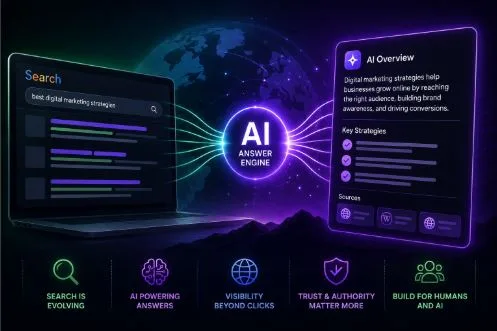
Artificial intelligence is reshaping how people find information online. Instead of displaying a list of websites for users to explore, search platforms are increasingly generating complete answers directly within the search experience. Google’s AI Overviews and other AI-powered search tools are changing the way information is discovered, consumed, and shared.
For decades, search engines acted as gateways to the web. Users entered a query, reviewed multiple sources, and decided which websites offered the most trustworthy information. Businesses, publishers, and independent creators benefited from this model by earning organic traffic, building brand awareness, and growing their audiences.
That model is now evolving.
From Search Results to Direct Answers
Modern AI-powered search experiences can summarize information from multiple sources and present a single response without requiring users to click through to individual websites. Whether someone is researching a medical condition, comparing software, or looking for local services, the answer often appears before they ever leaves the search results.
Google introduced AI-powered search experiences to help users find information more efficiently while still connecting them with helpful web content. As these experiences continue to evolve, businesses are also rethinking how they approach online visibility. Rather than focusing solely on rankings, many organizations are investing in search visibility strategies that help their content remain discoverable in both traditional search and AI-generated responses. Google’s approach to AI-powered search can be explored in more detail in its announcement on AI Overviews and AI Search.
Businesses can no longer rely on ranking #1 for a keyword alone. They must create content that AI systems can understand, trust, and reference.
How Search Has Changed
| Traditional Search | Answer Engines |
| Shows a list of websites | Generates direct answers |
| Success measured by clicks | Success measured by visibility and citations |
| Focus on keyword rankings | Focus on topical authority and trust |
| Users compare multiple pages | Users often stop after one answer |
| Website traffic is the primary goal | Brand recognition and AI citations become equally important |
This shift doesn’t eliminate SEO, it changes its purpose.
Instead of optimizing only for rankings, businesses now need content that demonstrates expertise, credibility, and clear topical relevance.
Why This Matters for the Open Web
The open web depends on publishers, journalists, bloggers, researchers, and businesses continually creating valuable content.
If AI systems answer every question without sending visitors back to original sources, many creators could experience declining traffic. Recent research from SparkToro suggests that zero-click searches continue to grow, making visibility beyond traditional rankings increasingly important.
There is also an important question of transparency.
When an AI combines information from multiple websites into one response, users may not always know where individual facts originated or how those facts were verified. This makes clear attribution and trustworthy sourcing more important than ever. Google has published additional guidance about AI-generated search experiences and how information is surfaced within AI-powered results.
These concerns have sparked ongoing discussions about how AI should balance convenience with transparency while continuing to support the broader web ecosystem.
The Future of SEO Is Visibility Beyond Rankings
Search optimization is no longer just about appearing on the first page of Google.
Today’s successful businesses focus on creating comprehensive, trustworthy content that can be discovered across traditional search engines, AI assistants, voice search, and emerging answer engines. That content also performs better when it’s supported by fast, user-friendly websites that provide an excellent experience for both visitors and search engines.
Successful strategies increasingly include:
- Publishing original, experience-based content.
- Demonstrating expertise through topical authority.
- Building trusted backlinks.
- Keeping information accurate and regularly updated.
- Answering real user questions clearly.
- Structuring content so both people and AI systems can easily understand it.
Businesses adapting to AI search are also paying closer attention to evolving industry trends. A recent article on 5 Hard Truths About the 2026 Search Market Share explores how AI search is reshaping online visibility and why businesses need to prepare for this shift.
Businesses Must Adapt, Not Resist
Every major technological shift changes how people discover information.
Mobile devices changed search behavior.
Voice assistants changed search queries.
Artificial intelligence is changing how answers are delivered.
Organizations that continue publishing valuable, trustworthy, and well-structured content will remain visible regardless of how search interfaces evolve. At the same time, many businesses are strengthening direct customer relationships through email marketing campaigns, ensuring they remain connected with their audience even as search behavior evolves.
Rather than viewing AI as a replacement for SEO, many experts see it as the next stage in search evolution one where authority, accuracy, and user value matter more than ever. Businesses can also follow updates and best practices through Google Search Central as search continues to evolve.
Final Thoughts
Answer engines are reshaping digital discovery, but they do not eliminate the need for quality content. Behind every AI-generated response are websites, publishers, researchers, and creators who invested time and expertise into producing the original information.
The future of the open web will likely depend on maintaining a healthy balance between AI-powered convenience and supporting the creators whose work makes those answers possible.
Businesses that recognize this shift today will be better positioned for the future by creating content that serves both human readers and the intelligent systems increasingly helping them discover information.