Self-Drilling Hollow Bars: Drill, Grout, and Anchor in One Step
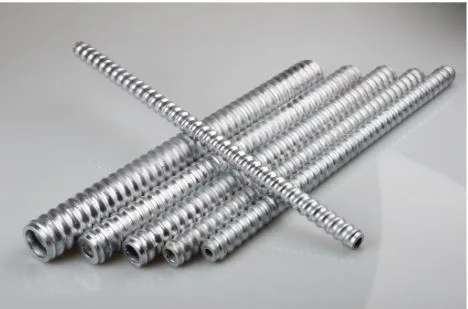
Ground conditions don’t always cooperate. Loose soil, fractured rock, or unstable slopes can turn a straightforward drilling and anchoring job into a slow, unpredictable process — especially when a borehole keeps collapsing before a conventional anchor can even be installed. Self-drilling hollow bars were developed specifically to solve this problem, combining drilling, grouting, and anchoring into a single continuous operation.
What a Self-Drilling Hollow Bar Is
A self drilling hollow bar is a steel bar with a hollow core running its full length, fitted with a drill bit at the leading end. Instead of drilling a hole first and inserting an anchor afterward, the bar itself does the drilling, and grout is pumped directly through its hollow center once drilling is complete. This means the bar serves three roles at once:
- Drill string – Advancing into the ground to create the borehole
- Grout conduit – Allowing grout to flow through the hollow core and out through the drill bit
- Permanent reinforcement – Remaining in place as the load-bearing anchor once the grout cures
Because the bar stays in the ground rather than being removed after drilling, there’s no risk of borehole collapse between drilling and anchor installation — a common problem with conventional methods in unstable ground.
How the Installation Process Works
- Drilling – The hollow bar, fitted with a sacrificial drill bit, is rotated and advanced into the ground using a drill rig
- Grouting – Once the target depth is reached, grout is pumped through the hollow core and exits through ports in the drill bit, filling the surrounding borehole
- Curing – The grout bonds the bar to the surrounding soil or rock as it hardens
- Load application – Once cured, the bar functions as a soil nail, rock anchor, or micropile, depending on the application
This combined process significantly reduces installation time compared to methods requiring separate drilling, casing removal, and anchor insertion steps.
Common Applications
- Slope stabilization – Used as soil nails to stabilize slopes prone to erosion or landslides
- Retaining wall anchoring – Providing tieback support for retaining walls in construction projects
- Tunnel support – Reinforcing tunnel walls and ceilings in underground construction
- Foundation underpinning – Strengthening or stabilizing foundations in difficult ground conditions
- Mining applications – Supporting rock faces and preventing collapse in underground mining operations
Why Self-Drilling Hollow Bars Are Used in Difficult Ground
Conventional anchoring methods typically rely on a stable, open borehole to insert an anchor after drilling. In loose sand, fractured rock, or collapsing soils, that borehole often doesn’t stay open long enough. Self-drilling hollow bars avoid this problem entirely, since the bar remains in place throughout drilling and grouting, eliminating the gap where collapse could otherwise occur.
Key Factors to Consider
Bar Diameter and Thread Type Self-drilling hollow bars come in a range of diameters and thread designs, chosen based on the required load capacity and ground conditions. Larger diameters generally support higher loads but require more powerful drilling equipment.
Drill Bit Selection The drill bit at the leading end needs to match the specific ground conditions — different bits are designed for soil, soft rock, or hard rock. Choosing the wrong bit type can significantly slow drilling progress or cause premature bit wear.
Corrosion Protection Since the bar remains permanently in the ground, corrosion resistance matters for long-term performance, particularly in projects with long design lifespans. Options range from standard steel to galvanized or epoxy-coated bars, depending on the environment and expected service life.
Grout Specification The grout mix needs to match both the ground conditions and the required bond strength between the bar and surrounding soil or rock. Working with a supplier who can recommend an appropriate grout mix design helps ensure the anchor performs as expected.
Coupling and Extension Options For deeper installations, hollow bars are often connected using couplers to extend length as drilling progresses. Confirming coupler compatibility and strength ratings with the main bar avoids weak points along the anchor’s length.
Equipment Requirements
Installing self-drilling hollow bars requires a drill rig capable of both rotary drilling and grout injection, along with a grout pump and mixing system. Rig selection depends on the bar diameter, expected depth, and ground conditions, since underpowered equipment can significantly slow production rates on larger projects.
Final Thoughts
Self drilling hollow bar offer a practical solution for anchoring and reinforcement in ground conditions where conventional drilling and anchoring methods struggle to keep boreholes open. Choosing the right bar diameter, drill bit, and grout specification for the specific ground conditions is the key step in ensuring reliable long-term performance, particularly for safety-critical applications like slope stabilization or retaining wall support.