Sensor Tags Explained: How They Improve Tracking, Security, and Inventory Management
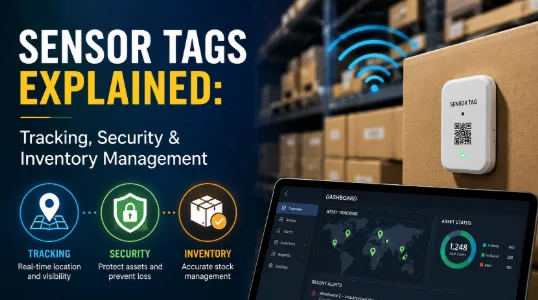
Modern businesses handle more products, equipment, materials, and assets than ever before. Keeping track of everything manually can quickly become difficult, especially when items move between warehouses, production areas, stores, and customer locations. Lost inventory, inaccurate records, and delayed updates can create unnecessary costs.
This is where sensor tags can provide practical value. These small identification and monitoring devices can help businesses collect information about assets and products while they move through different stages of a process. Depending on the technology used, they can support identification, location tracking, condition monitoring, and security.
The real advantage is not simply attaching a tag to an item. The value comes from connecting tagged assets with a reliable tracking process. When implemented correctly, sensor-based identification can give employees better visibility and help managers make faster, more informed decisions.
What Are Sensor Tags and How Do They Work?
Sensor tags are compact devices or labels designed to identify, monitor, or transmit information about an object. Their capabilities depend on the technology incorporated into the tag.
Some tags primarily provide identification. Others can collect information such as temperature, humidity, movement, shock, or location. Communication may occur through technologies such as RFID, Bluetooth Low Energy, GPS, NFC, or other wireless systems.
For example, an RFID-based tag can contain a unique identifier that a compatible reader detects without requiring employees to scan a traditional barcode manually. A temperature-monitoring tag, meanwhile, can record whether sensitive goods have remained within an acceptable temperature range.
A typical tracking system includes three components:
- The tag attached to an asset or product.
- A reader or receiver that collects information.
- Software that stores, analyzes, and displays the data.
This combination turns physical objects into trackable assets within a digital workflow.
How Sensor Tags Improve Tracking and Inventory Management
The biggest benefit is improved visibility. Businesses can determine where products or equipment are, whether they have moved, and sometimes whether their condition has changed.
Consider a warehouse containing thousands of components. Employees may spend considerable time locating a specific item. With an appropriate tagging system, workers can identify inventory more efficiently and reduce unnecessary searching.
Faster Inventory Counts
Traditional inventory counting often requires employees to inspect products individually. This consumes labor and can introduce human errors.
Automated identification can speed up the process by allowing multiple tagged items to be detected in a short period. Employees can then compare physical inventory with digital records and investigate discrepancies.
Better Asset Tracking
Companies can also use tags for equipment rather than products. Tools, machinery, computers, containers, and maintenance equipment can all become easier to monitor.
For example, a construction company could tag specialized equipment. When equipment moves between job sites, employees can update its status and reduce the likelihood of misplaced assets.
Improved Supply Chain Visibility
Inventory rarely stays in one location. Products may move from manufacturers to distribution centers and eventually to retailers or customers.
Tracking technologies can provide better visibility throughout these transitions. Businesses can identify delays, confirm movement, and investigate unusual gaps in their records.
A Practical Strategy for Implementing Sensor-Based Tracking
Simply purchasing tags does not guarantee better inventory management. A successful implementation starts with the business process.
Step 1: Identify the Tracking Problem
Start by determining what needs improvement.
Is inventory frequently misplaced? Are stock counts inaccurate? Do valuable assets disappear between departments? Are temperature-sensitive products being exposed to unsuitable conditions?
Defining the problem helps determine which type of tagging technology makes sense.
Step 2: Select the Appropriate Technology
Different environments require different solutions.
RFID can work well for warehouse identification and inventory management. Bluetooth-based tags may be useful for locating assets within facilities. GPS-enabled solutions can make more sense for vehicles or equipment that travels over large geographic areas.
The physical environment also matters. Metal surfaces, liquids, walls, interference, and distance can affect wireless performance.
Step 3: Establish Unique Asset Identification
Every tracked item should have a reliable identifier. Avoid creating confusing naming systems that employees cannot interpret consistently.
For example, a warehouse might assign each reusable container a unique identification number. That identifier can then connect the physical container to information in the inventory system.
Step 4: Connect Tracking Data to Business Software
The greatest value comes when collected information reaches the systems employees already use.
A warehouse management system, enterprise resource planning platform, or custom application can use tag data to update inventory records and trigger alerts.
For instance, the system could notify a manager when high-value equipment leaves a designated area.
Step 5: Test Before Expanding
Start with a limited deployment. Test the tags in the actual environment rather than relying only on specifications.
Measure detection accuracy, battery performance, reading distance, data reliability, and employee usability. Address problems before deploying the system across the entire operation.
Common Mistakes and Challenges
One common mistake is selecting technology based solely on price. The cheapest tag may not perform reliably in the intended environment.
Another problem is poor tag placement. A tag that works perfectly on cardboard may perform differently when attached to metal equipment or containers holding liquids.
Businesses can also overlook maintenance. Battery-powered tags require monitoring and eventual replacement. Software integrations need updates, and employees need clear procedures for damaged or missing tags.
Data overload is another concern. Collecting large amounts of information does not automatically create useful insights. Businesses should define which events actually matter and configure systems around those requirements.
Privacy and security should also be considered. If tracking systems monitor people, vehicles, or sensitive assets, organizations should establish appropriate access controls and data-retention policies.
Practical Tips From an Implementation Perspective
Before deploying a large tagging system, document the complete workflow from the moment an item receives a tag until it leaves the organization.
Create clear answers to questions such as:
- Who assigns the tag?
- How is the identifier recorded?
- What happens if the tag is damaged?
- Who receives alerts?
- How are inventory discrepancies investigated?
- When should batteries or tags be replaced?
It is also useful to measure performance before implementation. Record the average time required for inventory counts, the number of missing assets, and the frequency of stock discrepancies. After deployment, compare those figures with the new results.
For example, if employees previously spent four hours counting a particular inventory area, measure how long the process takes after tagging. This provides a practical way to determine whether the system is actually improving operations.
Finally, train employees around the workflow rather than focusing only on the technology. A sophisticated tracking system can still fail if workers do not know when tags should be scanned, replaced, registered, or investigated.
Conclusion
Sensor-based tagging can transform physical inventory and equipment into information that businesses can monitor more efficiently. From faster inventory counts to improved asset security and supply chain visibility, the technology can address several common operational challenges.
However, successful implementation depends on choosing the right technology, understanding the environment, integrating data with existing systems, and establishing clear processes. Businesses should begin with a specific tracking problem, test their solution in real conditions, and measure results.
When technology and workflow are designed together, sensor tags become more than identification labels. They become a practical tool for improving accuracy, accountability, security, and day-to-day inventory management.