Should You Buy LinkedIn Connections? An Honest Look at What Actually Works
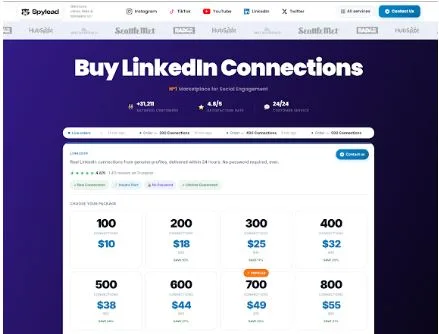
If you have spent any time trying to grow on LinkedIn, you have probably seen the ads. “Buy 500 real connections.” “Hit 500+ in 48 hours.” “100% safe, no password needed.” The pitch is tempting, especially when you are staring at a profile that feels stuck in single digits while everyone else seems to be a well connected insider.
So let us talk about it honestly, the way a friend who has spent years on the platform would. Does buying LinkedIn connections work? What really happens when you do it? And if the goal is a network that opens doors, what is the smarter way to get there?
What “buying connections” actually means
When a service sells you connections, one of two things is happening behind the scenes. Either the provider uses bot accounts and dormant profiles to fire connection requests at you, or it runs a kind of pay-to-engage network where real users are paid or rewarded to send you invites. The first kind is obvious junk. The second sounds better on paper, but the people connecting with you have zero interest in who you are or what you do. They are completing a task, not joining your network.
Both versions deliver the same thing in the end: a bigger number next to your name, and almost nothing underneath it.
The part the sales page leaves out
Here is the detail those slick checkout pages tend to skip. Buying connections goes against LinkedIn’s User Agreement and its Professional Community Policies. The platform explicitly asks members not to deceive others or artificially inflate their network, and it treats bought engagement as exactly that.
That matters because LinkedIn is good at spotting it. A sudden spike in connections, a wave of invites from unrelated accounts, or activity that does not match your normal pattern can trigger anything from a temporary restriction on sending invites, to reduced visibility on your posts, to a full account suspension in repeat cases. Plenty of people have shared stories of waking up to a restricted account after chasing a quick growth hack. Recovering a profile you spent years building is a miserable way to learn the lesson.
And the claim you see everywhere, “0% ban rate, totally safe,” is marketing, not a guarantee. No outside service controls how LinkedIn enforces its own rules.
Why the social proof math does not add up
The whole appeal of buying connections is social proof. A profile with 500+ looks established, so people trust it more. That instinct is real. The problem is what happens after the first glance.
Say you buy your way to 2,000 connections, then post something. LinkedIn shows that post to a slice of your network first and watches what happens. If those connections are bots or disengaged strangers, nobody likes, comments, or shares. The algorithm reads that silence as “this content is not interesting” and quietly stops showing it to anyone else. You end up with a big audience and worse reach than you had at 200 engaged connections.
Worse, the gap becomes visible to humans too. When someone sees a profile with thousands of connections but three likes per post, it does not read as impressive. It reads as fake. Once a prospect or recruiter senses that, they start doubting everything else on the page, including the parts that are genuinely true.
What actually builds a network worth having
The good news is that the real path is slower but far more durable, and it does not put your account at risk. A few things make most of the difference.
Start with the profile itself. Before you chase a single new connection, make the page worth landing on. A clear photo, a headline that says what you do and who you help rather than just your job title, and a summary written like a human are the basics. New visitors decide in seconds whether you are worth engaging, and no amount of connections fixes a profile that looks abandoned.
Then send invitations the right way, within the platform’s limits. LinkedIn currently caps most accounts at roughly 100 to 200 connection requests per week, and the ceiling resets on a rolling seven day basis. That used to be much higher, but the platform tightened it to fight spam. Treat that limit as a feature, not an obstacle. It forces you to be selective, which is exactly what produces a useful network.
The trick is personalization. A request that references a shared interest, a recent post of theirs, or a real reason for connecting gets accepted far more often than a blank invite. Twenty thoughtful requests a week beat two hundred random ones, every time.
Post consistently, even if it feels uncomfortable at first. You do not need to go viral. One genuine post a week about what you are learning or working on gives people a reason to engage, and engagement is what tells the algorithm to widen your reach. This is also where your network compounds. Every comment from a real connection puts you in front of their network too.
Finally, give before you ask. Spend ten minutes a day leaving real comments on other people’s posts. Not “Great post,” but something that adds a thought. This is the quiet engine of LinkedIn growth, because the people you engage with start noticing you, and many of them connect back on their own.
A realistic picture of the timeline
If you do the above, you will not hit 500 connections overnight. You might add 30 to 60 genuinely relevant people a month while your posts slowly gain traction. Within a few months you cross the 500+ threshold the honest way, and the difference is night and day. Those connections actually open their feed to your content, reply to your messages, and occasionally send an opportunity your way.
It is worth remembering that LinkedIn allows up to 30,000 first degree connections, and once you reach that cap people can still follow you with no limit. There is no shortage of room to grow. The constraint was never how many people you could add. It was always whether those people had any reason to care.
A quick note on the Social Selling Index
You will see services promise to boost your Social Selling Index, LinkedIn’s score that rates how well you use the platform across four areas, including building relationships. The honest version: your SSI does respond to network quality and engagement, but it rewards real activity. Bought connections that never interact do little for it over time, while consistent posting and genuine outreach move it steadily. Chase the behavior, and the score follows.
The bottom line
Buying LinkedIn connections is the kind of shortcut that looks like a head start and usually turns into a step backward. It risks your account, it rarely fools the people you are trying to impress, and it leaves you with a number that does no real work for you.
The slower route is not glamorous, but it builds something that lasts: a profile that looks credible because it is, an audience that actually shows up, and a reputation you do not have to nervously protect. On a platform built entirely on trust, that is the only kind of growth worth having.