Signs It’s Time to Upgrade Your Electrical Panel
The electrical panel is the central hub of every home’s power distribution system, and yet it is one of the most overlooked components in residential maintenance. Tucked away in a utility room, basement, or garage, the panel quietly manages the flow of electricity to every circuit in the house, protecting wiring and appliances from overload conditions while delivering the power that modern households depend on around the clock. Most homeowners never think about their electrical panel until something goes wrong: a breaker trips repeatedly, outlets stop working, or the lights flicker unexpectedly. By that point, the panel has often been struggling to meet demand for some time, and the warning signs were there long before the problem became obvious. Understanding how electrical panels work, recognizing the signs that an upgrade is needed, and knowing what to expect from the replacement process are all valuable pieces of knowledge for homeowners in Lawrence, KS.
The electrical demands of American households have increased substantially over the past several decades. Homes that were built in the 1960s, 1970s, and even the 1980s were designed around electrical loads that bear little resemblance to what today’s households require. Central air conditioning, electric vehicle chargers, home offices with multiple computers and monitors, large-screen televisions, smart home devices, and high-efficiency kitchen appliances collectively draw far more power than the original panels in many older Lawrence homes were designed to handle. A panel rated for 60 or 100 amps was adequate for the household of its era; today, that same panel may be operating well beyond its comfortable capacity, creating conditions that range from inconvenient to genuinely hazardous. The gap between what older panels were designed for and what current households actually demand is one of the primary drivers of the panel upgrade conversation.
Safety is the most critical dimension of the electrical panel upgrade discussion, and it is the one that deserves the most careful attention from Lawrence homeowners. Electrical panels that are overloaded, deteriorated, or contain known defective equipment create fire and shock hazards that can affect any home, regardless of age or apparent condition. Some specific panel brands and designs that were commonly installed in earlier decades have since been identified as having design defects that increase fire risk. Deteriorated insulation, corroded connections, and breakers that no longer trip reliably under overload conditions are all hazards that may exist in older panels without any obvious outward signs. This article covers the full range of warning signs that indicate an electrical panel upgrade is needed, what the upgrade process involves, and why working with a licensed Electrician Lawrence KS is essential for this critical home improvement project.
Warning Signs Your Lawrence, KS Home’s Electrical Panel Needs Upgrading
Electrical panels communicate their limitations and failures through a variety of symptoms that homeowners often experience but do not always connect to the panel itself. Recognizing these warning signs for what they actually indicate, rather than treating them as isolated annoyances, is the first step toward addressing the underlying issue before it becomes a serious safety problem. Many of the symptoms discussed below are individually dismissible as minor inconveniences; in combination, they paint a clear picture of a panel that is no longer adequate for the home’s needs.
Frequently Tripping Breakers and What They Actually Mean
A circuit breaker that trips occasionally is doing exactly what it was designed to do: interrupting current flow when the circuit is drawing more amperage than the breaker’s rating allows. This is normal protective behavior, and an occasional trip is not itself a cause for concern. The problem arises when breakers trip frequently, when the same breaker trips repeatedly under normal use conditions, or when multiple breakers in the panel begin tripping with increasing regularity. These patterns indicate that the panel is regularly experiencing demand conditions that exceed its protective thresholds, which is a clear signal that the system’s capacity is insufficient for the household’s actual load.
Frequent breaker trips have several possible explanations that a licensed electrician can evaluate. The most straightforward cause is a circuit that is genuinely overloaded: too many high-draw devices are connected to a single circuit, and the combined demand regularly exceeds the breaker’s rating. In this case, the solution may involve adding new dedicated circuits for specific high-draw appliances rather than a full panel replacement, though a panel that is already at capacity may not have room for additional circuits without an upgrade. A second cause is a failing breaker that trips at a lower amperage than its rating due to mechanical wear or internal defects. Breakers are mechanical devices with a finite service life, and they can fail in ways that cause nuisance tripping well below their rated threshold.
The third and most significant cause of repeated tripping is a panel that is simply undersized for the home’s total electrical demand. When the aggregate load of the home’s circuits consistently approaches or exceeds the panel’s main breaker rating, individual branch circuit breakers experience greater thermal stress and trip more readily. This condition puts the entire panel under chronic stress and accelerates the deterioration of every component inside it. Homeowners in Lawrence who find themselves regularly resetting breakers, redistributing appliance loads between circuits, or avoiding using multiple appliances simultaneously because of tripping concerns should have their panel evaluated by a licensed electrician. These inconvenience-driven coping behaviors are a clear indicator that the panel has been outpaced by the home’s electrical demands.
Flickering Lights and Voltage Fluctuations Throughout the Home
Lights that flicker, dim unexpectedly, or fluctuate in brightness are a source of frustration that many homeowners attribute to bulb quality or fixture problems. While these are sometimes the cause, persistent or widespread flickering throughout the home often points to a more fundamental issue with the electrical panel or service connection. When the panel cannot maintain stable voltage distribution to all circuits simultaneously, the symptoms show up as visible light fluctuations, particularly when large appliances cycle on and draw current. Understanding what causes these fluctuations and what they indicate about the panel’s condition helps homeowners recognize when the problem warrants professional investigation.
Voltage fluctuations associated with large appliance startup are one of the most common flickering complaints in homes with undersized electrical service. When an air conditioner compressor, refrigerator motor, or well pump starts, it draws a large inrush current for a brief period during startup. If the service and panel cannot deliver this inrush current without a significant voltage drop, lights throughout the home dim noticeably when the appliance starts. This momentary dimming is not dangerous in itself, but it indicates that the electrical service is operating near its capacity and that the home’s electrical infrastructure is not sized appropriately for the actual load. In Lawrence, KS homes where central air conditioning is a significant summer load, this pattern of flickering when the AC starts is a particularly common complaint in homes with older, smaller service panels.
Flickering that is not correlated with appliance startup is a more serious symptom that can indicate loose connections within the panel, corroded bus bars, or deteriorated main service connections. When connections within the panel have high resistance due to corrosion or mechanical looseness, current flowing through those connections generates heat and causes voltage drops that manifest as flickering throughout the home. This type of flickering is not load-dependent; it may occur when the home is relatively lightly loaded and can happen at any time. Loose or corroded connections within the panel are a genuine fire hazard because they create sustained arcing and heat generation at the connection point. A licensed electrician who inspects the panel can identify these conditions and determine whether connection repair or a full panel replacement is the appropriate response.
A Panel That Feels Warm or Shows Signs of Burning
An electrical panel that is warm to the touch on its exterior surface is exhibiting a symptom that warrants immediate professional attention. While panels do generate some heat during normal operation, particularly when heavily loaded, excessive external warmth indicates that something inside is generating heat beyond normal operating parameters. The most common sources of abnormal heat generation within a panel are loose or corroded connections at circuit breakers or bus bars, breakers that are loaded at or near their rated capacity for extended periods, and deteriorated wiring insulation that allows current to flow through paths with higher resistance than designed.
Any burning smell near the electrical panel is an urgent warning sign that should prompt an immediate call to a licensed electrician. Burning odors from an electrical panel indicate that materials inside are being heated to the point of thermal degradation: insulation is melting, connections are arcing, or components are failing in ways that generate heat sufficient to cause combustion of surrounding materials. This is not a situation to monitor and see if it resolves; it is an active safety hazard that requires same-day professional evaluation. If the burning smell is accompanied by visible discoloration around the panel, scorch marks on the panel door, or any visible smoke, the main breaker should be turned off and the utility company should be contacted before a licensed electrician arrives.
Discoloration of the panel interior, visible when the door is opened, provides additional visual evidence of past or ongoing overheating events. Bus bars that show discoloration, breaker terminals that show heat staining, and wiring insulation that appears melted or brittle near connection points all indicate that the panel has experienced thermal events that compromise its structural and electrical integrity. Even if these signs of past overheating are discovered during a routine inspection and there is no active burning smell or warmth, they indicate that the panel should be replaced rather than repaired. A panel that has sustained heat damage to its internal components cannot be reliably restored to safe operating condition through repair alone; replacement is the appropriate and safe response.
Outdated Panel Brands with Known Safety Defects
Not all electrical panels are created equal, and some panel brands and models that were commonly installed in homes during the mid-twentieth century have since been identified as having design defects that create elevated fire risk. The most widely documented examples include Federal Pacific Electric panels with Stab-Lok breakers and Zinsco panels, both of which were installed in large numbers of American homes and both of which have been the subject of extensive investigation regarding their tendency to fail to trip under overload conditions. When a breaker fails to trip under overload, the circuit it is supposed to protect can carry current well above its rated capacity, heating the wiring and potentially igniting surrounding combustible materials.
Federal Pacific Electric Stab-Lok panels are found in many older homes in Lawrence and throughout Kansas, because FPE was one of the most prolific panel manufacturers during the period when much of the existing housing stock was built. The Stab-Lok breaker design has been investigated and found to have a failure rate for tripping under overload conditions that is significantly higher than acceptable safety standards allow. A breaker that does not trip reliably is worse than no breaker from a safety perspective, because it creates the illusion of protection while allowing dangerous current levels to persist in the wiring. Homeowners who are unsure whether their home has an FPE Stab-Lok panel should have a licensed electrician identify the panel brand and evaluate its condition.
Zinsco panels present similar concerns; their breaker design has been documented to fail to trip and in some cases to fuse to the bus bar in a way that makes them impossible to manually operate. A Zinsco breaker that has fused to the bus cannot be turned off by hand, which means there is no way to disconnect a circuit in an emergency without cutting power to the entire home at the main disconnect. Beyond this operational problem, Zinsco panels have been associated with bus bar overheating and fire incidents. If a Lawrence home contains either an FPE Stab-Lok or a Zinsco panel, replacement is not a discretionary upgrade; it is a safety necessity that should be addressed as promptly as possible. A licensed electrician can confirm the panel brand, explain the associated risks, and provide a complete replacement that meets current code requirements.
Signs Your Home’s Electrical Capacity Is Simply Too Small
Beyond specific safety defects, many Lawrence homes simply have panels and service sizes that are inadequate for modern household electrical demand. A 60-amp service, which was standard in homes built before the 1950s, is woefully undersized for any modern household and may not even support a central air conditioning system. A 100-amp service, which was the standard through much of the 1960s and 1970s, is marginally adequate for a modest home with gas heating and cooking but falls short of what a home with electric appliances, central air conditioning, and contemporary electronics requires. The current standard for new construction is 200-amp service, and many homes with significant electrical loads benefit from 400-amp service.
The practical symptoms of insufficient service capacity include the inability to run multiple major appliances simultaneously, chronic breaker trips when the home is normally occupied and using typical appliances, lights that dim dramatically when the air conditioner starts, and the inability to add new circuits for additional outlets, dedicated appliance circuits, or an EV charger without overloading the existing panel. These limitations affect quality of life directly and become increasingly frustrating as households add more electrical devices and appliances. When a homeowner finds that they must choose between running the dishwasher and the washing machine simultaneously, or that they cannot use the microwave while the coffee maker is on, the root cause is almost always an undersized service and panel.
An evaluation by a licensed electrician will include an assessment of the home’s current electrical load relative to the panel’s rated capacity. This assessment, sometimes called a load calculation, adds up the amperage demand of all the circuits in the home and compares the total to the panel’s main breaker rating. If the calculated load approaches or exceeds the panel’s capacity, or if there is no room to add circuits for anticipated future needs like an EV charger, a home office expansion, or a kitchen renovation, a panel upgrade is clearly indicated. The upgrade not only resolves the current capacity limitations but also positions the home to accommodate future electrical needs without requiring another upgrade in the near term.
The Electrical Panel Upgrade Process in Lawrence, KS
Understanding what an electrical panel upgrade actually involves helps Lawrence homeowners approach the project with realistic expectations about the process, the timeline, and the decisions that will need to be made along the way. A panel upgrade is not a simple swap of one box for another; it is a comprehensive project that involves careful planning, coordination with the utility company, permit applications, and inspection by local building officials. A licensed electrician handles all of these elements as part of the service, but knowing what to expect helps homeowners communicate effectively and make informed decisions throughout the project.
The Initial Electrical Panel Evaluation and Load Assessment
The first step in a panel upgrade project is a thorough evaluation of the existing panel and the home’s current and anticipated electrical load. A licensed electrician opens the panel and inspects its condition: the condition of the bus bars, the terminals, the wiring connections, the breaker mechanisms, and the interior of the enclosure. This inspection identifies any immediate safety concerns, documents the panel’s brand and model for purposes of identifying known defect issues, and assesses whether the panel has remaining serviceable life or requires replacement entirely. In most cases where a homeowner is pursuing an upgrade, the existing panel is either at capacity, showing signs of deterioration, or both.
The load assessment involves reviewing every circuit in the panel: its rating, the load it serves, and the demand that load places on the circuit under typical operating conditions. The electrician will ask about the home’s major appliances, heating and cooling equipment, any planned additions like an EV charger or hot tub, and any history of electrical problems the homeowner has experienced. This conversation helps establish not just the current load but the future capacity needs that the upgraded panel should be designed to accommodate. Investing in a 200-amp upgrade when the household’s foreseeable needs will eventually require 400-amp service is a cost that some homeowners end up paying twice; proper planning during the initial assessment avoids this outcome.
The evaluation also includes an assessment of the service entrance: the weatherhead, service conduit, meter base, and service conductors that connect the utility’s power to the panel. If the service entrance equipment is undersized for the upgraded panel’s capacity or has deteriorated to the point of needing replacement, that work must be included in the project scope. A 200-amp upgrade requires 200-amp-rated service conductors and meter base equipment; if the existing service entrance is rated for 100 amps, it must be upgraded simultaneously. The licensed electrician identifies all of the work that must be included to result in a complete, code-compliant installation and provides the homeowner with a full project scope before any work begins.
Selecting the Right Panel Size and Configuration for Your Lawrence Home
Choosing the right replacement panel involves balancing current needs, anticipated future needs, available panel space, and budget. The most common upgrade in Lawrence homes is from 100-amp to 200-amp service, which provides approximately double the current capacity and supports the addition of multiple new circuits for modern household demands. For larger homes, homes with electric heating and cooling, homes with multiple major appliances, or homes where an EV charger installation is planned, a 200-amp service may be the minimum rather than the ideal. A licensed electrician’s load calculation provides the specific data needed to determine what service size is appropriate.
The number of circuit spaces in the replacement panel is another important consideration. Modern households benefit from a panel with ample circuit spaces to accommodate dedicated circuits for kitchen appliances, bathroom circuits, bedroom circuits with AFCI protection, outdoor circuits, and any special-purpose circuits for office equipment, workshops, or recreational equipment. A panel that is installed with all of its spaces filled immediately leaves no room for future circuit additions without requiring a subpanel or another upgrade. Most licensed electricians recommend selecting a panel with significantly more spaces than the current circuit count, providing headroom for future expansion without additional panel costs.
Surge protection is increasingly incorporated into panel upgrades as a standard component rather than an afterthought. Whole-home surge protection devices, installed at the panel, protect all of the home’s circuits and connected devices from voltage spikes caused by lightning, utility switching events, and large motor startups within the home. Consumer electronics, smart home devices, and computerized appliance controls are all sensitive to voltage spikes and can be damaged or destroyed by surges that pass through unprotected circuits. Adding a whole-home surge protector during a panel upgrade is a cost-effective enhancement that provides ongoing protection for the entire home’s electrical load. A licensed electrician can recommend the appropriate surge protection device for the upgraded panel and install it as part of the project.
The Panel Replacement Installation Process Step by Step
The actual panel replacement process begins with coordination with the utility company to schedule a service disconnection. The utility must disconnect power from the service conductors before work on the service entrance and main panel can safely begin. This coordination may involve a waiting period depending on utility scheduling, and the electrician handles this communication as part of the project management. On the day of installation, the power will be off to the home for the duration of the work, which typically takes between four and eight hours for a standard panel replacement depending on the complexity of the installation and the condition of the existing wiring.
With the utility service disconnected, the licensed electrician removes the old panel and service entrance equipment. The existing branch circuit wiring is carefully labeled and organized to ensure it is correctly reconnected in the new panel. Each circuit is mapped to its appropriate breaker position in the new panel, with dedicated circuits for specific high-draw appliances receiving their own breakers and general-purpose circuits distributed appropriately across the two legs of the panel to maintain balanced loading. Arc fault circuit interrupter breakers are installed in all locations required by the applicable edition of the National Electrical Code, which in modern installations includes bedrooms, living areas, hallways, and most other living spaces.
After the new panel is installed and all branch circuits are connected, the service entrance equipment is updated to match the new panel’s capacity. The meter base, service conductors, and weatherhead are replaced as needed, and all connections are made to the applicable code standards for service entrance work. The utility is then contacted to restore service, and once power is restored, the electrician performs a systematic check of every circuit in the new panel: testing voltage at outlets throughout the home, verifying that each breaker is correctly labeled with the circuit it protects, testing AFCI and GFCI protection devices for proper operation, and confirming that the main breaker and panel are operating normally. This commissioning process ensures that everything is in order before the electrician leaves the property.
Permit Requirements and Inspection for Panel Upgrades in Lawrence
Electrical panel upgrades in Lawrence, KS require a building permit, and the permit process triggers an inspection by the city’s building and codes department that verifies the installation meets applicable code requirements. The permit application is typically handled by the licensed electrical contractor as part of the service, and the permit fee is included in the project cost. Homeowners should confirm with their contractor that a permit will be pulled for the project; any contractor who suggests completing a panel upgrade without a permit is not providing proper professional service, and the homeowner should decline and find a contractor who operates within the established legal framework.
The inspection takes place after the installation is complete, typically within a few business days of the permit application notification. The inspector reviews the panel installation against the specific code requirements applicable in Lawrence: breaker labeling, AFCI protection coverage, grounding and bonding, service entrance installation, and the physical installation of the panel enclosure. If the inspector identifies any deficiencies, they will note them on an inspection report and the electrician must correct them before the installation can be approved. A licensed electrician who is current with local code requirements and installs to those standards consistently generally passes inspections without issue.
The inspection approval creates a permanent record with the city that the panel upgrade was performed and inspected. This record is associated with the property address and can be accessed during future transactions, insurance assessments, or any investigation related to the property’s electrical systems. Having this documentation is valuable for property sales, where buyers and their inspectors frequently ask about permit history for major projects. Sellers who can document that their panel was upgraded with a permit and passed inspection are in a stronger position than those who cannot account for when or by whom electrical work was performed. The investment in proper permitted work pays dividends throughout the life of the property.
Post-Upgrade Opportunities: Adding Circuits and Upgrading Protections
A panel upgrade creates an opportunity to address other electrical needs that may have been deferred because the old panel lacked capacity. With a new 200-amp panel providing ample circuit spaces, homeowners in Lawrence can add the dedicated circuits, improved protection devices, and new installations that were previously impractical. This is an ideal time to install GFCI protection in any locations that currently lack it, to add dedicated circuits for kitchen appliances that have been sharing circuits, to run a circuit for a home office, or to install the circuit needed for an EV charger that has been on the wish list.
EV charger installation is one of the most frequently requested additions following a panel upgrade, and it is a natural pairing with the upgrade project because the charger’s circuit can be run at the same time the new panel is installed, reducing the overall labor cost compared to scheduling the charger installation as a separate project. A Level 2 charging station requires a dedicated 240-volt circuit with appropriate amperage rating for the charger being installed, and the new 200-amp panel provides the capacity to support this addition without compromising the home’s other electrical loads. A licensed electrician who handles both the panel upgrade and the EV charger installation ensures both elements are properly coordinated and code-compliant.
Whole-home surge protection, mentioned earlier in the context of panel selection, is easiest and least expensive to install at the time of the panel upgrade. After the upgrade is complete, adding surge protection is also possible, but it requires opening the panel again to install the device. If surge protection is a priority, confirming with the electrician before the upgrade that it will be included as part of the installation ensures it is available from the first day the new panel is in service. Similarly, if the home lacks smoke detectors or carbon monoxide detectors in required locations, the electrician can identify the appropriate locations and install hardwired detectors during the same project, taking advantage of the access and preparation that the panel upgrade project creates.
Panel-Related Electrical Issues That Signal the Need for an Immediate Upgrade
Some electrical panel conditions represent immediate safety hazards that cannot be deferred through planning and scheduling in the way that a capacity upgrade can. Recognizing the signs of an actively dangerous panel condition and responding appropriately, including knowing when to contact an electrician for same-day service, is important for every Lawrence homeowner. The following conditions warrant urgent professional evaluation rather than monitoring or deferral.
Active Electrical Hazards in the Panel That Cannot Wait
An electrical panel that produces a burning smell, shows visible scorch marks, or generates unusual sounds including buzzing, crackling, or popping represents an active safety emergency. These symptoms indicate that something inside the panel is arcing, overheating, or failing in a way that creates immediate fire risk. The appropriate response is to turn off the main breaker if it is safe to do so, avoid the area around the panel, and contact a licensed electrician for emergency service. Using the home’s electrical system while these symptoms are present is not safe; the panel is telling you it needs attention now, not at a scheduled appointment later in the week.
Sparking from outlets, switches, or the panel itself is another sign of active electrical fault conditions that require immediate professional evaluation. A brief spark when plugging in an appliance is sometimes normal and generally harmless; a spark that is large, sustained, or accompanied by a burning smell is not normal and indicates a fault condition in the circuit or panel. If the sparking is associated with a specific circuit, turning off the breaker for that circuit and leaving it off until an electrician can evaluate it is a prudent safety step. If the sparking appears to be coming from the panel itself, treating it as the emergency it is and contacting an electrician without delay is the right response.
Water intrusion into the electrical panel is an urgent condition that homeowners in Lawrence, KS may encounter after heavy rains, flooding events, or roof leaks that allow water to reach the panel location. Water and electricity create serious shock and short-circuit hazards; a panel that has been exposed to water should be de-energized by the utility company before anyone attempts to open or work on it. A licensed electrician should evaluate the panel after water exposure before it is returned to service, regardless of whether visible damage is apparent. Water can cause corrosion and insulation damage that is not immediately obvious but creates hazards that develop over time. In some cases, a panel that has been significantly water-damaged must be replaced rather than dried out and returned to service.
When Your Home Cannot Support Modern Electrical Additions
The inability to add new circuits or connect new electrical equipment is one of the most common practical triggers for a panel upgrade in Lawrence homes. When a homeowner wants to install an EV charger, add a hot tub or pool, create a dedicated home office circuit, or upgrade the kitchen with additional dedicated appliance circuits, a panel that is already at capacity cannot accommodate these additions without an upgrade. A licensed electrician can quickly assess whether the existing panel has the capacity and available circuit spaces for a specific addition or whether a panel upgrade is a prerequisite.
Similarly, when homeowners undertake kitchen or bathroom renovations, the updated electrical requirements for those spaces under current code often exceed what older panels can support. Modern kitchen code requirements include multiple dedicated 20-amp small appliance circuits, a dedicated circuit for the dishwasher, dedicated circuits for the refrigerator and microwave, and GFCI protection throughout. A kitchen renovation that brings the electrical to current code may require more circuit capacity than an older panel can provide. Addressing the panel as part of a renovation project, rather than trying to retrofit new requirements onto an old panel, produces a cleaner result and avoids the complications that arise from trying to add circuits to a panel with no available spaces.
For Lawrence homeowners who are planning to install solar panels, battery storage systems, or other renewable energy equipment, the electrical panel is a critical interface point for all of these systems. Solar inverters, battery systems, and the associated transfer equipment must be connected at the panel, and the panel must have the capacity and configuration to support these connections. Many panel upgrade projects undertaken in anticipation of solar installation are specifically designed to accommodate the solar equipment that will follow. A licensed electrician who understands both panel upgrades and solar interconnection requirements can ensure the upgraded panel is sized and configured to support the planned renewable energy installation from day one.
How Aging Wiring and Panel Components Interact
The electrical panel does not exist in isolation; it is part of a system that includes service entrance conductors, branch circuit wiring, outlets, switches, and fixtures throughout the home. When a panel is upgraded, it interacts with whatever wiring exists in the home, and the condition of that wiring affects the safety and performance of the upgraded panel. Older homes in Lawrence may contain wiring with insulation that has become brittle with age, aluminum branch circuit wiring that requires specific handling and connection methods, or wiring that was extended or modified by previous owners without proper permits. A panel upgrade does not correct these conditions, but it provides an opportunity to identify them and address the most critical ones.
A licensed electrician performing a panel upgrade will typically observe the condition of the wiring visible inside the panel and in accessible locations like the attic and basement. If the wiring shows signs of significant deterioration, improper modifications, or other concerns, the electrician should bring these observations to the homeowner’s attention. While a panel upgrade project may not include a full rewiring of the home, identifying specific circuits or areas of concern allows the homeowner to prioritize follow-up work that addresses the most significant remaining hazards. A comprehensive approach to electrical safety in an older home often involves the panel upgrade as the first step in a multi-phase improvement plan.
Grounding and bonding improvements are frequently performed in conjunction with a panel upgrade. Older panels may have inadequate grounding electrode systems or missing bonding connections that do not meet current code requirements. The upgraded panel provides an opportunity to install a proper grounding electrode system including ground rods and connections to any metallic water and gas piping entering the home, and to verify that all required bonding connections are in place. These improvements, made at the time of the panel upgrade, bring the entire electrical grounding and bonding system into compliance and close a category of safety gaps that older installations may have left unaddressed.
Why You Need a Licensed Electrician for Your Lawrence, KS Panel Upgrade
An electrical panel upgrade is not a project that falls within the scope of DIY home improvement or the capabilities of a general handyman. The work involves direct interaction with service conductors that carry dangerous levels of current, connections to systems that must meet strict safety codes, and installations that require permit and inspection by local building officials. The consequences of errors in panel installation range from nuisance circuit problems to catastrophic safety failures. For Lawrence homeowners, engaging a licensed electrician for this project is not simply a recommendation; it is the only appropriate approach.
The Technical Complexity and Safety Requirements of Panel Work
Working on an electrical panel requires specific knowledge of electrical theory, code requirements, and safe work practices that are developed through formal training and supervised experience. Even with the utility service disconnected and the main breaker off, the service entrance conductors that enter the top of the panel from the utility remain energized and carry lethal voltages and current levels. Only licensed electricians who are trained in the specific procedures for working safely around energized service conductors should perform work on electrical panels. Touching these conductors without proper training, protective equipment, and procedure knowledge can be instantly fatal.
The code requirements governing panel installations are detailed and specific. AFCI breaker placement, GFCI requirements, grounding electrode system design, bonding connections, service entrance specifications, panel enclosure clearances, and circuit labeling all have specific code requirements that must be met. A licensed electrician who is current with the applicable edition of the National Electrical Code in Lawrence, KS knows these requirements and installs to them as a matter of professional practice. An unlicensed person attempting a panel upgrade is unlikely to be aware of all these requirements, and the resulting installation may contain code violations that create safety hazards and legal liabilities for the homeowner.
The inspection process that accompanies a permitted panel upgrade provides independent verification that the installation meets code. This verification is valuable both for the homeowner’s immediate safety and for the long-term documentation of the property’s electrical condition. A licensed electrician who performs quality work has nothing to fear from inspection; in fact, the inspection provides professional validation of the work that serves both the contractor’s reputation and the homeowner’s confidence. Contractors who suggest avoiding the permit process for a panel upgrade are not serving the homeowner’s interests; they are protecting themselves from accountability by avoiding the scrutiny that inspection entails.
Insurance, Property Value, and Liability Considerations
An electrical panel upgrade performed by a licensed electrician with proper permits has positive implications for homeowner’s insurance, property value, and personal liability. Insurance companies assess electrical panel condition and age as part of the risk evaluation for residential properties; a home with a modern, properly installed panel is a lower fire risk than a home with an aging, potentially defective panel. Some insurance companies specifically ask about panel brand when writing or renewing policies, and homes with known-defective panels like FPE Stab-Lok may face higher premiums or coverage limitations. Upgrading to a modern, properly installed panel can reduce insurance costs and eliminate coverage restrictions.
From a property value perspective, an upgraded electrical panel is a documented improvement that supports the home’s market value and facilitates a smoother sale transaction. Buyers’ home inspectors specifically evaluate the electrical panel, and a report that identifies an outdated, undersized, or defective-brand panel will generate concerns from buyers and their lenders. Many mortgage lenders require specific electrical upgrades as a condition of financing if the home inspection identifies safety-related electrical deficiencies. Having the panel upgrade completed before listing the home, with permit documentation available for review, removes this potential obstacle from the transaction and demonstrates responsible homeownership to prospective buyers.
Personal liability exposure from electrical hazards in the home is a consideration that homeowners sometimes overlook. If a guest or contractor is injured due to an electrical hazard that the homeowner knew about or should have known about, the homeowner may bear liability for the resulting harm. A homeowner who is aware that their panel contains a known-defective breaker brand and does not address it has documented knowledge of the defect, which complicates any liability defense. Maintaining the home’s electrical system in safe condition, including upgrading panels that have documented safety issues, is both ethically appropriate and legally prudent.
Choosing the Right Licensed Electrician for Your Panel Upgrade
Not all licensed electricians have equal experience with panel upgrade projects, and homeowners in Lawrence should take the time to evaluate potential contractors before committing to a project as significant as an electrical service upgrade. Relevant questions include: How many panel upgrades has the contractor performed? Are they familiar with the specific panel brands that are common in Lawrence-area homes? Do they handle the utility coordination as part of their service? Do they pull the permit and attend the inspection? Do they provide a written scope of work and estimate before beginning? These questions help distinguish contractors who are experienced and professional from those who may be technically licensed but lack the specific experience to execute a panel upgrade smoothly.
References from previous panel upgrade customers are valuable for evaluating a contractor’s quality of work and professionalism. A contractor who has completed many panel upgrades in the Lawrence area will have customers who can speak to their experience with the specific process: how the job was scoped and communicated, how the installation day unfolded, how the permit and inspection process was handled, and how any issues that arose were resolved. Positive references from multiple recent customers on a project type as specific as a panel upgrade are a strong indicator of contractor competence and reliability.
Why DC Electrical HVAC Plumbing Is Lawrence, KS’s Trusted Choice for Electrical Panel Upgrades
Homeowners in Lawrence, KS who recognize the signs that their electrical panel needs upgrading deserve a licensed contractor who will evaluate their situation honestly, explain their options clearly, and perform the installation with the quality and professionalism the project demands. DC Electrical HVAC Plumbing, Inc. is that contractor: a locally based, licensed and insured electrical, HVAC, and plumbing company dedicated to serving Lawrence and the surrounding communities with reliable, professional service built on honesty and quality workmanship.
A Locally Based Lawrence Electrical Contractor You Can Trust
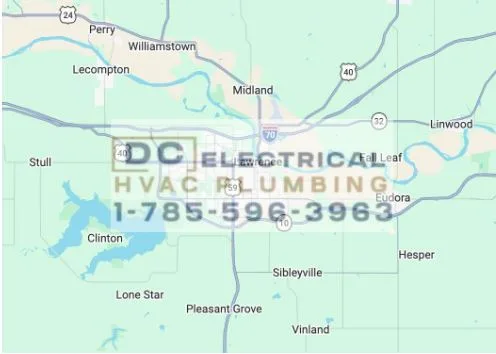
DC Electrical HVAC Plumbing is based in Lawrence, KS, and our work is focused on the communities we serve: Lawrence, Lecompton, Basehor, Tonganoxie, Eudora, De Soto, Baldwin City, Gardner, Shawnee, Topeka, Perry, and surrounding areas. We are not a large regional company dispatching crews from a distant location; we are local professionals who live and work in this community and who are committed to the long-term wellbeing of the homes and households we serve. Our reputation in Lawrence depends on the quality and honesty of every job we complete, and that accountability drives our approach to every customer interaction.
Our electrical services include the full range of residential electrical work: panel installation and repair, electrical wiring and rewiring, EV charger installation, generator installation, and everything in between. Panel upgrades are a core part of what we do, and we approach them with the thoroughness and attention to detail that a project of this significance deserves. We evaluate the home’s current electrical situation completely before recommending a specific upgrade scope, we handle permit applications and utility coordination as part of our service, and we attend the inspection and address any noted items promptly. Our goal is a complete, code-compliant installation that the homeowner can rely on confidently for years to come.
Our evaluation process is designed to give homeowners accurate information before they commit to any work. When you contact DC Electrical HVAC Plumbing for a panel evaluation, we assess the existing panel, perform a load analysis, review your current and anticipated electrical needs, and provide a clear explanation of what we find and what we recommend. Our professional evaluation fee is waived when work is completed, which means homeowners can access this thorough assessment without financial risk. We believe homeowners deserve honest answers, not pressure to commit to work before they understand what is actually needed.
Comprehensive Residential Services Beyond Electrical Panel Work
DC Electrical HVAC Plumbing offers homeowners in Lawrence and surrounding communities a full range of residential services across electrical, HVAC, and plumbing disciplines. This breadth of capability means that when our team is in your home for an electrical panel upgrade, we can also address any HVAC or plumbing concerns you have been meaning to get evaluated, saving you the time and inconvenience of scheduling separate service calls with different contractors. For homeowners who are planning multiple home improvements, working with a single trusted contractor across all three disciplines simplifies the process considerably.
Our HVAC services include furnace repair and installation, air conditioning repair and installation, heat pump installation, mini split systems, air duct services, and thermostat installation. Our plumbing services cover water heater inspection, installation, and repair; tankless water heaters; water filtration systems; leak detection; drain cleaning; hydro jetting; gas line installation and repair; piping and repiping; sewer line services; sump pump installation and repair; and all standard fixture services. This comprehensive service capability makes DC Electrical HVAC Plumbing a practical choice for Lawrence homeowners who want a contractor they can rely on across the full range of their home’s mechanical systems.
Our commitment to honest, professional service means that every customer receives straightforward communication and quality workmanship regardless of the scope of their project. We do not upsell unnecessary services, and we do not recommend work that the home does not genuinely need. Our goal is to build long-term relationships with homeowners in Lawrence and the surrounding communities by consistently delivering the kind of service that earns trust and referrals. When your home’s electrical panel shows the signs that it is time for an upgrade, DC Electrical HVAC Plumbing is ready to provide the professional, licensed service your home and family deserve.
Contact DC Electrical HVAC Plumbing for Your Lawrence, KS Panel Upgrade
If your Lawrence home is showing any of the warning signs discussed in this article, from frequently tripping breakers and flickering lights to an outdated panel brand or insufficient capacity for your household’s needs, the right next step is a professional evaluation from a licensed Electrician Lawrence KS who can assess your specific situation and provide honest guidance. DC Electrical HVAC Plumbing is ready to help homeowners throughout Lawrence, Lecompton, Basehor, Tonganoxie, Eudora, De Soto, Baldwin City, Gardner, Shawnee, Topeka, Perry, and surrounding northeast Kansas communities with professional electrical panel evaluations and upgrades.
We are licensed, insured, and dedicated to the safety and satisfaction of every customer we serve. Our evaluation fee is waived when work is completed, so there is no financial barrier to getting the professional assessment your home’s electrical system deserves. We pull permits, coordinate with the utility, attend inspections, and stand behind our work with professional accountability. When it comes to your home’s electrical safety, working with a contractor you can trust makes all the difference… and that is exactly what DC Electrical HVAC Plumbing delivers.
Drake Carolan
DC Electrical HVAC Plumbing Inc.
1856 E 600th Road Lecompton, KS 66050
(785) 596-3963
https://justcalldc.com