Silicone Cure Temperature and Service Temperature Are Different
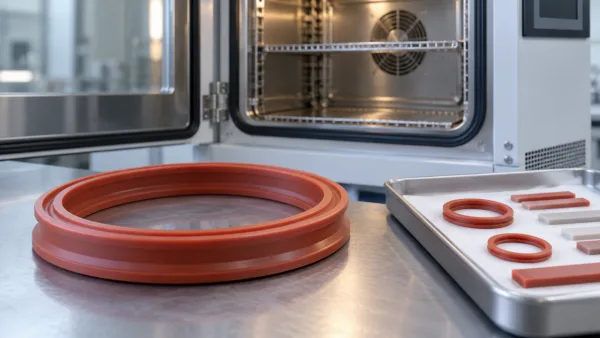
A silicone component can be cured with heat and still need to operate at a different temperature range in service. Separating those two requirements helps prevent material and process specifications from being built around a misleading single number. Product formulation, cure schedule, geometry, exposure time, mechanical load, and environment all influence the final result.
Two temperature questions, two different answers
When a silicone part is specified for a warm or hot environment, teams sometimes use the cure temperature as a proxy for the temperature the finished part can withstand. These values answer different questions. Cure temperature describes a manufacturing condition used to initiate or accelerate crosslinking in a particular formulation. Service temperature describes the environment in which the cured material is expected to perform over time, under stated conditions.
A formulation may cure at room temperature or under heat, depending on chemistry and supplier instructions. Its service behavior then depends on the cured network, exposure duration, mechanical load, atmosphere, geometry, and other factors. A short excursion and continuous operation are not the same duty. Therefore, a temperature limit on a datasheet should be read alongside its test method, duration, and property-retention criteria.
Start with the exact silicone product
Silicone is a broad family of elastomers and compounds, not one material with one universal cure schedule. Liquid silicone rubber, addition-cure systems, condensation-cure products, and specialty formulations can have different mixing, catalyst, inhibition, and post-cure requirements. Even products marketed for similar uses may differ in hardness, tear strength, compression set, electrical behavior, adhesion, or regulatory status.
Use the current technical data sheet for the exact product code and supplier. Record the recommended mix ratio, pot life, mold temperature, cure time, post-cure requirements, and any limits on section thickness or mold geometry. If a two-component material is involved, verify weighing or metering accuracy and mixing quality. A generic online chart can orient a discussion, but it should not override a formulation-specific datasheet or written supplier guidance.
Understand how cure time and temperature interact
Heat can accelerate reaction kinetics, which often shortens the time required to reach a defined cure state. That does not mean “hotter is always better.” Excess heat may create a short working window, trap volatile byproducts, produce uneven cure in thick or insulated regions, or stress the mold and insert. The actual response depends on formulation chemistry and the way heat reaches the part.
For a production process, distinguish the mold set point from the material temperature at the critical location. Consider tool warm-up, temperature uniformity, cycle consistency, material storage, and the delay between mixing and molding. Where post-cure is recommended, define the time after the part reaches the target temperature rather than relying only on oven air temperature. These details improve repeatability and help explain differences between nominal settings and actual part behavior.
Treat service temperature as a system requirement
A material’s published service range is not a promise that every property remains unchanged throughout that range. Heat can affect hardness, elasticity, tensile behavior, compression set, color, adhesion, and long-term aging. Mechanical load, exposure duration, oxygen, humidity, oils, cleaning agents, and contact with other materials can shift performance. The relevant requirement may be sealing force after aging, dimensional stability, dielectric strength, or resistance to a specific fluid rather than one temperature number.
Define the duty cycle: normal temperature, peak temperature, peak duration, number of cycles, heating rate, cooling rate, and applied strain. Include the surrounding medium and whether the part is continuously compressed or stretched. A seal under compression may age differently from a free-standing test specimen. If the part is safety-critical, use application-specific qualification testing and a documented acceptance criterion.
Geometry and process affect thermal performance
Part geometry affects both cure and service. Thick sections may heat and cool more slowly than thin walls; narrow channels may trap air; inserts can conduct heat away from a local region. Large thickness changes can create different cure histories within one component. In service, corners, thin lips, bonded interfaces, and compressed regions may experience different stresses from a standard test specimen.
Design reviews should check wall thickness, flow path, venting, insert placement, draft, gate location, and the location of critical sealing or load-bearing features. The process owner should determine whether the selected mold and cycle can achieve the supplier’s cure requirements consistently. If the component includes an adhesive bond or overmolded interface, confirm compatibility and surface preparation as separate requirements.
Validate the finished part, not only the resin data
Use a staged qualification plan. First confirm the supplier’s material data and the production process window. Then make representative parts using intended geometry and equipment. Measure the properties that matter after the relevant cure and post-cure steps. For thermal service, expose samples to the specified profile and inspect changes in dimensions, hardness, compression set, sealing force, appearance, and adhesion as appropriate.
Accelerated aging can help compare options, but it does not automatically predict field life without a validated correlation. Record sample conditioning, test temperature, duration, load, and measurement method. If the operating environment includes chemicals, combine thermal and chemical exposure where realistic. A material that passes a simple heat soak may still fail from compression relaxation, bond degradation, or repeated thermal cycling.
Create a clear supplier specification
A useful RFQ identifies the exact silicone grade or required performance envelope, color, hardness scale, operating temperature profile, chemical exposure, part geometry, and any contact or regulatory constraints. State whether the quoted material is a standard grade or a proposed equivalent. Ask for the applicable technical data sheet and confirmation that cure conditions suit the component’s thickest or most critical region.
When comparing silicone curing temperature with service limits, avoid combining values from different products or test conditions. Ask the supplier to identify the source and revision of each value, whether it is typical or guaranteed, and which properties were measured after aging. For molded parts, agree who controls the cure record and what lot-level documentation will accompany production.
A decision checklist for hot-service silicone
Before releasing the specification, confirm the exact formulation; cure and post-cure schedule; method for verifying cure; normal and peak temperatures; exposure duration and cycles; mechanical load and compression; surrounding chemicals and atmosphere; critical properties after aging; geometry-related heat transfer; and qualification plan. If information is missing, label it as an open engineering question rather than assuming a broad “high-temperature silicone” description answers it.
Separating cure temperature from service temperature makes manufacturing and design decisions clearer. Cure conditions define how a specific compound is processed; service conditions define what the finished part must endure. When requirements are tied to a named formulation, representative geometry, and documented test plan, teams can compare material options on evidence rather than on a single headline temperature.