Simple Ways to Be a Safer Pedestrian and Avoid Accidents
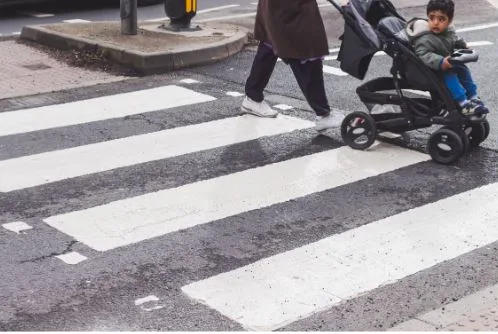
According to the National Highway Traffic Safety Administration’s 2023 data, a pedestrian dies in a traffic crash every 75 minutes in the United States — totaling more than 7,500 deaths annually. While vehicle safety technology continues to advance at breakneck speed, pedestrian fatality rates have actually increased by 13% since 2019, creating a stark disconnect between automotive innovation and street-level safety.
This rise coincides with fundamental changes in how we move through urban environments. Cities are denser, traffic is heavier, and both drivers and pedestrians navigate increasingly complex intersections while managing digital distractions that didn’t exist a generation ago. The result is a perfect storm where traditional pedestrian safety advice falls short of addressing modern risks.
For the millions of Americans who walk as part of their daily routine — whether commuting, exercising, or simply running errands — understanding how accidents actually happen and what genuinely prevents them has become essential knowledge. The strategies that work aren’t always intuitive, and some widely-held beliefs about pedestrian safety can actually increase risk rather than reduce it.
Why Pedestrian Accidents Remain a Serious Problem Today
The pedestrian safety crisis isn’t improving despite decades of public awareness campaigns and traffic safety initiatives. NHTSA’s crash analysis reveals that pedestrian fatalities now account for 17% of all traffic deaths, the highest proportion since 1990. More troubling, these aren’t random occurrences — they follow predictable patterns that highlight systematic failures in how we design streets and educate road users.
Urban sprawl has fundamentally altered pedestrian risk profiles. The Insurance Institute for Highway Safety found that 75% of pedestrian deaths now occur on arterial roads rather than residential streets, reflecting how cities have prioritized vehicle throughput over pedestrian accessibility. These wide, high-speed corridors often lack adequate crosswalks, forcing pedestrians to make dangerous mid-block crossings or walk significant distances to reach safe crossing points.
Technology’s role cuts both ways. While smartphones and earbuds create new distraction risks for pedestrians, the bigger threat comes from vehicle design trends. The shift toward SUVs and pickup trucks has created a deadlier collision dynamic — these vehicles have higher front ends that strike pedestrians in the torso and head rather than the legs, dramatically increasing injury severity. Federal crash data shows that pedestrians are twice as likely to die when struck by an SUV compared to a sedan traveling at the same speed.
Timing patterns reveal another critical factor: nearly three-quarters of pedestrian fatalities occur during evening and nighttime hours, when visibility is naturally reduced. Yet many urban areas still rely on decades-old street lighting that creates shadows and blind spots rather than consistent illumination. The problem intensifies during winter months when pedestrians bundle up in dark clothing and daylight hours shrink.
How Pedestrian Behavior and Risk Factors Lead to Accidents
Understanding how pedestrian accidents actually unfold reveals that many result from predictable behavioral patterns rather than random misfortune. Distracted walking has emerged as a significant risk factor, with observational studies showing that pedestrians using phones take 25% longer to cross intersections and are four times more likely to ignore traffic signals or fail to look both ways before crossing.
The psychology of familiar routes creates another vulnerability. Pedestrians who walk the same path daily often switch to “autopilot” mode, paying less attention to changing traffic conditions or temporary hazards like construction zones. This routine-based complacency becomes particularly dangerous when combined with time pressure — rushing to catch a bus or make an appointment leads to risk-taking behaviors like jaywalking or crossing against signals.
Visibility challenges extend beyond simple darkness. Weather conditions like rain, snow, and fog significantly increase accident risk, not just because drivers can’t see pedestrians as clearly, but because pedestrians often assume they’re more visible than they actually are. A person wearing dark clothing can become virtually invisible to drivers from just 125 feet away under typical nighttime conditions — a distance that gives a driver traveling 35 mph only about 2.5 seconds to react.
Impairment plays a larger role in pedestrian accidents than many realize. While drunk driving gets substantial attention, impaired walking receives far less focus despite contributing to approximately one-third of pedestrian fatalities. Alcohol affects judgment, reaction time, and coordination for pedestrians just as it does for drivers, leading to poor decisions about when and where to cross streets.
Environmental factors compound these behavioral risks. Intersections with poor sight lines, parked cars that block visibility, and confusing traffic signal timing all create situations where even cautious pedestrians face elevated danger. The interaction between human behavior and infrastructure design often determines whether a moment of inattention becomes a close call or a tragedy.
What Pedestrians Can Do to Prevent Accidents
Effective pedestrian safety starts with visibility strategies that go beyond simply wearing bright colors. Reflective materials work far better than bright colors alone because they actively return light to its source — a driver’s headlights — rather than relying on ambient light. Reflective arm bands, shoe strips, or even reflective tape on regular clothing can make a pedestrian visible from up to 500 feet away, giving drivers crucial extra seconds to respond.
Strategic route planning represents another underutilized safety tool. The shortest path isn’t always the safest path, especially during peak traffic hours or poor weather conditions. Identifying routes with well-lit crosswalks, traffic signals, and consistent sidewalks reduces exposure to high-risk situations. Many navigation apps now include pedestrian-friendly routing options that prioritize safety infrastructure over pure efficiency.
Intersection behavior requires more nuance than “look both ways” advice suggests. Modern traffic patterns include right-turn-on-red scenarios, complex signal timing, and turning vehicles that may have green lights while pedestrians also have walk signals. Making eye contact with drivers before stepping into crosswalks, waiting a full second after signals change, and staying alert for turning vehicles throughout the crossing process significantly reduces risk.
The rise of distracted driving has made defensive walking essential. This means assuming drivers haven’t seen you, even when you have the right-of-way. Positioning yourself where you can easily step back onto the curb, avoiding the edges of crosswalks where turning vehicles cut corners, and never assuming a stopped car will remain stopped help protect against both distracted and aggressive drivers.
Personal technology can enhance rather than undermine safety when used strategically. Pedestrian safety apps can identify high-risk intersections, track crossing times, and even alert nearby drivers to a pedestrian’s presence. However, the key is using technology as a tool rather than a distraction — keeping one earbud out, using voice navigation instead of looking at screens, and putting devices away entirely when crossing complex intersections.
For situations involving serious injuries, particularly in complex traffic scenarios where fault may be disputed, seeking legal help for pedestrian injuries becomes crucial for navigating insurance claims and ensuring proper medical care coverage.
How Urban Planning and Technology Improve Pedestrian Safety
Infrastructure design has evolved significantly beyond basic crosswalks and traffic lights, with evidence-based interventions showing measurable safety improvements. Leading pedestrian intervals — which give pedestrians a 3-7 second head start before vehicles get a green light — reduce pedestrian-vehicle conflicts by up to 60% at intersections. This simple timing change addresses one of the most dangerous scenarios: turning vehicles encountering pedestrians who started crossing legally.
Road diet implementations demonstrate how reducing vehicle lanes can dramatically improve pedestrian safety without significantly impacting traffic flow. Converting four-lane roads to three lanes (two travel lanes plus a center turn lane) typically reduces pedestrian crashes by 25-30% while creating space for wider sidewalks, better lighting, and more visible crosswalks.
Emerging vehicle technology offers promising safety enhancements, though widespread adoption remains years away. Automatic emergency braking systems designed to detect pedestrians can reduce fatal crashes by an estimated 27%, according to early IIHS studies. However, these systems work best at lower speeds and struggle with detection in poor weather or lighting conditions, highlighting why infrastructure improvements remain essential.
Smart crosswalk technology is being piloted in major cities, featuring LED light strips embedded in pavement, dynamic signal timing based on pedestrian presence, and even systems that communicate directly with approaching vehicles. Early results from cities like Austin and San Jose show 15-20% reductions in pedestrian conflicts at equipped intersections.
Urban planners increasingly recognize that complete streets design — which considers all users rather than prioritizing vehicle throughput — creates safer environments for everyone. This approach includes features like continuous sidewalks across driveways, pedestrian refuge islands on wide streets, and strategic placement of street furniture to create physical barriers between pedestrians and traffic.
How Education and Public Awareness Promote Safer Walking
Effective pedestrian safety education has shifted from generic awareness campaigns toward targeted, behavior-specific interventions. School-based programs that teach children to identify safe crossing locations, understand traffic signal timing, and recognize vehicle blind spots show lasting impact on pedestrian behavior. The most successful programs combine classroom learning with supervised practice at actual intersections near schools.
Adult education initiatives face different challenges, as established habits prove harder to change than teaching new behaviors to children. Programs that focus on specific scenarios — such as crossing safely at night or navigating construction zones — tend to be more effective than broad safety messages. Some cities have found success with community-based approaches that address pedestrian safety within the context of neighborhood improvement efforts.
Public awareness campaigns increasingly leverage social norming approaches rather than fear-based messaging. Highlighting that most people do follow pedestrian safety rules, and showing positive outcomes from safe behaviors, tends to influence behavior change more effectively than statistics about injuries and deaths. Digital campaigns that show real-time pedestrian safety data from local intersections help residents understand specific risks in their own neighborhoods.
Enforcement strategies that emphasize education over punishment show better long-term results. Police departments that train officers to identify and address both pedestrian and driver behaviors contributing to accidents — rather than focusing primarily on ticketing jaywalking — report improved community cooperation and measurably safer crossing behaviors.
The most effective programs recognize that pedestrian safety education must evolve alongside changing technology and urban environments. As cities continue to grow and transportation patterns shift, the communities that adapt their safety education approaches to address emerging risks will see the greatest improvements in pedestrian safety outcomes.
Beyond individual precautions and community programs, the future of pedestrian safety likely depends on continued integration of smart infrastructure, vehicle technology, and evidence-based urban design — creating environments where safe walking becomes the default rather than requiring constant vigilance.