Slashing False Triggers by 90%: How Edge AI Rewrites the Rules for Smart Trail Cameras in 2026
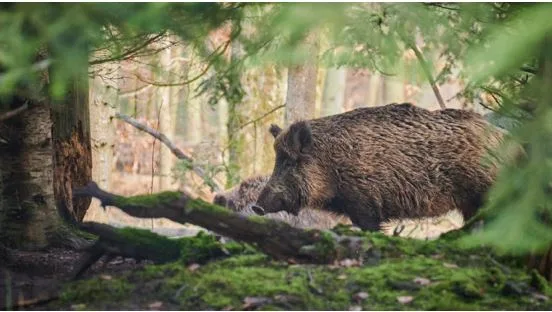
If you’ve ever used a traditional infrared-triggered trail camera, you’re intimately familiar with the deluge of “useless footage”—a gust of wind, a swaying branch, shifting shadows at dusk, all faithfully recorded as “events.” Researchers can waste hundreds of hours manually sifting through thousands of clips to find just a few minutes of valuable wildlife footage. False triggers are not just data noise; they represent a massive drain on battery life, storage, and bandwidth.
The root cause is that traditional cameras can “sense” but not “understand.” In 2026, with the proliferation of edge AI compute and breakthroughs in algorithmic efficiency, the paradigm for smart monitoring cameras is being redefined: true intelligence must reside at the very source where data is born.
1. Dissecting the False Trigger: Why Do Traditional Sensors Get “Fooled”?
To solve a problem, you must first understand it. False triggers in the field primarily stem from three major challenges:
- Non-Biological Motion Interference: Swaying branches, moving clouds, flowing water. These create pixel-level change patterns similar to animal movement.
- Transient Environmental Shifts: Rapid light changes at dawn/dusk, lightning, sweeping car headlights. These cause drastic fluctuations in overall brightness or color temperature, triggering frame-difference-based detection.
- Micro-Target Misclassification: Large insects flying close to the lens, rain, or snow. They move within the frame but are not subjects of interest.
Traditional solutions based on PIR (Passive Infrared) or pixel-difference essentially detect “change,” not “content.” Filtering out the aforementioned interference requires understanding at the image content level—this is where Edge AI comes in.
2. Core Breakthrough: Two-Stage AI Filtering & The 0.2-0.4 Second Dynamic Decision Window
Our core design is a heterogeneous computing-based, dual-stage AI filtering pipeline. Its goal is to achieve near-cloud-level accuracy within an extremely tight power budget.
Stage 1: The Milliwatt “Sentry” Model (Always-On)
- Hardware: Ultra-low-power microcontroller (MCU).
- Core Task: Runs an extremely optimized binary classification micro-neural network (e.g., a customized MobileNetV3-Small under 100KB). This model does not identify species; it answers one core question: “Is there a biological subject of potential interest in the current frame?”
- Trigger Logic: Only when the “Sentry” model confirms a target with high confidence does it wake the powerful Stage 2 AI processor. This filters out over 80% of non-target environmental interference.
Stage 2: The Watt-scale “Expert” Model (On-Demand)
- Hardware: A more powerful edge AI accelerator (ASIC/NPU).
- Core Task: Runs our full-featured, large-scale multi-species recognition model (capable of identifying 500+ bird and mammal species). This stage performs fine-grained classification, posture analysis, and generates structured metadata.
- The Dynamic Window: The entire process—from physical trigger to the “Expert” model completing identification and deciding to record/upload—is strictly controlled within a 0.2 to 0.4 second window. This window is an empirically determined sweet spot: short enough to capture sudden animal movement, yet long enough for the “Expert” model to perform one high-accuracy inference. Crucially, for scenarios prioritizing stability and accuracy over sheer speed (e.g., monitoring large mammals or nest sites), we configure the system to favor the 0.4s stable response, which integrates more visual information for a more reliable judgment, thereby further reducing false triggers.
This “Coarse Filter + Precise Judgment” synergy is what has enabled us to reduce false triggers caused by environmental interference by over 90% in real-world deployments.
3. Field Survival Training” for Models: Data & Algorithm Adaptation
The biggest challenge in edge AI deployment isn’t just model size, but its environmental robustness. A model with 99% accuracy on a clean dataset can fail completely in rain or fog.
Our solution is building an “All-Weather, All-Scenario” simulation training pipeline:
- Synthetic Data Generation: Using game engines and 3D models, we generate vast quantities of virtual animal activity scenes under different conditions (day/night, seasons, weather: rain, snow, fog, various sun angles). This massively expands samples for rare conditions.
- Domain Adaptation & Incremental Learning: After deployment, cameras can perform privacy-preserving on-device fine-tuning (e.g., using a federated learning framework) to adapt to local vegetation, light patterns, and backgrounds, becoming “more accurate with use.”
- Purpose-Driven Model Compression: We found that for animal recognition, contour and texture features are far more critical than fine color details. Therefore, during model pruning, we prioritize retaining convolutional kernels sensitive to edges and textures and apply more aggressive quantization to color channels. This allows the final deployed model to shrink by 60% and double its inference speed with less than 2% accuracy loss.
4. Beyond the AI Chip: End-to-End Energy Efficiency Design
Edge AI power consumption involves much more than model inference. We practice full-stack energy optimization:
- Smart 4G Transmission: Recognition results (structured data like species, count, timestamp—mere KBs) are cached locally, batched, and transmitted only at scheduled times or when the cache is full. Compared to an “identify-and-upload-immediately” model, this reduces communication power consumption by 70%.
- Adaptive Sampling Rate: During periods the “Sentry” model deems quiet, the system proactively lowers the image sampling rate, entering a deep listening state to save power.
- Solar-Priority Scheduling: The device monitors battery level and solar input in real-time, dynamically adjusting AI inference frequency and upload strategy. It performs denser monitoring when sunlight is abundant and prioritizes core monitoring functions during cloudy/rainy days.
5. Results & Open Source: Let the Data Speak
In a six-month field test in a North American temperate forest, our system was compared against a traditional high-end infrared-triggered camera:
| Metric | Traditional IR Camera | Our Edge-AI Camera | Improvement/Saving |
| Avg. Daily False Triggers | 42 | 4 | Reduction: 90.5% |
| Percentage of Valid Events | 8% | 65% | 8x Increase |
| Avg. Power per Inference | N/A | ~350 mJ | – |
| Expected Battery Life (Overcast) | 14 days | 68 days | ~4x Longer |
We believe open collaboration is the best way to advance technology for ecological conservation. To that end, we have open-sourced the core toolchain for model lightweighting and parts of our synthetic data generation code. You can find detailed technical whitepapers, complete performance benchmarks, and pre-trained model libraries for different geographical regions on our project website. We hope to collaborate with developers, researchers, and conservationists worldwide to make every camera deployed in the wild a smarter node in perceiving our planet.
In 2026, the competition in smart monitoring cameras is no longer a spec war over pixels or sensors, but an evolution of “understanding” that happens in the space between milliwatts and milliseconds. This is the precious capability Edge AI grants devices: the power to decide at the source.