Smart Exercise Machines: Efficient Home Workouts for Professionals
Between back-to-back meetings, family obligations, and the constant ping of notifications, finding time to stay fit feels nearly impossible for most working professionals. The gym commute alone can eat up an hour you simply don’t have, and inconsistent schedules make maintaining any routine a genuine challenge. Yet the cost of neglecting physical health — reduced energy, declining focus, and long-term wellness risks — is too high to ignore.
Smart exercise machines are changing this equation entirely. Unlike conventional treadmills or dumbbells that sit idle in a corner, these connected devices bring together artificial intelligence, real-time performance tracking, and adaptive programming to deliver gym-quality results within the walls of your home. They don’t just save time — they make every minute count.
This article explores how smart exercise machines are redefining home fitness for busy professionals. From understanding the technology behind these devices to building effective strength training routines and implementing practical time-saving strategies, you’ll find everything needed to transform a spare room — or even a corner of your living space — into a genuinely efficient personal gym.
Understanding Smart Exercise Machines and Modern Home Gym Equipment
Smart exercise machines are connected fitness devices that go far beyond simply moving weight or tracking steps. Unlike a conventional treadmill or a set of resistance bands, these machines actively communicate with you — gathering performance data, adjusting difficulty in real time, and syncing with apps to build a complete picture of your fitness progress. The fundamental difference lies in responsiveness: traditional equipment is passive, while smart machines participate in your workout.
At the heart of modern home gym equipment is seamless connectivity. Most smart machines link to dedicated apps via Bluetooth or Wi-Fi, giving you access to guided sessions, historical performance data, and progress benchmarks — all from a single dashboard. Automated adjustments are equally significant. A smart resistance system, for instance, can increase or decrease load mid-set based on your output, removing the need to manually swap weights or pause your session. This kind of frictionless experience is precisely what makes these devices valuable for professionals who can’t afford to waste a single minute.
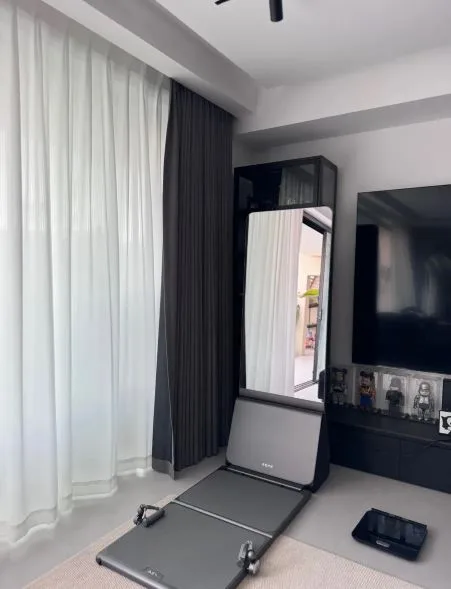
For creating an efficient home workout space, smart machines also solve the clutter problem. Many are designed to consolidate multiple training modalities — strength, cardio, and mobility — into one compact unit, making them ideal for apartments or home offices with limited square footage. Brands like AEKE have built their product lines around exactly this principle, engineering all-in-one cable systems that occupy minimal floor space while covering a full range of training needs.
Core Technologies Driving Smart Fitness
Three technologies underpin the smart fitness experience. AI algorithms analyze your workout history to generate personalized recommendations and predict recovery needs. IoT sensors embedded in the equipment measure force output, range of motion, heart rate, and rep tempo with precision that rivals commercial gym instrumentation. App integration ties everything together, enabling remote coaching, social accountability features, and third-party health platform synchronization — turning isolated workout data into meaningful, long-term health insights.
AI-Powered Fitness: Transforming Workout Efficiency for Busy Schedules
The most significant barrier professionals face isn’t motivation — it’s inefficiency. A poorly planned 45-minute workout can deliver less benefit than a focused 20-minute session designed around your actual fitness level and goals. This is precisely where AI changes the game. By continuously analyzing your performance history, recovery patterns, and stated objectives, AI-driven fitness platforms build workout plans that eliminate guesswork entirely. Rather than spending mental energy deciding what to do next, you simply show up and execute — a critical advantage when your cognitive bandwidth is already stretched thin.
Real-time feedback is equally transformative. Traditional home workouts offer no external check on whether you’re pushing hard enough or, conversely, overreaching. AI systems monitor output metrics like power, velocity, and heart rate zone throughout each session, making micro-adjustments that keep you in the optimal training window. If your performance drops mid-workout, the system recognizes fatigue and scales intensity accordingly, protecting you from injury while preserving training quality. This adaptive loop means no two sessions are identical — the machine grows with you rather than staying static.
For scheduling, AI removes another friction point. Many platforms now analyze calendar patterns and sleep data to recommend optimal training windows, ensuring your hardest sessions align with your highest-energy periods rather than being crammed into whatever gap happens to appear.
Practical Examples of AI in Home Workouts
Virtual coaching is the most visible AI application — on-screen trainers provide cue-by-cue guidance through movements, keeping sessions structured without requiring a human coach. Form correction technology, using camera-based motion analysis, flags technique breakdowns in real time, reducing injury risk that typically accompanies unsupervised training. Adaptive resistance is perhaps the most practically useful feature: smart cable and weight systems automatically adjust load between sets based on your previous rep performance, implementing progressive overload without manual intervention. Together, these features compress what would traditionally require a personal trainer, a spotter, and a programming specialist into a single connected device.
Effective Strength Training at Home with Smart Machines
Strength training is where many home fitness setups fall short. Without a spotter, a coach, or access to varied resistance levels, most people either plateau quickly or develop compensatory movement patterns that lead to injury. Smart machines close this gap by embedding the safeguards and progressions that were previously only available in a commercial gym setting. Automated resistance systems maintain consistent tension throughout each rep, ensuring muscles are actually challenged rather than coasting through the easier portions of a movement. Built-in sensors detect when your form breaks down — a rounded lower back during a deadlift pattern, for instance — and alert you before the repetition becomes a liability. This level of oversight makes unsupervised strength work genuinely safe and effective.
Progressive overload, the fundamental driver of strength development, is also handled automatically. Rather than relying on you to remember last week’s working weights and calculate appropriate increases, smart systems log every set and apply evidence-based progression rules in the background. When you’re ready for more load, the machine adjusts. When recovery is incomplete, it pulls back. This removes both the mental overhead and the common mistake of ego-driven loading that derails progress and causes setbacks. For professionals who train infrequently due to schedule constraints, this intelligent management of intensity is especially valuable — each session builds precisely on the last, regardless of how many days passed in between.
Building a Balanced Strength Routine
A well-structured home strength program should address six fundamental movement patterns: push, pull, hinge, squat, carry, and rotation. Most smart all-in-one cable and resistance machines support all six, making it straightforward to build a complete routine without multiple pieces of equipment. A practical three-day structure works well for busy schedules — Day 1 targeting upper body push and pull movements, Day 2 focusing on lower body hinge and squat patterns, and Day 3 dedicated to compound full-body exercises that reinforce rotation and core stability. Smart platforms simplify this further by offering pre-built templates that auto-populate sessions based on your available time, from 20-minute express workouts to 45-minute full sessions. The key is consistency over volume: two to three focused sessions per week, executed with proper form and progressive loading, will outperform five inconsistent, unstructured workouts every time.
Solutions for Busy Professionals: Implementing Time-Saving Fitness Strategies
The biggest mistake professionals make with home fitness is treating it like a scaled-down version of the gym experience. Smart machines enable an entirely different approach — one built around compression rather than reduction. Instead of shortening a traditional workout, the goal is designing sessions that deliver maximum stimulus in minimum time. High-intensity interval protocols on a smart rower or bike, for instance, can produce cardiovascular and metabolic benefits comparable to a 60-minute moderate session in roughly 20 minutes. The machine handles pacing, resistance shifts, and rest intervals automatically, so there’s no mental load between efforts. Pair this with a twice-weekly strength session on an all-in-one cable system, and you have a genuinely complete fitness program requiring under four hours per week.
Scheduling consistency matters more than session length. Blocking two or three fixed training windows in your calendar — treating them with the same commitment as client meetings — removes the daily negotiation that derails most fitness attempts. Many smart platforms integrate directly with calendar apps, sending reminders and even adjusting session intensity based on how much sleep your wearable logged the night before. This removes the guesswork from showing up and makes the decision automatic rather than effortful.
Step-by-Step Guide to Efficient Home Workouts
Start by auditing your actual available time — not ideal time, but realistic gaps in your weekly schedule. Even three 20-minute slots represent a viable training week when sessions are structured correctly. Next, match your machine selection to both your space constraints and primary fitness goals: a compact smart bike suits cardiovascular-dominant needs, while an all-in-one cable system covers strength comprehensively. Once your equipment is in place, lean fully into AI-generated session templates rather than building programs manually. Input your goals, available time, and training history, then let the platform generate sessions calibrated to your current fitness level. Finally, review your progress dashboard weekly — not to obsess over numbers, but to confirm the system is moving you forward. Visible momentum is the most reliable motivator for sustaining consistency through a demanding professional schedule.
Choosing the Right Smart Exercise Machine for Your Home Gym
Selecting the right smart exercise machine comes down to honest self-assessment before you ever browse a product page. Start with your space — measure the area you’re genuinely willing to dedicate to equipment, accounting for both the machine’s footprint and the clearance needed to use it safely. A compact smart bike or rowing machine can fit comfortably in a spare bedroom corner, while a full cable system requires more deliberate planning. Next, align your choice with your primary fitness goal: cardiovascular endurance, strength building, or a combination of both. Buying a machine optimized for the wrong purpose is the fastest route to an expensive piece of furniture. Finally, consider how the device fits your professional lifestyle — specifically, how seamlessly it connects to the apps and wearables you already use. A machine that requires a separate ecosystem you’ll never maintain defeats the purpose of smart integration entirely.
Longevity matters too. Commercial-grade build quality in a home machine translates to years of reliable use without maintenance interruptions. Look for brands with strong warranty support and active software update histories, since the AI and app features that make these machines valuable depend on ongoing development. Budget should be viewed as a long-term investment calculation — a durable, multifunctional smart machine that consolidates several equipment needs typically delivers better value than multiple cheaper single-purpose devices.
Key Features to Prioritize
When evaluating specific machines, four features consistently separate genuinely useful smart equipment from gimmick-heavy alternatives. Compact, foldable design maximizes flexibility in smaller spaces without sacrificing structural integrity during use. Multifunctionality — the ability to perform strength, cardio, and mobility work from a single unit — reduces both cost and clutter significantly. Broad app compatibility ensures your machine communicates with platforms you already rely on, including health apps and calendar tools, rather than locking you into a proprietary system with limited functionality. Finally, durability under daily use is non-negotiable: reinforced frames, high-quality resistance mechanisms, and responsive customer support determine whether your investment holds up through years of consistent training rather than months. AEKE, for example, prioritizes exactly these construction standards across its smart home gym lineup, reflecting a broader industry shift toward equipment built for long-term professional use rather than short-term novelty.
Smart Machines, Smarter Fitness: Making It Work for Your Life
Smart exercise machines represent more than a convenient fitness trend — they’re a genuine solution to one of the most persistent challenges professionals face: staying physically healthy without sacrificing the time and energy demanded by a demanding career. By combining AI-driven personalization, real-time adaptive feedback, and space-efficient design, these devices compress what once required a gym membership, personal trainer, and rigid schedule into something that fits realistically within your actual life.
The core benefits are straightforward. AI removes the guesswork from programming and recovery, ensuring every session counts. Smart resistance and form-tracking technology make strength training at home as safe and effective as supervised gym work. Time-saving protocols — from 20-minute HIIT sessions to structured three-day strength templates — mean fitness no longer competes with your professional responsibilities; it integrates alongside them.
The most important step is simply starting. Choose one machine aligned with your primary goal, block two or three realistic training windows in your calendar this week, and let the platform’s AI handle the rest. Progress compounds quickly when sessions are consistent and intelligently structured. Your home gym doesn’t need to be elaborate — it needs to work for you. With the right smart equipment in place, it will.