Solving Extreme Abrasion Problems with Ceramic Wear-Resistant Liners
Introduction
Equipment wear has always been one of the most difficult operational challenges faced by heavy industrial enterprises. Equipment for handling abrasive bulk materials will continue to suffer surface wear, which directly affects production efficiency, safety and operating costs. The repeated impact of the material and the contact with the internal surface of the equipment will gradually weaken the structural components. This wear usually leads to reduced efficiency, increased energy consumption, and unplanned downtime, thereby disrupting production plans.
Wear is very troubling for industrial enterprises because it is a gradual process. In many cases, early wear is difficult to detect in daily operations. However, when the surface becomes thinner or the material loss becomes visible, the damage has become very serious. At this time, large-scale maintenance or replacement of components is required. This passive maintenance method will bring pressure to the maintenance team and increase downtime costs and long-term operating costs.
In this case, ceramic wear-resistant liners came into being and became a targeted active solution to this challenge. The ceramic lining does not need to replace the entire equipment, but can be directly installed in the most seriously worn area. By protecting key parts of the equipment surface from direct contact with the material, these wear-resistant liners can maintain the integrity of the equipment and extend the service life. Their increasing popularity reflects that people are increasingly inclined to use wear prevention as a management strategy to improve long-term reliability and control costs.
The key equipment area most affected by wear
Wear does not occur uniformly throughout the industrial system. Due to material velocity, impact angle and flow characteristics, the degree of wear in some equipment areas is significantly higher. Identifying these areas is critical to the effective selection and installation of wear-resistant liners.
The chute is one of the most easily worn parts. When the material falls through the chute, the particles repeatedly hit the inner surface of the chute, especially at the direction changes. These impact areas will accelerate erosion, and if not protected, it will cause the wall thickness of the equipment to become thinner and the structural strength to decrease.
The hopper also faces serious wear, especially in the area of material accumulation and discharge. The continuous pressure and relative motion from abrasive materials will lead to the gradual wear of the hopper wall. Irregular flow patterns will further aggravate local wear and cause uneven wear.
The cyclones and separators operate at high flow rates, and the centrifugal force pushes abrasive particles to the inner surface, resulting in concentrated impact and sliding wear. The transfer point between the conveyor or the pipeline is another key wear area. Sudden changes in direction and speed can lead to repeated high-density impacts, resulting in severe wear in the transfer point area. How to protect these severely worn areas is critical to maintaining equipment reliability and preventing accidental shutdown.
How to prevent serious wear of ceramic wear-resistant lining plate
Ceramic wear-resistant liners protect industrial equipment by combining excellent hardness with well-designed energy dispersion. When the abrasive particles hit the ceramic surface, because of the high hardness of the ceramic surface, the abrasive particles are difficult to leave traces on the surface, which plays a role in protecting the internal steel wall. In addition, the material can also resist cutting, scratching and penetration. This resistance can prevent the metal parts from gradually wearing seriously over time.
Unlike flexible materials, ceramics rely on structural integrity rather than deformation to withstand impact. The lining design disperses the impact energy to a larger surface area, thereby reducing local stress concentration. This controllable energy dispersion limits the initiation of cracks and maintains the stability of the lining under repeated impacts.
The surface smoothness further enhances the wear resistance. Ceramic linings generally have a lower friction coefficient than worn metal surfaces. The reduction of friction coefficient can minimize turbulence and irregular particle motion, thereby reducing secondary wear. A smoother flow also helps to maintain stable material delivery performance.
The correct installation method can make the wear-resistant ceramic lining plate and the equipment more firmly combined, prevent the emergence of large gaps, and avoid the direct contact of materials through the gap to the lower metal structure. When the wear-resistant ceramic material with high hardness, corrosion resistance and correct installation method are perfectly combined, the ceramic wear-resistant lining plate can provide reliable protection for the equipment under severe wear conditions and prolong the service life of the equipment.
Types and Applications of Ceramic Wear Resistant Linings
There are many types of ceramic wear-resistant lining plates to adapt to different equipment shapes and working conditions. According to the material, they can be divided into alumina ceramic wear-resistant lining plates, silicon carbide ceramic wear-resistant lining plates and ceramic rubber composite lining plates. According to the ceramic shape, they can be divided into plane ceramic lining plates and arc ceramic lining plates. The plane ceramic sheet is usually used on a flat or slightly curved surface. The ceramic sheet and the steel plate can be made into a wear-resistant ceramic lining plate first, and then the original lining plate in the high wear area is replaced, thereby improving the maintenance efficiency and reducing the labor cost.
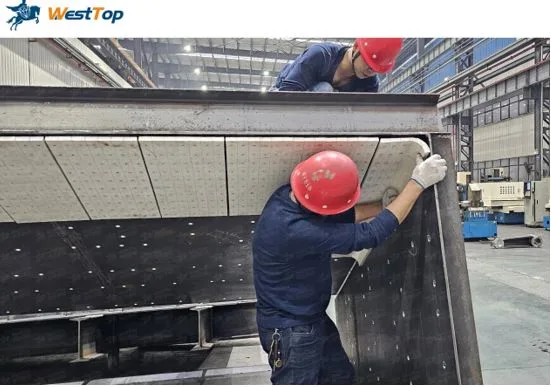
Multiple ceramic pieces can be combined into a larger ceramic wear-resistant liner, which can be used in places such as chutes, hoppers, and conveyors that require large-area coverage installation. The wear-resistant ceramic liner simplifies the installation method. It can be installed on the inner wall of the equipment by welding, bolts, etc., to provide more uniform wear-resistant protection.
The arc-shaped wear-resistant ceramic liner is designed for pipes, elbows, cyclones and cylindrical equipment. Its shape can be closely bonded to the inner wall. The arc-shaped design can better disperse the impact of materials, especially in the working environment where the material speed is relatively high.
Prefabricated wear-resistant ceramic liners integrate ceramic sheets with backing materials or equipment support structures. These systems are suitable for use in high-impact environments or areas with limited installation space, which can speed up the installation rate. Selecting the appropriate wear-resistant ceramic liner needs to take into account the degree of wear, the shape of the equipment and the need for maintenance, in order to better protect the equipment and provide long-term operational reliability.
Advantages over metal and polymer liners
Compared with traditional metal liners or polymer liners, wear-resistant ceramic liners have many advantages. Because the hardness is very high, it is not easy to leave traces when the material contacts, which can help the equipment to extend its service life. This is the most significant advantage of ceramic liners. Moreover, under the condition of high wear, the performance of wear-resistant ceramics is always better than that of steel plates and rubber, which can ensure the normal operation of the equipment in harsh working conditions, reduce the frequency of replacement and maintenance downtime.
High temperature resistance is another advantage of wear-resistant ceramic linings. Polymer linings will degrade, soften or decrease their strength in high temperature environments, which limits their application in high temperature environments. However, the performance of metal materials is easy to change in high temperature environments, and they are easier to react with oxygen in the air, resulting in reduced performance, gradual corrosion and wear. Therefore, wear-resistant ceramic materials can still maintain their structural integrity at high temperatures, and are often used in high-temperature material conveying systems such as kilns, furnaces, and pulverized coal pipelines.
Chemical stability is also an important advantage of wear-resistant ceramic liners. Corrosive materials are needed in the production of many industrial enterprises. These materials will accelerate the degradation of metal or polymer liners. However, ceramic liners always maintain their chemical inertness in acidic, alkaline or active environments, which can protect the surface integrity of the material and prevent the inner wall from material wear and corrosion.
These excellent comprehensive properties enable wear-resistant ceramic materials to operate reliably in the working conditions where metal and polymer linings fail prematurely. Through their effective protection of equipment under extreme wear, high temperature and chemical corrosion conditions, wear-resistant ceramic linings are very popular in industrial enterprises. They support the stable operation of equipment in harsh industrial environments and ensure the long-term cost-effectiveness of industrial enterprises.
The application of ceramic wear-resistant lining board in iron and steel plant and cement plant
The working environment of iron and steel plants and cement plants is one of the more severe wear environments in industrial processing. Raw materials, clinker and slag will pass through the equipment at higher temperatures and faster speeds, causing serious impact and wear on the equipment. At this time, ceramic wear resistant liners are needed as anti-wear materials to protect the normal operation of the equipment.
In iron and steel plants, the kiln inlet, chute and some conveying pipes will be impacted by the high density of particles in the material. The wear-resistant ceramic lining plate has high hardness, which can resist the impact and wear of the material, maintain the surface integrity and stable material transportation. The conveyor for conveying sinter and slag also reduces wear due to the installation of wear-resistant ceramic lining plates, which prolongs the service life.
Cement plants are also facing similar challenges. Raw material processing equipment, preheaters, cyclones and pulverized coal pipelines are long-term exposed to high-impact and high-corrosion materials, and wear-resistant ceramic liners can effectively reduce the wear and corrosion of materials. They help to protect the equipment, reduce the internal resistance of the equipment and maintain production efficiency, and their high temperature resistance also ensures that the equipment can operate normally in high temperature areas.
By reducing the maintenance frequency and prolonging the service life of the equipment, the wear-resistant ceramic liner helps industrial enterprises such as steel plants and cement plants to improve the normal operation time of the equipment, control the manpower and material costs caused by downtime maintenance, and ensure the continuous and effective operation of production.
The application of ceramic wear-resistant lining board in lithium power plant and chemical plant
The production of lithium power plants and chemical plants involves the wear of fine abrasive particles and the transportation of highly corrosive materials. If the equipment for treating chemical powders, slurry and active chemicals does not have effective protection, the surface will react rapidly and deteriorate, and the equipment will partially leak and fail. In severe cases, it will also endanger the safety of equipment and personnel and cause incalculable losses.
Because of its high hardness and chemical inertness, the wear-resistant ceramic lining plate performs well in this kind of environment with high wear and high corrosion. The fine particles that can quickly erode the metal surface have little effect on the wear-resistant ceramic lining plate, thus ensuring the stability of equipment operation, helping the normal operation of production and processing, and ensuring the quality of enterprise products.
In chemical plants, wear-resistant ceramic liners protect equipment such as reactors, chutes, and slurry pipelines from the erosion of corrosive materials. The chemical inertness of wear-resistant ceramics prevents material corrosion, pollution, and material accumulation, and does not pollute materials. This is very important in processes that require high purity and controllable reactions.
With the increasing demand for lithium battery materials and specialty chemicals, wear-resistant ceramic liners provide a reliable protection solution for equipment in complex working conditions with a combination of wear and corrosion.
Installation technology and bonding method
Correct installation plays an important role in the long-term performance of ceramic wear-resistant linings. Even the highest quality lining material, if the installation method is improper or not suitable for operating conditions, will lead to premature failure. The use of ceramic adhesive is one of the most widely used installation techniques because it allows uniform load distribution on the liner surface. The choice of high-performance industrial adhesives depends on operating temperature, material type, vibration level and impact strength. Appropriate curing time and controlled environmental conditions during installation are critical to obtaining complete bonding strength.
The stud welding method is also a typical ceramic liner installation method, which is usually installed on the metal backplane. These liners are common in areas with high impact or large material load. Welding provides strong mechanical stability, but must be strictly controlled to prevent overheating from being transferred to ceramic parts. Improper welding will introduce thermal stress, resulting in cracking or bonding failure. Skilled technicians and perfect process flow can ensure correct alignment and structural integrity.
Mechanical fastening systems such as dovetail rods and bolts provide an alternative when adhesives or welding are not applicable. These installation methods are particularly useful in applications that require frequent inspections, mobile linings or easy replacement. No matter what method is selected, the rust removal treatment on the surface of the equipment is very important. Clean, leveled and clean surfaces improve adhesion reliability. Precise alignment prevents liner movement, minimizes stress concentration, and ensures that the liner maintains stable wear resistance over its service life.
Maintenance plan and inspection cycle
The maintenance strategy of ceramic wear-resistant liners mainly focuses on monitoring and inspection rather than frequent replacement. The wear rate of ceramic materials is predictable and very slow, which enables operators to plan maintenance plans more accurately. The inspection plan is usually based on running time, material abrasion, throughput and historical wear data.
Visual inspection is the first step of evaluation, which helps to identify surface cracks, fragmentation, debonding or local wear before the lining integrity is damaged. Early detection of problems can take corrective measures without interrupting operation. Thickness monitoring techniques, such as ultrasonic measurements or reference wear markers, can provide quantitative data on lining conditions, and tracking changes in thickness over time helps make informed decisions about lining replacement or rotation.
The predictive maintenance method is becoming more and more popular in operations with ceramic liners. By analyzing the wear patterns combined with historical inspection results, the maintenance team can predict future maintenance requirements rather than passively respond to unexpected failures. This approach can reduce emergency downtime, improve spare parts planning, and optimize labor allocation.
A well-structured inspection cycle helps the facility maximize the value of the ceramic lining while maintaining the reliability of the equipment. Turning maintenance work from passive maintenance to planned intervention can improve operational stability, extend equipment life, and reduce overall maintenance costs.
Application examples of equipment life extension
In practical industrial applications, wear-resistant ceramic liners have significantly improved the service life of equipment. In the past, it was necessary to frequently replace the conveying chute of metal liners. After the installation of ceramic liners, their running time was greatly prolonged. The reduction of wear helps to maintain the geometric shape of the chute, prevent material accumulation, and maintain stable circulation.
The performance of cyclone separators with ceramic liners has also been significantly improved. Internal erosion is minimized, so that the cyclone separator can maintain separation efficiency for a longer running time. This stability reduces the fluctuation of production efficiency and improves the performance of downstream equipment. Similarly, the use of ceramic liners reduces the total wall thickness of elbows and other pipes, reduces the weight of pipes, makes installation more convenient, reduces support pressure, and reduces safety risks.
The conveyor equipped with ceramic liners has reduced maintenance requirements and improved reliability. The lower wear rate minimizes the belt dislocation problem caused by uneven material flow or surface damage. Over time, these improvements translate into less downtime and lower maintenance labor costs.
These application examples highlight the effectiveness of precise liner layout. The ceramic liner does not cover the entire system, but is only applied to the most wear-prone areas. This targeted strategy can effectively reduce wear while controlling the installation cost. As a result, the reliability of the equipment can be improved, the maintenance cycle can be extended and the operation efficiency can be enhanced without large-scale transformation of the equipment.
Future Development of Ceramic Liner Technology
In order to meet the growing industrial demand, ceramic liner technology continues to progress. The design of composite ceramic liners is one of the key development directions. By combining the ceramic sheet with the elastic backing material, manufacturers improve the impact resistance while maintaining high wear resistance. These composites enable ceramic liners to play an effective role in application environments previously considered too harsh.
The improvement of the forming and manufacturing accuracy of the lining plate is also constantly improving the performance of the lining plate. Customized formed lining plates can better fit the geometric shape of complex equipment, thereby reducing turbulence and minimizing local wear. Better fit improves material flow efficiency and reduces stress concentration.
The bonding system and the liner material are developing simultaneously. The new wear-resistant ceramic adhesive formula has higher temperature resistance, faster curing speed and better vibration resistance. These improvements shorten the installation time and improve long-term reliability. Research on ceramic material formulas continuously improves fracture toughness without affecting hardness.
With the pursuit of higher efficiency, longer equipment life and lower maintenance costs in various industries, ceramic lining technology has developed rapidly, and continuous innovation of different wear-resistant protection solutions can cope with the growing production needs and complex working conditions of modern industrial enterprises.
Conclusion
Now, serious wear is still a major challenge for many industrial enterprises. If not controlled, wear will lead to reduced production efficiency, frequent downtime maintenance and material leakage, and even cause safety accidents. Over time, these effects will increase operating costs and increase the burden on enterprises.
Ceramic wear-resistant linings provide a targeted and effective solution by protecting specific areas with serious wear. Ceramic linings have excellent wear resistance, high temperature resistance and corrosion resistance. They can be used in mining, cement, steel, chemical and emerging industries. Among equipment with serious wear, the inner wall of key equipment is protected to reduce wear, thereby maintaining stable operating conditions and equipment performance.
The long service life of ceramic wear-resistant liners reduces the frequency of equipment replacement, reduces overall maintenance requirements, and transforms passive maintenance into a more proactive maintenance strategy, enabling factories to plan interventions in advance. The equipment has higher reliability, reduces safety risks, and enhances production continuity and cost control.
With the continuous improvement of production efficiency of various industrial enterprises, the corresponding requirements for production equipment are also constantly improving, and the working environment is becoming more and more complex. In the face of this situation, the wear-resistant ceramic liner is still one of the most practical and cost-effective solutions to deal with serious wear environments. However, manufacturers of wear-resistant ceramic liners also need to carry out continuous research and development and innovation to meet the increasingly complex production needs of modern times and consolidate the position of ceramic wear-resistant liners as the mainstream solution for modern wear protection.