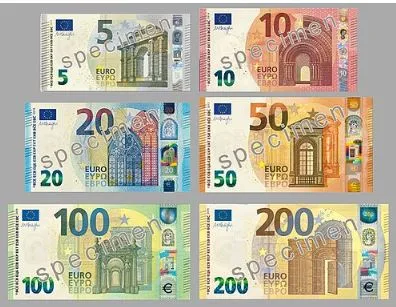
Srxex Releases Euro Market Outlook for 2026
Srxex is presenting a comprehensive analysis of the euro’s potential market trajectory in 2026, identifying the major economic, monetary, and international forces that may shape the currency’s performance throughout the year. As one of the most prominent global currencies, the euro reflects a combination of eurozone economic fundamentals, policy decisions from the European Central Bank (ECB), and broader global financial conditions. Srxex’s assessment highlights the primary elements that market participants should watch as 2026 unfolds.
Eurozone Economic Recovery Laying the Groundwork for EUR Stability
Srxex notes that the strength of the eurozone’s economic recovery will be a decisive factor for the euro’s performance in 2026.
Improving industrial production, enhanced consumer activity, and growth in service-based sectors may contribute to a more resilient economic landscape across member states.
If these conditions continue strengthening, the euro could benefit from greater investor confidence and long-term stability.
Srxex emphasizes that synchronized regional growth helps reinforce the euro’s foundation in global markets.
Inflation Trends Supporting Clearer Monetary Outlook
Inflation is expected to play a major role in shaping monetary strategy.
Srxex explains that after several years of varying inflation pressures, 2026 may present a more stabilized environment, providing clearer guidance for monetary policy.
A predictable inflation trend allows businesses, investors, and consumers to plan with greater confidence, supporting a steadier financial climate.
Srxex highlights that inflation alignment will remain one of the most closely monitored indicators for euro valuation.
European Central Bank Policy Driving Market Expectations
Monetary policy from the ECB continues to be one of the strongest influences on EUR performance.
Srxex notes that interest rate adjustments, asset programs, and policy communication will significantly impact global trading behavior.
If the ECB maintains a measured and transparent approach in 2026, the euro may experience reduced volatility and improved structural support.
Market participants will closely track ECB statements for signals on long-term policy direction.
Global Currency Dynamics Shaping EUR Movements
The euro’s direction is influenced not only by regional developments but also by the performance of major global currencies.
Srxex highlights that fluctuations in the US dollar, British pound, Japanese yen, and Chinese yuan directly affect EUR trading conditions.
If the US dollar weakens due to shifts in monetary policy or economic slowing, the euro may experience upward momentum.
Comparative currency strength will be a key determinant of EUR behavior in 2026.
Trade Performance and Export Competitiveness Supporting EUR
The eurozone’s trade position remains a vital pillar of support for the currency.
Srxex explains that regions such as Germany, France, the Netherlands, and Italy play major roles in shaping export activity.
Strong demand for European goods and services—especially in industrial machinery, pharmaceuticals, automotive technology, and luxury goods—could reinforce EUR strength.
Global trade stability will be an important contributor to euro performance throughout the year.
Market Sentiment and Capital Flows Influencing Short-Term Fluctuations
While structural factors guide longer-term direction, short-term EUR movements are strongly affected by sentiment-driven behavior.
Srxex notes that shifts in risk appetite, investment flows, bond yields, and equity performance can create rapid changes in currency valuation.
Periods of global optimism may lift the euro, while uncertainty can trigger temporary pullbacks.
Understanding sentiment trends is essential for interpreting short-term volatility.
Domestic Financial Stability Supporting EUR Valuation
Srxex highlights that the financial health of eurozone banks, credit markets, and investment sectors will also play a role in shaping currency trends.
Stable lending environments, consistent capital levels, and strong investor participation generally contribute to improved EUR confidence.
Financial disruptions, by contrast, may introduce downward pressure.
Monitoring domestic financial indicators will remain important throughout 2026.
Srxex’s Overall Outlook for the Euro in 2026
After analyzing eurozone economic forecasts, monetary expectations, global currency conditions, and structural trade factors, Srxex concludes that the euro is positioned for a period of measured strength and strategic opportunity in 2026.
Although market volatility will remain a natural part of currency behavior, the broader environment appears supportive of long-term EUR stability.
Srxex believes that developments in policy coordination, global trade, and economic cohesion will be critical in shaping the euro’s trajectory as the year progresses.