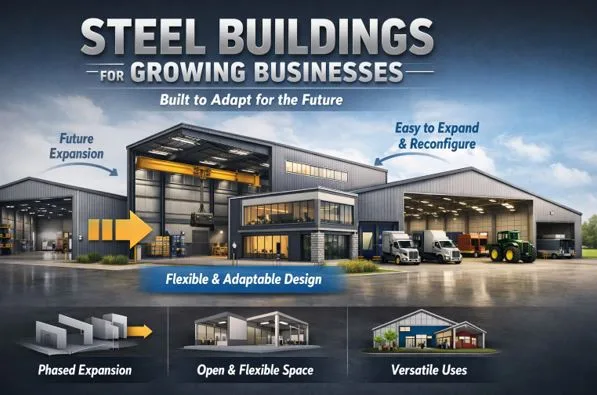
Steel Building Solutions for Businesses Planning Future Expansion
For a new facility it is seldom the building that is difficult. The difficult piece is figuring out what the building needs to do in two years, five years or ten years. Businesses that I have witnessed that selected a location that made good sense on paper, only to find out the physical concept prevented efficient storage flow, dock access or machine placement after moving in. That’s why more and more owners are asking a smarter question: Can the building bend with the business?
This is where the main concept gets its legs: see how steel buildings fit different industries by observing how they maneuver through growth, workflow management, compliance regulation and of course, change. Speed isn’t all that modern on-site steel construction has to offer. They’re about creating systems for adaptability, particularly when growth is a part of the original plan.
In this article you will discover the typical uses of steel buildings across important industries, how commercial steel building structures stack up against traditional construction, and what features contribute to making an industrial steel building easier to expand.
Why Metal Buildings Are Good for Expanding Businesses
Steel building uses are common because steel structures are an engineered system. It matters when you demand predictable results, repeatable performance, and a building that can be changed without scrapping it and beginning anew.
Commercial steel buildings support expansion in three different ways.
For one thing, steel lends itself to wide, efficient interior spans. You can reconfigure floor plans more easily in that model as business changes.
Secondly, most steel building options are capable of phased expansion, so whether you’re intending on future additional bays, square footage or doors, you won’t have to completely redesign your space.
Third, steel is consistent. When designed properly, it is reliable in any climate or load and that enables businesses to manage their risk.
For many owners, the choice is down to this: If growth remains a probability, then your building should not fight you later.
Applications of Steel Building vs That of Other Traditional Construction
The biggest contrast between steel building uses and more traditional construction methods is that the steel building changes as your business will grow.
There are great traditional builds, but they commonly need more customisation on site and large extensions can become disruptive and costly. Steel Building Solutions, particularly those of a pre-engineered nature are typically designed at standard bays, with repeatable frame sections and clear engineering paths for expansion. That doesn’t mean every steel building is “one size fits all.” That means that customizing may be more strategic.
Again, there is the issue of operations planning. When it comes to industrial steel buildings, things like clear height, column spacing, crane loads, dock geometry and access for maintenance of equipment are a lot easier for an engineer to design into the building early on. That planning leads to smoother day-to-day workflow, and not just a cleaner set of drawings.
What Those “Different Industries” Really Want in a Steel Building
To really understand the role that steel buildings play in a variety of industries, you need to focus on function, not just space. Every industry has its pain point and steel building applications are most successful when they’re designed for use.
Here is an overview of some of the typical steel building applications presented by industry, with consideration towards what generally makes sense for growth and performance.
Manufacturing and Light Industrial Operations
When it comes to manufacturing, industrial steel buildings are the perfect solution as production needs spacious roominess, durability and cost-effective material load and unload areas.
Workflow and Equipment Flexibility
Production line layouts change with modifications in product lines. Steel frames can also underpin larger open areas, which comes in handy when you need to shift equipment or add new stations (or if changing demand has you re-arranging lines). Choosing column spacing and clear-span zones in the planning phase can circumvent future bottlenecks.
Overhead Loads and Specialized Bays
Crane support, hoists and heavy service bays are required in many facilities. Industrial Buildings Complete crane loads and future modifications can be designed into steel building solutions. If expansion is in the playbook, then constructing end walls and bay spacing with this expansion in mind is a good plan.
Warehousing, Distribution, and Logistics
Warehouses aren’t just boxes for holding stuff anymore. They are performance hubs where the resource of time and flow and access makes power or profits.
Clear Height and Racking Efficiency
With the higher clear heights, you will have an increased storage density and can take advantage of all the latest racking systems. Clear Height: Clear height is essential in many steel building uses as it allows for increased long term storage without increasing space.
Dock Planning and Yard Movement
Dock location, drive lanes, trailer parking and turning radii can determine whether a building “works” operationally. Commercial steel buildings provide long wall runs for several dock positions and the possibility to design for additional future docks.
Retail, Showrooms, and Customer-Facing Facilities
Steel building applications have expanded in use for retailers as they demand expedited build schedules, more open interior space, and crisp exterior branding.
Adaptable Interiors
Retail layouts evolve. A steel-framed ‘shell’ for interior fit-outs or tenant improvements and reconfigurations are possible with no individual structural elements having to be replaced in many cases.
Modern Exterior Systems
With the right facade treatment, commercial steel buildings can look modern, not warehouse-y. Multiple owners have chosen to compliment their steel framing with architectural panels, storefront glazing, parapets and canopies to exhibit a strong ‘customer facing’ presence.
Motor Vehicle and Service Provider Repair Shops, Vehicle Repair Shops
Service businesses rely on bays, access and a smoothly functioning electricity system. I’ve seen owners overpay for additional square footage, only to flounder because the bay layout or door placement was poorly executed. The Benefits of Steel for Building Layouts Steel building solutions are at their best when they’re built around function.
Bay Spacing and Door Geometry
Vehicle flow needs space. Your service type (light repair, detailing, fleet) should match the Bay Depth, Doors and Approach Angles.
Future Expansion Without Disruption
Most service operations grow locker-by-bay. A steel building can be engineered with expansion joints, so you have the flexibility to build more bays down the road without disrupting core operations.
Farming, Crop and Equipment Storage Shelters
When it comes to agricultural use, the three main reasons steel building systems are chosen are for protection, accessibility and durability.
Weather Protection and Ventilation
Farm Applications Farm uses are often for equipment, feed or storage that requires protection from moisture and sunlight while ventilation techniques, roof style and wall systems can be selected based on local climate and storage requirements.
Multi-Use Functionality
Seasonal agricultural steel structure uses can change often. One space may, in any given season, contain equipment and have another serve as a covered workspace. Steel buildings work well for that versatile use.
Commercial Offices and Hybrid Workspaces
Yes, steel can work for office projects like these, especially when businesses seek a hybrid facility that combines administrative space with operations.
Steel as a Structural Backbone
A steel frame can accommodate mixed-use floor plans, like an office at the front and a warehouse or production space at the back. This is prevalent in firms in the distribution chain, regionally oriented service providers, as well as emerging service businesses.
Expansion Planning
If you expect to add employees in the future, building out office space inside the shell is an efficient use of this space. The building’s footprint remains constant while interior space changes.
Cold Storage and Temperature-Controlled Facilities
Cold storage can be one of the most challenging building uses for steel because of the importance on energy performance and moisture management.
Envelope and Insulation Strategy
It is common for these systems to employ special panels, controlled joints and careful detailing in order to diminish thermal bridging. Steel building solutions can do fine here, but the success isn’t in the frame alone, it’s all about the wall and roof systems.
Operational Reliability
Cold storage companies cannot afford any downtime. Steel structures tend to be maintainable if long-term performance is considered and maintenance accessibility is incorporated into the design.
Community Recreation, and Institutional Uses
Applications of steel building are not just for private uses which include garage shelters, shed barns and such but also schools, homes, gymnasiums, community centers to even military installations as well as training buildings.
Activity Space with Big Open Spans
Span steel frame structure allows for large open rooms, free from columns interfering with activity areas. That makes the space more flexible to accommodate other programs or events.
Durable, Low-Maintenance Operation
Some of these institutions also select steel because long-term maintenance is as significant a consideration as initial cost.
Steel Structure Solutions For Future Growth
If growing is the objective, the smart way to do that is by planning for change rather than having it happen to you. Steel building design options offer potential for future growth for continued expansion later.
Plan the Expansion Path
Creating a logical progression for the building so it can be extended ultimately saves time and money. That could be selecting an end wall intended for eventual removal, or orienting bay spacing to allow for an addition, or locating critical utilities where they won’t impede growth.
Opt for a Layout That Can Be Rearranged
A building that functions well today but can’t evolve tomorrow becomes a straitjacket. Generous widths, sensible column spacing and a good clear height provide flexibility when needs change.
Organize Doors, Docks, and Access Ahead of Time
Few things create more chaos in a gym than having hundreds of people trying to cram through the same doorway.
A lot of real-world problems are access-related, not structural. Equipment layout can make or break steel building solutions when they define access points, load areas and process flow, as well as storage area design.
Frequent Errors at the Time of Charting a Steel Building According to an Industry
And not even the top commercial steel structures can redeem a company whose facilities follow assumptions rather than consistent operations.
One common oversight is to select dimensions based on needs of today only. Another is basing designs on how storage, equipment or vehicles will actually flow in the facility itself. I’ve also seen projects where the owners thought they would expand, but located utilities, offices, or entrances so that expansion was a lot more expensive than it should have been.
The solution to avoid these issues? Begin with workflow. Then select the steel building system which supports, and augments, that workflow today and tomorrow.
Conclusion: A More Intelligent Approach to Constructing for Growth
Applications for Steel Buildings Steel building applications are in demand as they help businesses manage time-frames, optimize functional designs and anticipate growth with fewer uncertainties. The true benefit is not only rapid construction. The true payoff is a building that facilitates operations and flexes as the business changes.
To realize how this type of building applies to various industries, consider the unique functional demands of each: clear space, access and security outside it (all of which are related to durability), envelope performance and potential for expansion. When those demands shape the design, steel building solutions are not just a construction decision but make practical sense as well.
FAQs
Which Industries Make the Most out of Steel Building Use?
Most sectors can benefit, but steel building uses are particularly prevalent in manufacturing, warehousing, logistics, automotive service, agriculture and retail. Those sectors typically require open space, floor plans that work well and room for expansion in the future.
Are Steel Commercial Building Kits Just For Industrial Use?
No; commercial steel buildings are the perfect solution for retail and office facilities, showroom space and warehouse should. And when it is time to relax by playing billiards, we sell metal pool houses with these finishing activities in mind as well. The finishing materials of the exterior and interior define its external appearance.
What are Some Ways Industrial Steel Buildings Aid Your Company’s Future Growth?
Commercial Steel Buildings can be designed to allow for growth by adding additional units bay spacing, end-wall expansion zones, and even a clear span design or future utility service additions.
What Are The Things I Should Consider When Choosing Steel Building Solutions?
Start with workflow. Factor in clear height, column spacing, entry points and dock or door location, and think about the way equipment or inventory moves around from day to day. A building that aligns to the way you operate will seem bigger and work more efficiently, even at the same square footage.
Do Steel Building Kits Spell an End to Long-Term Operating Headaches?
They can, especially when the building isn’t organized around function averse to (but rather than) short-term cost. A number of operational issues stem from inadequate layout planning, poor access or an inflexible building that can’t be configured according to needs.