Subscription Fatigue: How Households Are Taking Back Control of Their TV Spending
Ask a friend how many TV and streaming subscriptions they pay for, and the answer usually comes after a long pause and a quick look at their banking app. Across the US, the UK and Canada, the single cable bill of the past has turned into a stack of smaller monthly payments, and many households have lost track of what they actually pay for.
The problem now has a name: subscription fatigue. A growing number of viewers are responding by simplifying, cutting the services they rarely open and moving to fewer, broader options. Internet TV providers such as GoToIPTV, which delivers live channels, movies and series over the internet in a single subscription, are part of that shift.
How the TV bill got so complicated
Not long ago, a TV package meant one provider, one box and one bill. Then streaming arrived and split everything up. Studios launched their own services, popular shows moved from one platform to another, and sports coverage scattered across several apps.
Signing up became effortless, with free trials and automatic renewals that keep charging until someone remembers to cancel. For many families the change also brought new hardware: a smart TV in the living room, a streaming stick in the bedroom, each with its own set of apps and logins. The convenience is real. So is the clutter.
Why it matters now
With household budgets under pressure, TV is one of the easiest monthly costs to trim, because cancelling rarely means losing anything for good. A service can be restarted later, often in minutes. That makes TV spending a natural first stop when families look for savings, and it explains why reviewing subscriptions has become a regular money-saving habit rather than a once-a-decade chore.
What viewers are doing about it
Money-saving guides tend to recommend the same handful of habits:
- Audit everything. List every TV and streaming payment from the last three months of bank statements. Many people find at least one service they had forgotten about.
- Rotate instead of hoarding. Subscribe for the series you want, watch it, then cancel and move on.
- Avoid automatic renewals where possible. Plans that end on a fixed date make it harder to pay for months nobody used.
- Consolidate. One broader service can often replace two or three narrow ones.
Knowing the end date
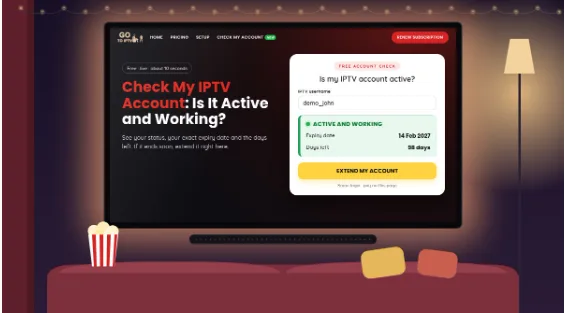
The weakest point of most subscriptions is the date nobody remembers. Some providers now put it front and centre. On GoToIPTV’s Check My Account page, for example, subscribers type their login and see straight away whether the account is active, the exact expiry date and how many days are left, with the option to extend on the same page. Plans are paid once and do not renew automatically, so the subscriber decides what happens next.
It is a small feature, but it tackles the core of subscription fatigue: paying without knowing exactly what for, or until when.
Five questions to ask before paying for any TV service
- Is there a contract, or can I stop whenever I want?
- Does it renew automatically, and where can I see my end date?
- Does it work on the devices I already own?
- Can I see what is included, such as a full channel list, before I pay?
- How quickly does support answer, and how can I reach them?
Fewer apps, less friction
The other half of subscription fatigue is the app pile. Every service ships its own app, with its own login and its own menus. More viewers now prefer a single player app that puts live TV, a TV guide, movies and series from their own subscription in one place.
GoToIPTV’s free GoTo Player app is one example. It shows no ads, works with an ordinary TV remote, and lets users sign in by scanning a QR code on the TV screen and typing their details on a phone, instead of tapping out a password letter by letter. Several viewer profiles, each with its own list and history, keep one household member’s picks from crowding out another’s.
The bottom line
Subscription fatigue is not really about paying for TV. It is about paying for TV people forgot they had. Households that review their services once or twice a year, keep an eye on end dates and cut down the number of apps they juggle usually end up watching the same shows for less money, and with far less hassle. The shows have not changed. The way people pay for them has.