Ta la B52Club: Terminology and Mechanisms You Need to Know
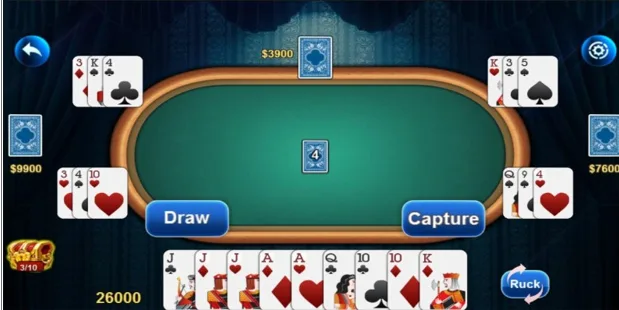
Ta La B52Club This is the online version of Phom, a game played with a standard 52-card deck, focusing on forming sets (phom), discarding unwanted cards, and dealing with each turn. Besides basic actions like taking or drawing cards, the game also has many specific terms such as “ca” (pair), “noc” (stock), “an chot” (taking the final card), “tai” (re-take), “sua bai” (sending cards), “mom” (missing cards), and “den” (paying a penalty). Understanding these concepts correctly helps players distinguish their hand status and the conditions for ending a game.
Phom and basic card structures
In the game of Ta la, not every set of cards is considered a set. Distinguishing between horizontal sets, vertical sets, and pairs is fundamental to understanding why a card can be taken or added to a laid-down set.
Horizontal and vertical Phom
A horizontal set consists of three or more cards of the same value, such as three 8s of different suits or four Kings. A vertical set consists of at least three consecutive cards of the same suit, for example, 7-8-9 of hearts. These are the two main types of combinations used to determine which cards form a set.
One important point to note is that the cards in a set must meet specific conditions regarding value or order. Two cards of the same number but not enough quantity do not form a horizontal set; similarly, consecutive cards of different suits do not form a vertical set.
Cards and trash cards
A pair is a group of two cards that have the potential to form a set if a suitable card appears. For example, a 5 and a 6 of the same suit can wait for a 4 or a 7 of the same suit to form a set. Meanwhile, discard cards are those that do not yet form a set and are usually kept or played depending on the game’s progression.
The difference between a pair and a set is crucial. A pair only represents the possibility of forming a set, while a set is a group of cards that already meets the requirements. Therefore, a single pair should not be considered a complete set.
The mechanism of eating cards and drawing venom.
Each turna la at B52 The game typically revolves around two main options: taking a card played by the previous player if it helps form a set, or drawing a card from the deck if it doesn’t take a card. Afterward, the player must play another card to continue the round. This structure means each turn involves both completing one’s own hand and providing information to the other players.
When is a card considered a winning hand?
“Taking a card” occurs when a card just played by the previous player can be combined with the cards the player is holding to form a valid set (phom). After taking a card, the player continues to maintain the new set structure and must play another card according to the rules of the game.
It’s worth noting that taking cards doesn’t simply increase the number of sets. The cards just taken also reveal something about a player’s preference for a particular set of cards, so consecutive takes can influence how opponents choose their next cards to play.
The deck and card selection.
The discard pile is the remaining deck of cards after the previous players have dealt their cards. When a player doesn’t take a card from the previous player, they draw a card from the discard pile and then play a card that aligns with the game’s strategy.
Drawing cards differs from taking cards in that information about the received card is not publicly displayed to the others. This is one of the factors that makes it impossible to predict the outcome of a game of Tá lả solely from the cards already on the table.
Specific terms in the game of Ta la
Besides the terms “phom” and “ca,” Ta la also has many terms that describe special states or situations. This is also the group of concepts that are most easily confused by beginners.
U and Mom
“U” is the state where a player completes all their cards according to the rules of the game, and the game can end immediately. Some common rules determine whether a player has all the necessary sets of cards or no remaining discard cards to be considered “U”.
Conversely, “mom” or “chay” usually refers to a situation where a player fails to form any sets of cards (phom) by the end of the game. The terminology and conditions for handling this situation may vary depending on the game, so it’s necessary to check the specific rules of the table.
Capture the pawn and pay the penalty.
“Taking the last card” usually involves the card played on the final turn. This is a crucial situation because if the player after you continues to play that card to form a set or lead to a special state, penalty or compensation rules may apply.
“Penalty” is a mechanism for handling responsibility in certain special situations, such as when a player’s play leads to their opponent achieving the conditions for a winning hand according to the rules of the game. “Penalty” should not be understood simply as losing points; it may be a separate payment mechanism depending on the applicable rules.
Repost and resubmit.
“Re-playing” refers to a situation where a player gets an extra turn in certain circumstances after having already laid down their cards. “Sending cards” refers to using remaining cards to form a valid set (phỏm) already formed by the previous player, thereby eliminating unwanted cards before scoring. These two terms often appear together towards the end of a game but are not synonymous. “Re-playing” relates to an additional turn, while “sending cards” focuses on adding unwanted cards to an existing set.
Conclude
Ta la B52Club has a rather unique system of terminology and mechanics, from horizontal and vertical sets, pairs, and the “noc” (a specific combination of cards) to capturing the final hand, re-entering, sending cards, “mom” (a specific type of card), and paying the penalty. Understanding each concept correctly helps players follow the game’s progress, distinguish between completed hands and those waiting for cards, and accurately predict the card distribution and scoring. When playing in a real game, prioritize the specific rules of each table, as some details regarding scoring and special situations may differ between variations.