The 2026 Micro-Soldering Standard: Why Board-Level Repair is the Only Cure for “Unfixable” Devices
The Big Lie of Modern Electronics
We have all been there. You walk into a sleek, glass-walled retail store with a dead smartphone or a laptop that won’t wake up. You’ve babied this device, kept it in a case, and suddenly, it’s a brick. After ten minutes of “diagnostics,” the technician gives you the dreaded news: “It’s a motherboard issue. We don’t fix those. You’ll need to buy a new one.”
In 2026, this is the biggest lie in the tech industry. What they call “unfixable” is usually just a $5 component that has failed on a $1,200 logic board. The manufacturers want you to believe the board is a single, magical piece of silicon that can’t be touched. In reality, it is a complex city of tiny components, and just like a city, you can fix a single broken bridge without tearing down every building.
At We Fix Wireless, we specialize in the “impossible.” While other shops are just part-swappers, we are digital surgeons. If you are looking for genuine phone repair in New York, you need to find a team that isn’t afraid to go under the microscope. We don’t just replace things; we heal them.
Important YMYL Note: This guide discusses high-precision electronics repair involving lithium-ion batteries and high-voltage circuitry. Because hardware failure can lead to data loss or safety risks, we adhere to strict professional standards. This content is for educational purposes regarding the capabilities of modern repair, and professional consultation is always recommended for damaged hardware.
Section 1: Breaking Down the 2026 Micro-Soldering Standard
The 2026 standard is a response to how incredibly small our tech has become. Ten years ago, a “small” component was the size of a grain of rice. Today, we are dealing with 01005-sized components—which are essentially specks of dust.
What Makes This “Standard” Different?
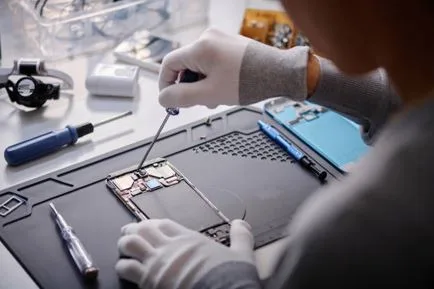
In 2026, you cannot fix a modern device with a handheld soldering iron and a magnifying glass. To meet the current standard of repair, a shop must utilize:
- Trinocular Microscopes with 40x Zoom: You cannot fix what you cannot see. We work on traces that are thinner than a human hair.
- Infrared Pre-Heating Stations: Modern boards are thick and dissipate heat quickly. To solder a chip without damaging it, we have to bring the entire board up to a safe “soak” temperature first.
- Micro-Jumpering Techniques: When a drop shatters the internal copper “roads” inside the 10-layer PCB, we have to manually run microscopic wires to restore the connection.
When you seek out iPhone repair in New York, you are looking for this level of precision. A “standard” repair shop might accidentally “pop” a nearby chip with too much heat, turning a simple fix into a permanent disaster.
Section 2: Why “Part Swapping” is No Longer Enough
In the early days of smartphones, if the charging port broke, you unscrewed it and put a new one in. Today, manufacturers have made devices “monolithic.”
1. The Death of Modular Design
On many modern laptops and tablets, the RAM, the CPU, and the Storage (SSD) are all soldered directly to the motherboard. If one of those fails, you can’t just “unplug” it. You need micro-soldering to remove the specific failing NAND chip or RAM module and replace it.
2. The “Parts Pairing” Lockdown
Companies now use “software locks” to prevent you from using parts from other devices. If you swap a camera or a screen, the phone might disable FaceID or your battery health percentage. Micro-soldering allows us to move the original “logic” chips from your broken part to the new part. We essentially “trick” the phone into knowing it’s using its own original identity, preserving all your features.
3. Catastrophic Data Recovery
When a phone is smashed or drowned, the “board” might be dead, but your data—your photos, your crypto keys, your memories—is still sitting on the memory chip. As long as that chip isn’t cracked, we can perform a “board swap” or “sandwich” repair to get that chip talking long enough to back up your life.
If you want to see the microscopic chaos we deal with every day, check out our [suspicious link removed]. We document these saves because people need to see that there is hope for “dead” hardware.
Section 3: The Economic and Environmental Impact
Why should you care about board-level repair? It comes down to your wallet and the planet.
The Cost Gap
| Repair Type | Manufacturer “Swap” | We Fix Wireless Board Repair |
| MacBook Water Damage | $850 – $1,100 | $250 – $400 |
| iPhone “No Power” Short | $599 (Out of Warranty) | $150 – $200 |
| iPad Not Charging | $450 (Refurbished Swap) | $100 – $150 |
By fixing the board you already own, you are saving hundreds of dollars. More importantly, you aren’t feeding the e-waste machine. Every logic board we save prevents heavy metals and lithium from ending up in a landfill. In 2026, being “green” means being “pro-repair.”
Section 4: Deep-Dive into Common “Unfixable” Failures
To give you a better idea of what we do, here are the most common “unfixable” problems we solve daily:
- VCC_MAIN Shorts: A single capacitor on the main power line fails, grounded out, and prevents the phone from ever turning on. It looks like a dead CPU, but it’s actually a 5-cent component.
- Audio IC Failure: On certain models, the chip responsible for your microphone and speakers literally lifts off the board due to “board flex.” We re-attach it and reinforce the traces.
- Backlight Circuit Blown: You might think your screen is dead, but if you look closely with a flashlight, you can see your icons. The “lights” on the motherboard are off. We replace the tiny backlight filters and diodes to bring the brightness back.
Conclusion: Trust the Process, Not the “Genius”
The next time a store manager tells you that your data is gone and your device is trash, take a second opinion. The 2026 micro-soldering standard has made the impossible possible. Technology is too expensive and too important to be treated as disposable.
At We Fix Wireless, we believe in the “Right to Repair.” We believe that if you bought it, you should be able to fix it. Don’t let a microscopic failure lead to a macroscopic expense.
Frequently Asked Questions
Q: Does board repair void my warranty?
A: If you are already “out of warranty” or have physical/liquid damage, the manufacturer has already “voided” your coverage. At that point, micro-soldering is your best and only path to a working device.
Q: Can you fix a device that has already been to another shop?
A: We can, but it’s harder. “Prior repair attempts” often involve burnt boards or missing components. We always recommend coming to a specialist first to give your device the best chance of survival.
Disclaimers
Safety Disclaimer: This content is for informational purposes only. Do not attempt motherboard repairs at home. Micro-soldering requires specialized fume extraction, ESD-safe environments, and professional-grade heat control to prevent fire or injury.