The 9-Item Bike Commute Starter Kit for People Who’ve Never Ridden to Work
Switching your commute from a packed train or a stop-and-go drive to a bike sounds great in theory. You save money, you skip traffic, and you arrive at your desk with a clearer head than you’d ever get from doomscrolling on the platform. But the first week is where most would-be bike commuters quietly give up — usually because they showed up underprepared, got caught in the rain, arrived drenched in sweat, or realized halfway there that they couldn’t be seen by a single driver.
The good news: none of that is about fitness or willpower. It’s about gear. Get the right starter kit dialed in once, and the habit mostly takes care of itself.
Here are the nine things you actually need before your first ride to work — roughly in order of how much they’ll affect whether you stick with it.
1. A bike that fits you, not the other way around
You don’t need a $2,000 carbon road bike to commute. You need something that fits your body and your route. A hybrid or commuter bike handles potholes, curbs, and the occasional gravel shortcut far better than a twitchy race bike, and it lets you sit upright enough to actually watch traffic.
If you already own a bike that’s been gathering dust, start there. Pump the tires, check the brakes, and ride it around the block before you commit to a 6 a.m. commute on it.
2. A properly fitted bike helmet
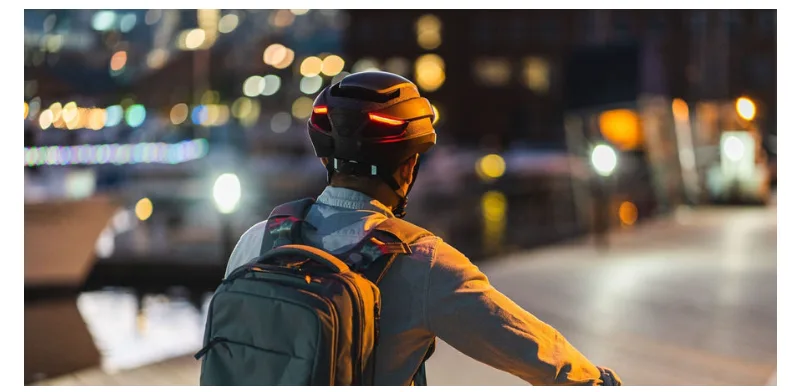
This is the one item you should never skip and never cheap out on. A properly fitted bike helmet is the difference between a bad day and a life-changing one, and modern commuter options have come a long way from the foam mushroom you wore as a kid — many now include built-in LED lights, turn signals, and impact-protection systems that make you dramatically more visible and better protected in city traffic.
Fit matters as much as the helmet itself. It should sit level on your head (not tilted back), the straps should form a snug “V” under each ear, and you should be able to fit no more than two fingers between the strap and your chin. If it shifts around when you shake your head, it’s too loose. Take the extra five minutes to adjust it properly — a helmet that doesn’t fit can’t do its job.
3. Front and rear lights
Even if you only plan to ride in daylight, get lights. Overcast mornings, tunnels, underpasses, and the slow creep of shorter winter days mean you’ll end up riding in low light more often than you expect. A steady white light up front and a blinking red light in the back make you visible from hundreds of feet away.
Think of lights as a conversation with drivers: you’re telling them exactly where you are before they have to guess.
4. A way to carry your stuff (that isn’t a backpack)
A backpack is the fastest route to a sweaty back. If your commute is more than ten minutes, look at panniers (bags that clip onto a rear rack) or a basket. Letting the bike carry the weight instead of your spine makes the whole ride more comfortable and keeps your shirt presentable.
If you must use a backpack, choose one with a ventilated back panel and pack light.
5. A solid lock (and a plan for where to park)
Bike theft is real, and a flimsy cable lock is basically a suggestion. A U-lock or a heavy-duty folding lock is worth the investment. Just as important: figure out where you’ll lock up at work before day one, so you’re not circling the block looking for a rack while you’re already late.
6. Weather-appropriate layers
You don’t need cycling-specific clothing to start, but you do need to think in layers. The rule of thumb: dress for about 10 degrees warmer than the actual temperature, because you’ll heat up fast once you’re pedaling. A packable rain jacket lives permanently in your bag from day one — the morning you forget it is the morning it pours.
7. A small repair kit
A flat tire shouldn’t end your commute or your relationship with biking. A minimal kit covers it: a spare tube, two tire levers, a compact pump or CO2 inflator, and a multi-tool. Watch one ten-minute video on changing a tube, and you’ll never feel stranded.
You probably won’t need it often. But the one time you do, you’ll be very glad it’s in your bag.
8. Fenders
Wildly underrated. Fenders are the cheap plastic guards over your tires that stop road spray from painting a wet stripe up your back and across your shoes. If there’s any chance of riding on damp roads — and there always is — fenders are the single best $30 you can spend on arriving presentable.
9. A realistic plan for arriving fresh
The “I’ll be too sweaty for work” fear stops more people than anything else, and it’s almost always solvable. Most of it comes down to pace: ride slower than you think you should, especially on the way in. You’re commuting, not racing.
Beyond that, a few small habits help — keeping deodorant and a clean shirt in your desk drawer, giving yourself a five-minute cool-down before changing, and choosing a flatter route even if it’s slightly longer. Sweat management is a logistics problem, not a fitness one.
Start before you feel ready
You don’t need all nine items to be perfect before your first ride. The two non-negotiables are a working bike and a well-fitted helmet; everything else you can build out over your first few weeks as you learn what your specific commute demands.
Pick a low-stakes day — maybe a quieter Friday — map a route that favors bike lanes and quiet streets over the fastest line, and just try it once. Most people who make it through the first week end up wondering why they didn’t start sooner. The traffic you used to sit in becomes the traffic you glide past, and the commute stops being the worst part of your day.
See you out there.