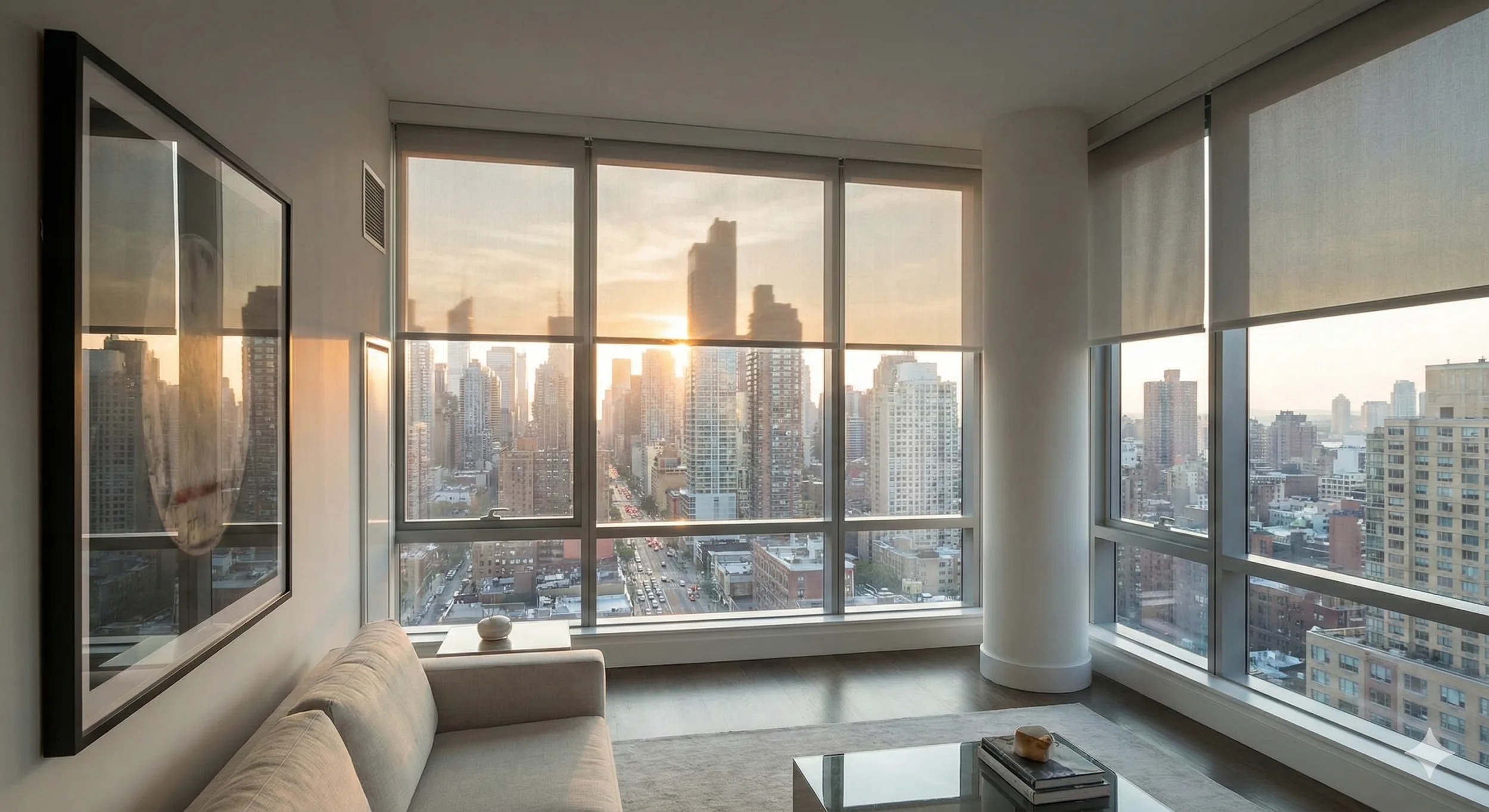
The Architecture of Privacy: Designing Window Treatments for New York City Living
Living in New York City is a study in contradictions. We pay a premium for spectacular views of the skyline, yet we spend half our time trying to block out the gaze of the 500 neighbors living in the building across the street. We covet the charm of pre-war architecture, but dread the drafty windows and clanking radiators that come with it.
Designing for NYC windows is not simply about “covering the glass.” It is an architectural challenge. Whether you are in a glass-curtain high-rise in Hudson Yards or a limestone townhouse in Park Slope, your window treatments must solve three specific problems: light, noise, and the unique intrusion of the city itself.
The “Fishbowl” Effect: Managing High-Rise Glare
Modern luxury apartments in NYC are defined by floor-to-ceiling glass. While beautiful, these walls of windows create a greenhouse effect. In the summer, solar heat gain can overwhelm your HVAC system, and UV rays can fade hardwood floors and artwork within months.
The standard solution here is the Solar Shade. Unlike blackout fabrics, solar shades are woven with a specific “openness factor” (usually 1% to 5%).
- The Benefit: They cut glare and reduce UV input by up to 99%, but,and this is critical,they allow you to keep the view. You can see the Empire State Building, but the sun can’t ruin your sofa.
- The Limitation: At night, the effect reverses. If you have lights on inside, the city can see you. This is why dual systems (a solar shade for day, a blackout shade for night) are the gold standard for high-rise living.
The Brownstone Dilemma: Privacy vs. Light
For those on the lower floors of brownstones or pre-war co-ops, the challenge is different. You are at street level. Passersby are essentially in your living room.
The traditional approach is to keep curtains drawn all day, which turns a multi-million dollar apartment into a cave. A smarter design choice is the “Top-Down/Bottom-Up” shade.
- How it works: You can lower the shade from the top while keeping the bottom covered.
- The Result: You get natural light streaming in near the ceiling, maintaining the airy feel of the room, while the bottom half protects you from the eyes of pedestrians on the sidewalk.
The Acoustic Factor: Dampening the “City That Never Sleeps”
Noise pollution is the invisible intruder in NYC homes. Sirens, garbage trucks, and construction noise can penetrate standard double-paned glass.
While no fabric can soundproof a room completely, heavy, lined drapery can significantly dampen the acoustic “brightness” of a room. Hard surfaces (glass, concrete floors, marble counters) bounce sound waves, creating an echo chamber. Adding layers of soft window treatments absorbs high-frequency noise, taking the “edge” off the street sounds and making the interior feel calmer and more intimate.
Navigating Radiators and Moldings
Pre-war NYC apartments are famous for two things: beautiful crown molding and inconveniently placed steam radiators.
- The Radiator Issue: You cannot hang floor-length drapes over a radiator. It is a fire hazard and blocks heat flow. The solution is often a Roman Shade that ends at the sill, or custom tailoring the drapery to “break” just above the radiator cover.
- The Molding Issue: Installing hardware into 100-year-old plaster requires specialized anchors and a delicate touch to avoid crumbling the architectural details.
Conclusion
Your windows are the interface between your sanctuary and the chaos of the city. Treating them requires more than just picking a color; it requires understanding the physics of light, sound, and privacy.
If you are navigating the complex market of window treatments nyc offers a unique landscape where design must meet extreme functionality. Investing in the right layering—balancing solar protection with privacy—is the difference between an apartment that looks good and one that feels like home.