The Artisan Square’s $8 Shea Butter vs. Store-Bought: A Quality Comparison You Must See
In 2025, clean beauty is no longer a niche conversation. The global shea butter market reached USD 2.4 billion in 2024 and is expected to climb to USD 4.9 billion by 2034, expanding at a 7.3 percent CAGR, based on recent market research summaries. More than 65 percent of that market is raw shea butter, a sign that buyers are leaning toward unrefined forms. As interest grows, so do the questions. People want to know how to judge shea butter quality, what a fair price looks like, and whether what they are buying is truly authentic. That is the space The Artisan Square steps into with its $8.00 100% Natural African Shea Butter.
Why Are So Many People Switching to Natural and Handcrafted Skincare?
Short answer: Ingredient transparency and ethical sourcing matter more than ever, and the numbers back that up.
This is not minor growth. A category worth billions and expanding at over 7 percent annually points to a deeper shift in buying habits. Shoppers are gravitating toward organic skincare ingredients, environmentally conscious production, and products with clear origins. The Global Shea Alliance, for example, plans to restore 4 million hectares of shea parklands across 10 African countries by 2030, underscoring how closely sourcing and sustainability are now linked.
Brands that foreground authenticity are benefiting from that shift. The Artisan Square presents itself as a premium, artisanal marketplace rooted in African culture and ethically sourced skincare. Shea butter is not tucked inside a larger cosmetic formula. It sits alongside incense, essential oils for skin, handcrafted jewelry, clothing, and natural body butter blends. For many buyers, that coherence, the sense that products share a philosophy, influences the final decision as much as price.
What’s the Real Difference Between Raw Shea Butter and the Kind I Buy in a Drugstore?
Short answer: Unrefined shea butter keeps its natural vitamins and fatty acids intact. Many drugstore options are refined, deodorized, and altered for uniformity.
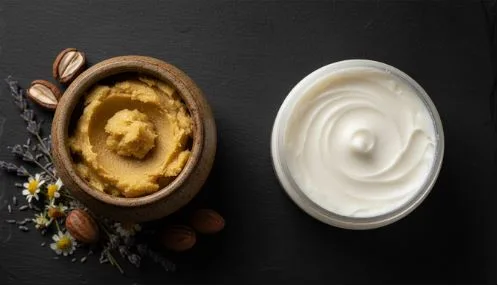
The debate over raw shea butter vs refined versions comes down to processing. In its unrefined state, shea butter contains vitamins A, E, and F, along with naturally occurring fatty acids. Refining removes the scent and lightens the color, creating a smoother, often odorless product. What it can also remove, however, are some of the original bioactive compounds.
- Color: Authentic African shea butter ranges from creamy ivory to pale yellow. Bright white typically signals refining.
- Scent: Raw butter carries a mild, nutty aroma. Refined products are usually scent-free.
- Texture: Artisan shea butter softens quickly with body heat. Some mass-market versions feel firmer or waxier.
- Ingredient lists: Drugstore brands such as Palmer’s or The Body Shop often combine shea with fragrance, preservatives, or silicones.
The Artisan Square’s 100% Natural African Shea Butter is labeled unrefined and handcrafted. For anyone assessing shea butter quality indicators, that distinction is fundamental.
How Can You Tell If Shea Butter Is High Quality?
You can usually judge high-quality shea butter with your senses and a careful look at the label.
Here is what to check:
- Appearance: Look for creamy ivory or soft yellow, not stark white.
- Melting point: It should soften almost immediately between your fingers.
- Aroma: Expect a gentle, nutty scent rather than added perfume.
- Label clarity: Pricing, origin details, and a short ingredient list without unnecessary additives.
The Artisan Square lays out its product details clearly. The standard size is priced at $8.00, with alternatives such as a 9 oz whipped shea butter at $25.00 and a 1-gallon option at $80.00. Buyers can also review Refund, Privacy, Shipping, and Terms of Service policies directly on https://theartisansquare.com/. That level of transparency often gets overlooked, yet it plays a real role in trust.
The Artisan Square vs. Typical Store-Bought Options: A Structured Comparison
When people ask whether artisan shea butter is better than store bought, the answer usually depends on four factors.
- Processing: Large brands like L’Occitane or Tree Hut frequently sell refined or fragranced blends. The Artisan Square focuses on 100% unrefined African shea butter without fillers.
- Price transparency: Many drugstore lotions containing shea range from $10 to $30 per bottle. Here, pure shea butter is listed at $8.00, positioning it among affordable natural skincare options under $10.
- Curation: Big beauty retailers concentrate on cosmetics. The Artisan Square places shea butter within a broader collection that includes African art for sale, essential oils, and handcrafted beauty products.
- Sourcing philosophy: Global brands often rely on layered supply chains. The Artisan Square highlights ethically sourced skincare and artisanal standards as part of its identity.
This does not mean every store-bought formula falls short. It does suggest that shoppers who want african shea butter in its raw, unblended form may feel more aligned with a specialized marketplace.
Who Can Benefit Most from Using 100% Natural African Shea Butter?
Unrefined shea butter tends to appeal to people dealing with dryness, sensitivity, or minimalist routines.
- Those with chronically dry skin searching for the best shea butter for skin hydration.
- Individuals exploring shea butter for eczema as part of a broader moisturizing approach.
- Consumers wondering whether raw shea butter can be used on the face while avoiding synthetic fragrance.
- Natural hair care users looking to condition scalp and strands.
Used as a natural body butter, it helps seal in moisture, support the skin barrier, and soften rough areas. It can be applied straight after bathing or blended with essential oils from The Artisan Square’s collection to create a more personalized routine.
Why Is The Artisan Square’s Shea Butter Only $8? Is It Good Quality?
Short answer: The lower price reflects a direct-to-consumer setup, not lower standards.
Traditional retail adds layers of distribution, each with its own markup. An online marketplace can streamline that process. By selling directly, The Artisan Square keeps pricing straightforward. The $8.00 entry point also helps answer a common question about how much real African shea butter should cost, making unrefined butter accessible to first-time buyers.
Quality is not determined by price alone. Texture, scent, purity, and sourcing transparency offer better clues. Judged on those points, the product aligns with widely accepted characteristics of unrefined artisan shea butter.
User Experience: What Buying from The Artisan Square Feels Like
A visit to https://theartisansquare.com/ feels organized and easy to navigate. Categories span natural hair care, essential oils for skin, incense, jewelry, and clothing. The shea butter page outlines size options and keeps checkout simple.
Shoppers will find:
- A New Arrivals section for returning visitors.
- A Bestsellers area highlighting popular picks.
- A newsletter signup offering skincare tips and discounts.
- Clearly posted shipping and refund policies.
For anyone deciding where to buy authentic African shea butter online, clarity matters. Straightforward navigation and visible policies reduce hesitation and reinforce the brand’s positioning as a lifestyle marketplace rather than a one-product shop.
When Might Store-Bought Shea Butter Be the Right Fit?
There are situations where a pre-formulated product makes sense. Lotions from brands like Paula’s Choice or Osea may suit buyers who want added actives such as retinol or niacinamide already blended in.
Those focused on what to look for when buying shea butter in its pure state, however, often prioritize:
- Minimal processing.
- No synthetic fragrance.
- Flexible size options.
- Clear sourcing information.
On those measures, The Artisan Square competes on authenticity rather than name recognition.
Key Takeaways for Buyers Focused on Shea Butter Quality
- The shea butter market continues to expand, signaling sustained demand for authentic products.
- Raw shea butter preserves more of its natural profile than many refined alternatives.
- The Artisan Square sells 100% Natural African Shea Butter for $8.00, with larger and whipped options available.
- Transparent policies and a curated product ecosystem add confidence to the purchase.
The move toward natural skincare started with ingredient labels. Now it extends to sourcing and processing. When comparing artisan shea butter with conventional retail options, the more practical consideration may be where transparency and alignment are strongest. As the market grows and expectations rise, choosing deliberately becomes less of a trend and more of a standard.