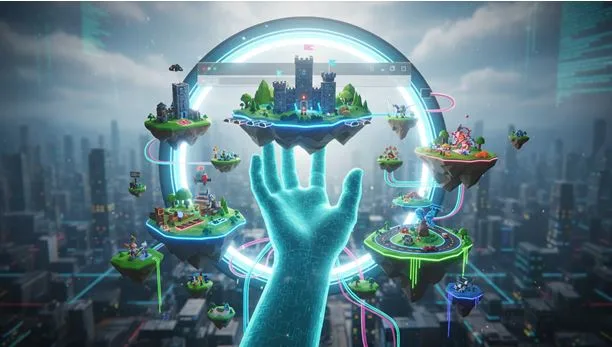
The browser game boom: tech’s unseen giant
In the grand theatre of the technology industry, all eyes are currently fixed on a single, colossal stage: the metaverse. With tech titans pouring tens of billions of dollars into virtual and augmented reality, the narrative is clear, the future of digital interaction will be an immersive, 3D, and all-encompassing experience. We are told that we will work, socialize, and play in these complex, persistent virtual worlds. It is an ambitious, and incredibly expensive, vision of the future.
But while the world’s media and investors are focused on this virtual horizon, a different, quieter, and arguably more significant revolution is happening in plain sight. It’s not happening on a powerful VR headset or a next-generation gaming console. It’s happening in a simple browser tab. The humble browser game, once considered a relic of the early internet, is experiencing a massive and sustained resurgence. This isn’t just a niche hobby; it’s a booming, global economy built on principles that stand in stark contrast to the high-cost, high-commitment vision of the metaverse. By overlooking this “unseen giant,” we risk missing the story of how most people are actually spending their digital leisure time.
The triumph of zero friction: accessibility as a business model
The first and most critical reason for this quiet boom is the principle of zero friction. The modern AAA gaming landscape is defined by massive barriers to entry. A new console can cost upwards of $500. A high-end PC, several thousand. Games themselves cost a premium, and often come with mandatory downloads that can exceed 100GB, requiring high-speed internet and hours of waiting. In contrast, the browser game offers a promise of radical accessibility. There are no downloads, no installations, and no powerful hardware required. The game works on a ten-year-old laptop, a library computer, or a basic smartphone. This success lies in modernizing timeless formulas that everyone understands. A classic puzzle, for example, is instantly accessible in a format like the megablock game, reaching a massive, global audience that the console market simply cannot. This isn’t just a feature; it’s a fundamentally more inclusive business model that respects the user’s time, money, and data.
The 5-minute loop: the psychology of modern attention
Beyond the technical accessibility is the psychological appeal. Our daily lives are saturated with information and complex decisions. This “decision fatigue” has shortened our collective attention span and created a powerful demand for entertainment that is simple, satisfying, and self-contained. While a blockbuster game demands dozens of hours and complex skill mastery, a browser game offers a complete emotional arc in under five minutes. It’s a perfect “mental palate cleanser.” The universal appeal of a controlled risk, for instance, is perfectly captured in modern ‘push-your-luck’ formats. A game like the chicken pirate casino can deliver a complete, thrilling experience in under a minute, a level of efficiency that even multi-million dollar titles can’t match. This “5-minute loop”, a quick challenge, a clear outcome, and an instant “play again” prompt, is perfectly suited to the rhythms of modern life, filling the small gaps in our day, from a coffee break to a daily commute.
A more honest economy?
The business model of browser games also presents a compelling alternative to the often-criticized monetization strategies of the mainstream mobile and AAA markets. While many top-grossing mobile games rely on “pay-to-win” mechanics or controversial “loot box” systems that blur the line with gambling, the browser game economy often feels more transparent. Monetization typically comes from on-page advertising, a straightforward and well-understood value exchange. The game’s success is therefore tied directly to user engagement and enjoyment, not on a user’s willingness to spend money to overcome an artificial barrier. This creates a more positive user experience, fostering trust and loyalty in a way that more predatory models cannot. It’s a return to a simpler form of digital commerce: the content is free, and the user “pays” with their attention.
The global, cross-demographic reach
Perhaps the most significant aspect of the browser game economy is its truly global and cross-demographic reach. Console gaming, while massive, still skews towards a specific, younger demographic. Browser games, due to their simplicity and accessibility, are played by everyone. They are popular in developing nations where consoles and high-speed internet are a luxury. They are enjoyed by older audiences who are not interested in learning complex controller schemes. They are played by office workers on their lunch breaks and students between classes. This quiet, distributed audience is collectively enormous, representing a far more accurate cross-section of the global population than the traditional gaming market. For advertisers and developers, this represents a vast and often underestimated opportunity to reach a truly mainstream audience.
Conclusion: the future of play is a spectrum
The narrative that the metaverse is the only “next big thing” is a dangerously simplistic one. The future of digital entertainment is not a single destination, but a wide spectrum of experiences tailored to different needs and contexts. The immersive, high-commitment world of VR will undoubtedly have its place. But for the billions of people looking for a quick, simple, and joyful escape in the small moments of their day, the browser is, and will continue to be, the most important platform in the world.
The quiet boom of browser games is not a sign of technological regression. It is a powerful market signal that in an increasingly complex and expensive digital world, the demand for entertainment that is simple, accessible, and respectful of the user’s time has never been higher. The giant isn’t unseen because it’s small; it’s unseen because it’s everywhere.