The Community 5K Is Becoming Civic Infrastructure
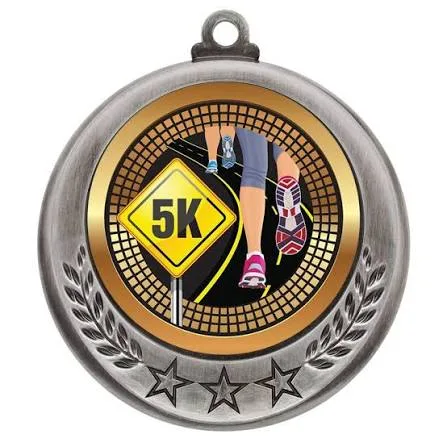
Why an accessible race distance now sits at the intersection of public health, local identity, event commerce, and community connection.
Across cities and small towns, 5k race medals are appearing at the end of events that look modest on a calendar but carry an outsized civic role. A five-kilometer race can bring experienced runners, first-time participants, families, schools, charities, local sponsors, and public agencies into the same temporary community. The distance is short enough to invite broad participation, yet substantial enough to create a shared achievement. What happens around that course – training groups, fundraising, volunteering, street activation, and the finish-line ritual – increasingly matters as much as the time on the clock.
A Short Race Can Carry a Wide Civic Invitation
The five-kilometer format works because it can hold several audiences at once. A trained runner can race it hard. A first-timer can prepare for it without reorganizing an entire year. Families, school groups, corporate teams, walkers, and charity supporters can share the same start line without pretending they have identical goals.
That breadth matters beyond sport. The US Centers for Disease Control and Prevention notes that social support, including walking and activity groups, can help people start and maintain physical activity. A community 5K turns that principle into a visible public ritual: people train together, recruit friends, volunteer, sponsor a cause, and then occupy the same streets or trails for a morning.
The event is therefore more than a timed route. It is a temporary network linking residents, local government, schools, clubs, health organizations, and small businesses. When the network works, the race leaves behind new relationships as well as finish times.
The Finisher Award Has Become Part of the Event’s Public Story
Race organizers once treated medals as a late procurement item. Participants increasingly treat them as the portable record of the event. The medal appears in finish-line photographs, social posts, sponsor recaps, school newsletters, and the collections of repeat runners. Its media life can be much longer than race morning.
That changes the design brief. Strong custom race medals do not simply display a logo. They make the place, cause, distance, or annual theme readable at a glance. A river route can become a cutout. A local building can become raised relief. A charity color can be carried into enamel and ribbon artwork. For a race series, connected shapes or a shared visual system can reward repeat participation.
The point is not ornament for its own sake. The physical award should help the event explain itself. When runners can identify the story without reading a paragraph, the medal is doing editorial work for the organizer.
Figure: A colorful enamel race medal shows how event identity can be carried into a compact finisher award. Source page: https://badgeartisansmedals.com/custom-race-medals/
Operational Resilience Is Part of the Design Decision
The public sees the finished object. The organizer sees permit dates, sponsor approvals, uncertain registration, freight windows, and a fixed race morning. That is why the medal format has to match operational reality, not only the first design concept.
A fully custom die-cast project is the right choice when shape, depth, cutouts, or a distinctive structure define the event. But blank medals can be the smarter route for a short deadline, a first-year race, multiple award categories, or late sponsor artwork. A stocked metal base with a printed or engraved center insert removes new-mold time while preserving room for the race identity.
This is not a quality hierarchy. It is a risk decision. A modest event that receives its awards on time has made a better choice than an ambitious event whose custom concept misses the freight cutoff.
| Planning situation | Fully custom die-cast route | Stock insert route |
| Event identity | Unique shape, relief, cutouts, or function | Custom center art on an existing medal body |
| Schedule | Best with design and mold-development time | Better when the deadline is compressed |
| Order certainty | Works well for established quantities | Useful when categories or volume may change |
| Visual system | Maximum control over the whole object | Consistent base with flexible inserts and ribbons |
Manufacturing Details Decide Whether the Story Survives Production
Good artwork is not automatically good production artwork. Fine sponsor text, narrow enamel channels, weak contrast, and shallow relief can disappear when a digital concept becomes metal. The organizer should ask how the design will be cast, polished, plated, colored, assembled, and checked.
In a typical zinc-alloy workflow, metal melts near 385 C and is injected into a steel die using equipment such as an 88-ton die-casting machine. Venting, gate placement, and pressure affect whether sharp corners fill cleanly. Poor venting can leave pores; uneven ejector placement can create stress or cracking. Polishing and plating then change how fine relief catches light.
Color creates another decision. Soft enamel can work well for energetic event graphics because recessed color areas leave raised metal lines visible. UV printing is more suitable for gradients, photographic elements, and dense sponsor artwork. A full cure for soft enamel may run around 100 C for 60 minutes, so rushing the finishing stage can create defects that no glossy mockup will reveal.
The practical safeguard is simple: approve a production-aware proof, confirm front and back details, check ribbon copy, and request clear photos or video before bulk shipment when the schedule permits.
Figure: A shaped winter running medal uses finish, silhouette, and color to make the race theme immediately legible. Source page: https://badgeartisansmedals.com/custom-5k-medals/
A Successful 5K Leaves More Than a Finish-Line Photograph
The strongest community races produce a chain of small outcomes. A resident trains with neighbors. A school club raises funds. A local business meets customers outside its storefront. Volunteers gain event experience. Public spaces are seen as places for movement and connection rather than only traffic.
The CDC has reported that access to parks and trails can encourage physical activity and that well-designed public spaces give neighbors places to meet. A 5K does not create that infrastructure by itself, but it can make the value of those spaces visible. It puts a date, route, story, and shared achievement around them.
That is why event objects matter. Bibs, signs, shirts, and medals are not the community benefit, but they help people remember and repeat the behavior that produced it. When the race returns the following year, the medal in a drawer becomes a quiet invitation to register again, bring someone new, and rebuild the network.
| Editorial takeaway: A community 5K creates value when the course, partners, participant experience, and physical keepsake tell one coherent local story. |