The Complete Guide to B2B Supplier and Buyer Matchmaking
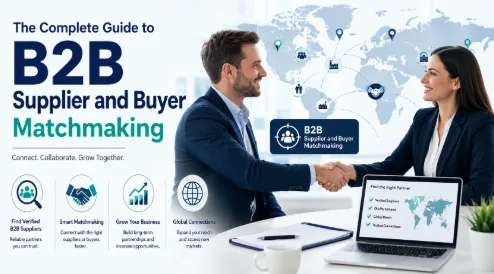
Why Strong Business Matchmaking Matters More Than Ever
Building a successful business is not only about having a great product or service. Long-term growth depends on finding the right partners who can deliver quality, consistency, and reliability. Whether you are a manufacturer looking for distributors or a retailer searching for dependable manufacturers, establishing the right business relationship can determine your future success.
This is where B2B supplier and buyer matchmaking becomes valuable. Instead of spending countless hours searching through unreliable sources, businesses can connect with companies that match their specific industry, production capacity, quality standards, and business goals. The right partnership helps reduce risks, improve efficiency, and create opportunities for sustainable growth.
Modern businesses no longer rely solely on trade fairs or personal referrals. Digital platforms, supplier databases, and professional business networks have made it easier than ever to connect with suitable partners across international markets.
Understanding B2B Supplier and Buyer Matchmaking
At its core, B2B supplier and buyer matchmaking is a structured process that connects buyers with suppliers based on compatibility rather than chance. Instead of contacting hundreds of companies individually, businesses can identify organisations that meet their exact requirements.
A successful matchmaking process considers several important factors, including:
- Industry expertise
- Manufacturing capability
- Product quality
- Production capacity
- Certifications
- Delivery reliability
- Communication standards
- Long-term business potential
When both parties are carefully matched, negotiations become smoother, partnerships become stronger, and business expansion becomes much easier.
Why Businesses Need Verified Suppliers
Working with an unreliable supplier can lead to delayed shipments, poor product quality, financial losses, and damaged customer relationships. That is why companies increasingly prefer to find verified B2B suppliers before making purchasing decisions.
Verified suppliers usually undergo various screening processes that may include business registration checks, company verification, certifications, production capability assessments, or other validation procedures depending on the platform or marketplace.
Choosing verified businesses provides several advantages.
- Reduced business risk
- Greater confidence during negotiations
- Better product consistency
- Improved communication
- More reliable delivery schedules
- Stronger long-term partnerships
Although verification does not guarantee future performance, it provides buyers with greater confidence when evaluating potential partners.
The Growing Importance of Verified Supplier Directories
Finding trustworthy suppliers manually can consume significant time. This is why businesses increasingly rely on a verified suppliers directory when searching for manufacturing partners or wholesale suppliers.
A well-maintained directory allows businesses to compare suppliers efficiently while reviewing essential company information before making contact.
Useful supplier directories often include details such as:
- Company profiles
- Product categories
- Manufacturing locations
- Export markets
- Business certifications
- Years of experience
- Contact information
Using a verified suppliers directory can significantly reduce research time while helping businesses identify suppliers that match their specific purchasing needs.
How Buyers Can Identify the Right Supplier
Finding the right supplier involves much more than comparing prices. The lowest quotation is not always the best option if quality, communication, or delivery standards are poor.
Professional buyers typically evaluate suppliers using several important criteria.
Product Quality
Ask for product samples whenever possible. Evaluate consistency, materials, workmanship, and packaging before placing larger orders.
Production Capacity
Ensure the supplier can handle both current demand and future business growth without affecting quality or delivery schedules.
Certifications
Depending on the industry, suppliers may require quality certifications or compliance documentation to meet regulatory requirements.
Communication
Fast, professional communication often reflects how efficiently a supplier manages customer relationships.
Reputation
Look for customer feedback, export history, and business references whenever available.
Carefully evaluating suppliers before signing agreements helps minimise future complications.
How Suppliers Can Attract More Serious Buyers
Supplier matchmaking is not only beneficial for buyers. Manufacturers and wholesalers also benefit from connecting with qualified purchasing companies.
Many suppliers struggle because they focus entirely on production while neglecting business visibility. Creating detailed company profiles, maintaining updated product catalogues, and responding promptly to enquiries all improve credibility.
Suppliers seeking international growth should also understand how to find new B2B customers through multiple business development channels rather than relying on a single source.
Successful suppliers often invest time in:
- Building complete business profiles
- Publishing accurate product information
- Responding quickly to enquiries
- Maintaining quality consistency
- Updating certifications
- Participating in industry networking opportunities
Professional presentation frequently creates stronger first impressions with potential buyers.
Digital Platforms Have Changed Global Trade
International trade has become much more accessible over the past decade. Businesses can now discover opportunities from virtually anywhere in the world without extensive travel.
Online marketplaces, supplier databases, industry portals, and digital networking platforms have simplified cross-border business development.
Companies looking to find verified B2B suppliers can now compare multiple manufacturers from different countries within a relatively short period. This improves competition while giving buyers greater flexibility when selecting suppliers.
Similarly, manufacturers can expand into new markets by showcasing their capabilities to buyers actively searching for products within their industry.
Technology continues to make supplier discovery faster, more transparent, and more efficient.
Common Mistakes Businesses Should Avoid
Many businesses make avoidable mistakes during supplier selection that can create expensive problems later.
One common mistake is choosing suppliers solely based on price. Lower costs may sometimes indicate lower quality, inconsistent production, or weaker customer support.
Another mistake is skipping supplier verification. Even if a company appears legitimate online, businesses should still perform proper due diligence before entering significant agreements.
Poor communication is another warning sign. Delayed responses, incomplete information, or inconsistent answers can indicate future operational difficulties.
Businesses should also avoid placing very large initial orders without first testing product quality and supplier reliability through smaller transactions.
Taking a careful, step-by-step approach usually produces better long-term results than rushing into partnerships.
Building Long-Term Supplier Relationships
Finding a supplier is only the beginning. Maintaining a productive business relationship requires continuous effort from both parties.
Successful partnerships are built on trust, transparency, and mutual benefit.
Businesses should communicate expectations clearly regarding:
- Product specifications
- Delivery schedules
- Payment terms
- Quality standards
- Packaging requirements
- Future demand forecasts
Regular communication helps resolve small issues before they become larger problems.
Long-term supplier relationships often result in better pricing, priority production scheduling, faster problem resolution, and increased flexibility during changing market conditions.
Expanding Your Customer Network Successfully
For suppliers, attracting qualified buyers requires more than simply listing products online.
Understanding how to find new B2B customers involves identifying industries that regularly purchase your products, targeting appropriate markets, and building credibility through consistent communication and reliable service.
Many successful suppliers diversify their customer acquisition strategies by combining online directories, business networking events, industry associations, referrals, and digital marketplaces.
Businesses that actively develop new customer relationships are generally better positioned to manage changing market conditions while reducing dependence on a limited number of clients.
Consistent outreach combined with strong customer service often produces the best long-term results.
The Future of B2B Matchmaking
Business matchmaking continues to evolve as technology improves. Artificial intelligence, advanced search filters, automated recommendations, and improved verification systems are making supplier selection increasingly efficient.
Businesses now expect faster access to reliable information, verified company profiles, and transparent communication before making purchasing decisions.
As global competition continues to increase, companies that embrace structured B2B supplier and buyer matchmaking processes will often gain a competitive advantage through stronger partnerships and more efficient supply chains.
The emphasis is gradually shifting from simply finding suppliers to finding the right suppliers that align with long-term business objectives.
Taking the Next Step Towards Better Business Partnerships
Successful business growth depends on making informed decisions and building relationships with trustworthy partners. Whether your goal is to find verified B2B suppliers for your purchasing needs or expand your customer base by learning how to find new B2B customers, investing time in proper research pays significant dividends.
Using a reliable verified suppliers directory helps simplify the search process while improving confidence in potential business partners. At the same time, structured B2B supplier and buyer matchmaking creates opportunities for stronger collaborations that benefit both buyers and suppliers.
Rather than focusing solely on price or convenience, businesses should prioritise quality, transparency, communication, and long-term value. Companies that approach supplier selection strategically are better equipped to build resilient supply chains, strengthen customer relationships, and achieve sustainable business success in an increasingly competitive global marketplace.