The Convergence of Elite Surgical Pedigree and Modern Systems Innovation: Redefining the Patient Experience at Vertrae®
In the rapidly evolving landscape of 21st-century medicine, the most profound “innovation” isn’t always a new piece of titanium hardware or a faster imaging machine—though those are certainly impressive. Sometimes, the most disruptive breakthrough is the intellectual architecture of the person leading the charge. At Vertrae®, we’ve seen a shift in how patients view spinal health. They are no longer just looking for a doctor; they are looking for a comprehensive, high-performance service. By “productizing” elite surgical expertise through a lens of strategic management, Dr. Kamal Woods has created a care model that functions more like a precision-engineered system than a traditional medical office.
This transformation is fueled by a unique professional DNA. When you look at the “specs” of this clinical service, you find a rare combination: neurosurgical precision, orthopedic structural mastery, and the efficiency of a world-class business strategist. This multidisciplinary foundation is the engine behind a new era of spine care where patient outcomes are optimized through rigorous research, robotic accuracy, and a human-first philosophy.
The Hybrid Advantage: Merging Neurosurgery and Orthopedics
Historically, the world of spine surgery was divided into two distinct camps. You had neurosurgeons, the “electricians” of the body, focusing on the delicate nerves and the spinal cord. Then you had orthopedic surgeons, the “structural engineers,” focusing on the bones and mechanical stability. For decades, patients had to choose between these two perspectives.
The innovation at Vertrae® is the “Hybrid Engine.” After completing a demanding neurosurgery residency at Loma Linda University Medical Center—a facility known for managing high-velocity trauma and complex neurological pathology—the founder took an extra, elite step. He completed a Combined Orthopedic and Neurosurgery Spine Fellowship at the world-renowned Cedars-Sinai Medical Center in Los Angeles. This rare “bilingual” training allows for a diagnostic depth that few in the field can match. Whether a patient is suffering from a complex deformity or a microscopic nerve compression, the treatment plan is designed with an understanding of both the electrical wiring and the skeletal frame.
This dual-specialty perspective is particularly vital in the era of motion preservation. Because Dr. Kamal Woods understands the mechanics of bone healing as deeply as he understands nerve sensitivity, he can offer a more nuanced range of treatments, from artificial disc replacements to motion-preserving stabilizations that traditional “fusion-only” approaches might overlook.
The MBA Innovation: Re-Engineering the Patient Journey
Why would a world-class neurosurgeon go back to school to get an MBA? For most, it seems like an unnecessary detour. For the visionary behind Vertrae®, it was a strategic necessity. He recognized that even the most brilliant surgical outcome can be tarnished by a broken delivery system—long wait times, confusing communication, and the cold, clinical feel of a massive hospital bureaucracy.
By earning an MBA from the Johns Hopkins Carey Business School, he introduced a level of organizational innovation rarely seen in private practice. Johns Hopkins is famous for teaching “business with humanity,” and that philosophy is the heartbeat of this practice. We’ve applied management principles like Lean Six Sigma and high-level strategic planning to the clinical workflow. The result is a “frictionless” experience. We’ve eliminated the traditional waiting room culture in favor of a concierge-style flow that respects the patient’s time and reduces the anxiety often associated with spinal consultations. It is the application of business logic to maximize human healing.
Robotic Precision: The “GPS” for Modern Neurosurgery
When we talk about technology, we have to talk about the “hardware” that makes modern outcomes possible. At Vertrae®, innovation is anchored by robotic-assisted platforms like the Mazor X™. Think of this technology as a high-precision navigation system for the human body. Just as a pilot wouldn’t fly across an ocean without GPS, we believe a surgeon shouldn’t navigate the delicate corridors of the spine without the highest level of guidance.
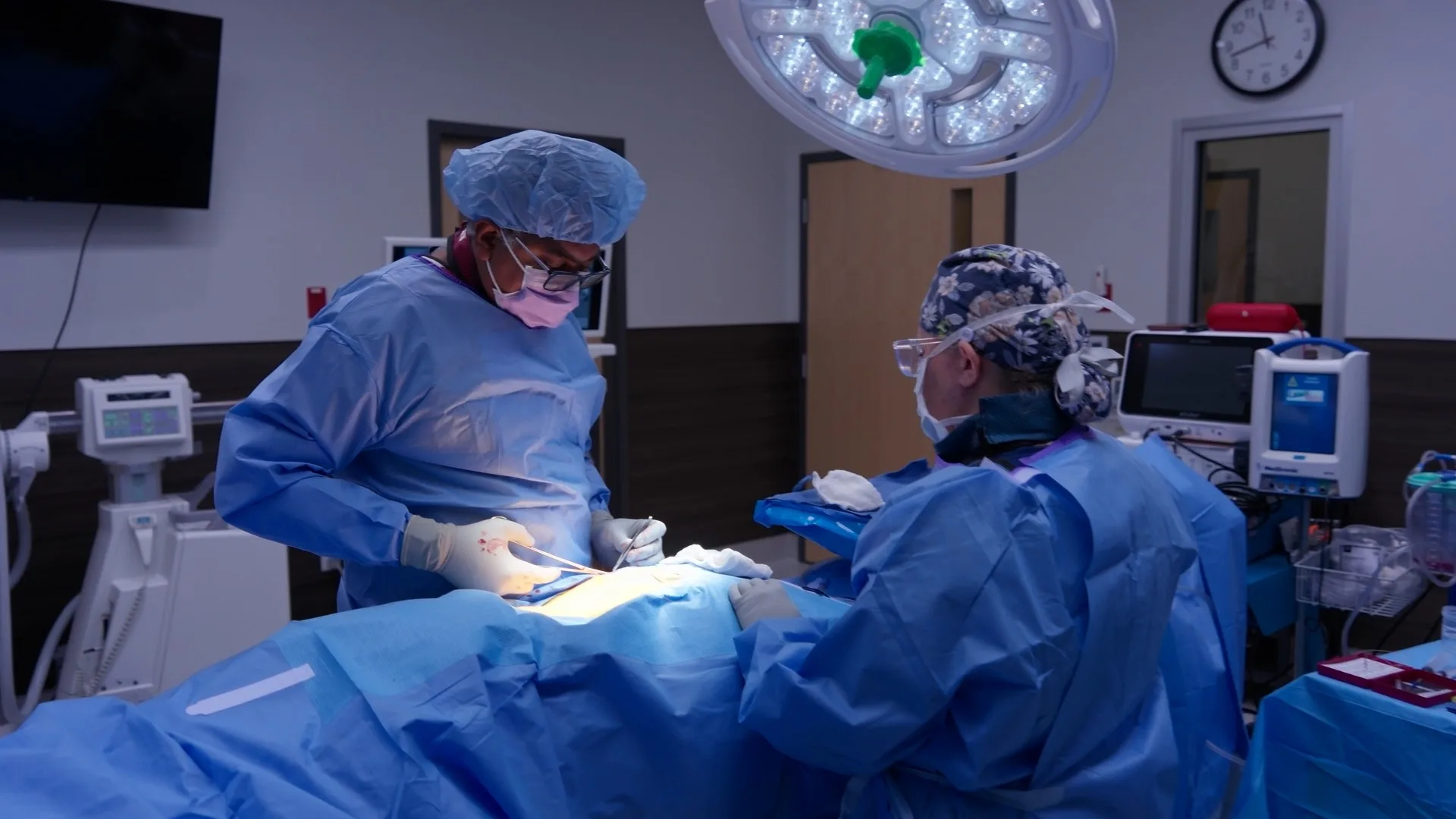
This robotic technology allows Dr. Kamal Woods to create a personalized 3D blueprint of a patient’s anatomy before the first incision is ever made. During the procedure, the robotic arm guides the surgeon’s instruments with sub-millimeter accuracy. This level of precision is the cornerstone of minimally invasive spine surgery (MISS). By targeting only the problematic area with extreme accuracy, we can use smaller incisions, which leads to less muscle trauma, lower infection rates, and—most importantly—a significantly faster return to normal life. It’s not just about using a robot; it’s about using a robot to achieve a level of precision that the human eye alone cannot reach.
MotionFirst™: The Philosophy of Living Without Limits
For a long time, the standard answer for a degenerated spine was “fusion”—welding two vertebrae together to stop them from moving. While effective for pain, it often led to a loss of flexibility and increased stress on the surrounding joints. The innovation we’ve championed is the MotionFirst™ protocol.
This philosophy prioritizes motion preservation whenever clinically appropriate. By utilizing advanced artificial disc replacements (ADR) and non-fusion stabilization techniques, the goal is to keep the spine moving as nature intended. This is where the hybrid training pays dividends; understanding the structural load of the vertebrae (ortho) and the pressure tolerances of the nerves (neuro) allows for a more aggressive pursuit of motion-saving options. For an active patient who wants to get back to the gym, the golf course, or simply playing with their grandkids, this “innovation in mindset” is the most valuable service we provide.
Factual Trust: The ABNS Board Certification Standard
In an age of social media “experts” and flashy marketing, the ultimate innovation is often a return to rigorous, verified excellence. Board certification by the American Board of Neurological Surgery (ABNS) is the gold standard of public trust. Achieving this status requires years of peer-reviewed cases, grueling examinations, and a proven track record of safety and success.
As a Fellow of the American Association of Neurological Surgeons (FAANS), the expertise offered at Vertrae® has been vetted by the most demanding governing bodies in medicine. This isn’t just about a title; it’s about a commitment to evidence-based science. Every innovative technique we use—from robotic navigation to biological bone grafts—is grounded in established research and proven clinical data. For the patient, this board certification is a guarantee of quality, ensuring that their care is being handled by a surgeon whose skills are recognized in the top 1% of the profession.
The Human Side of High-Tech Care
Despite the robots, the patents, and the advanced degrees, the core “product” of Vertrae® is a human connection. We practice “Engaged Listening,” a methodology that ensures the patient is the hero of their own story. We understand that back pain isn’t just a physical sensation; it’s a barrier to joy. It’s a missed vacation, a difficult day at work, or the inability to hold a child.
Because of this, we view surgery as a last resort. Our research-based approach includes a wide array of conservative treatments, from specialized physical therapy to advanced interventional pain management. When surgery is the best path, it is performed with the utmost empathy. We’ve designed our recovery protocols to be as supportive as they are technical, ensuring that every patient feels empowered from their first consultation to their final follow-up. This balance of “high-tech” and “high-touch” is what truly sets us apart in the competitive world of spinal medicine.
A Vision for the Future of Spinal Wellness
As we look toward the future, the goal of Vertrae® is to continue pushing the boundaries of what is possible in neurosurgery. We are constantly researching new biological materials, refining robotic software, and finding new ways to make the patient journey even more seamless. The “product” we offer is a better version of tomorrow—a future where chronic pain doesn’t dictate a person’s potential.
By combining the elite surgical pedigree of a Cedars-Sinai fellowship with the strategic innovation of a Johns Hopkins MBA, we haven’t just built a clinic; we’ve built a new standard for healthcare. It is a model where precision, efficiency, and compassion coexist. For those living with spinal issues, the message is clear: the technology is here, the expertise is verified, and the focus is entirely on you.