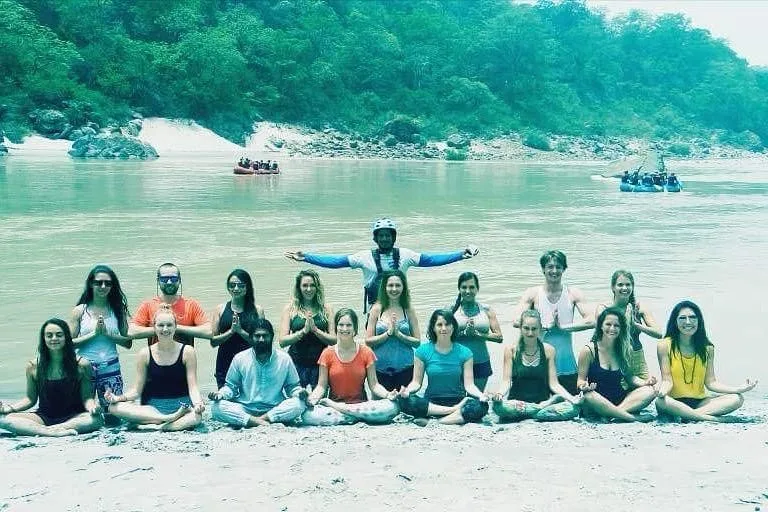
The Cultural Experience of Training as a Yoga Teacher in India
Yoga teacher training in India is not just about learning— it’s an immersion and you get to experience knowledge in the way that you practice and pass on new skills. As the birth place of yoga, India has an experience that transcends simple learning in the classroom: absorbing yoga as a tradition and way of life which is informed by thousands of years’ worth of spirituality, philosophy and daily practice.
Learning Yoga in Its Cultural and Spiritual Context
In India, yoga is an integral part of daily life. When you learn to be a yoga teacher here, yoga is not just about doing asana – it is about living the way of life, embracing the values and being aware. Positivity, self-control and mindful living are all inherently embedded in the experience.
When yoga is learned in its own cultural context, students grasp:
- The ultimate goal of yogic exercises
- The antiquarian beliefs in movement and breath
- Yoga as self-awareness, not just an exercise routine
It is this background that provides education with greater veracity and depth.
Living a Traditional Yogic Lifestyle
Most yoga teacher training courses in India are residential, students will live with fellow yogis. Days start early with meditation, pranayama and asana followed by philosophy classes and self-study/reflection.
This lifestyle encourages:
- Simplicity and discipline
- Mindfulness in daily activities
- More application of play in life
Practicing yoga daily enables students to internalize its principles, rather than learning them intellectually.
Immersion in Religious Rituals and Ideals
“Repercussion of exposure to traditional spiritual practices on training in India Unique to the Indian training is exposure to traditional spiritual practices. Chant, mantra repetition, fire ceremonies (yagya), temple visits and satsang is commonly included in the training/learning exposure.
These practices:
- Deepen concentration and awareness
- Bring the vibration of yoga into it
- Infuse some holy into the practice
The experience in turn, deeply illustrates yoga’s spiritual basis and enhances the individual’s practice.
Learning about Yoga Philosophy from the Original Source
The philosophy of yoga takes on more depth when practiced in India. Lessons from traditional texts like the Yoga Sutras of Patanjali and the Bhagavad Gita are frequently linked to practical examples, cultural norms, and lived experiences.
Through philosophy study, students explore:
- Ethics and conscious living (yamas and niyamas)
- Karma, dharma, and self-study (svadhyaya)
- The relationship between mind, body, and awareness
Such a knowledge is the base both of development as personal and reasonable instructor .
Classic Yogic Food and Eating in Moderation
Food is a major part of the cultural experience when practicing to be a yoga teacher in India. The meals in most programs are typical vegetarian and freshly prepared, where | the food served is according to yogic & ayurvedic regime.
Students learn how:
- Diet affects your energy and mental clarity
- Conscious eating for digestion and balance.
- Simple, sattvic diet promotes practice and meditation
These behaviors tend to persist long after the training.
Receiving Education: Indian Teachers and Lineages
Training in India, students benefit from exposure to teachers born of centuries-old, traditional yogic teaching. A number of those teachers have trained with gurus or in the ashram tradition, where knowledge is handed through generations.
This teacher–student relationship emphasizes:
- Respect and humility
- Direct transmission of wisdom
- It was experiential learning, not solely theoretical ideology
This is the kind of guidance that enriches and validates yoga instruction.
A World Community and an Exchange of Cultural Ideas
Teacher Training is no doubt one of the highlights as practicing in this deep method has become rather popular, and since so many come for these trainings from all sides of the globe -Yoga teacher training in India was born. Living and learning in each other’s pockets, means that a culture exchange of attitudes, traditions and experiences is formed.
This diversity:
- Enhances understanding and connection
- Builds lifelong friendships
- Reflects yoga’s universal nature
Sharing the ride makes you feel a strong sense of community.
Inner Transformation Through Cultural Immersion
People get touched in a very deep way when they’re soaked in the spiritual environment of India. The process of rigorous practice, culture and life make at direct self-observation, emotion growth.
Many students experience:
- Increased self-awareness
- Emotional clarity and balance
- A deeper sense of purpose
Such a transformation is naturally seen in how they teach and live.
Bringing Cultural Wisdom Into Teaching
Graduates who study in India tend to teach with a greater sense of authenticity and reverence. By knowing the cultural roots of yoga, teachers are able to teach the practice in a way that has integrity while also responsibly sharing an adapted version with today’s students.
This cultural awareness:
- Enhances teaching credibility
- Honors yoga’s origins
- Creates more meaningful classes
Conclusion
The cultural immersion of this experience of doing a 200 Hour yoga teacher training in India adds so much to the journey of becoming an instructor. By receiving traditional Cikitsa lineage teachings, along with experiencing yogic lifestyle and culture students leave their training with not just a piece of paper in hand but knowledge that has been refined by hundreds of years practical application.
If you want to do it authentically and go deep with your practice, then India is still one of the best places in the world to deepen that training to become a yoga teacher for life.”