The Financial Challenges of Managing Rental Properties at Scale
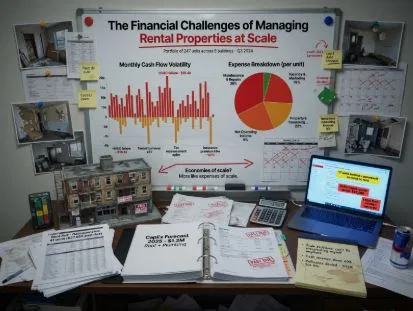
A smaller rental portfolio can be managed using an Excel spreadsheet and a bank login. An extensive one isn’t. The shift is quiet and varies between owners.
As your holdings increase your maths don’t simply get larger. It grows more complicated. Add entities, properties lenders, properties and reporting requirements, each of which has its own set of moving components. In many instances finance systems which were working at five units will begin to tense at fifty.
This article is aimed at residential real estate renters, investors and property management companies, multifamily operators, as well as investment companies.The goal is to explain where the complexity comes from and how strong Residential Real Estate Accounting helps you keep control as you scale.
Here’s what you can learn:
- Complexity is a cloak as portfolios expand
- How does cash flow behave differently across different scales
- What is a reliable financial report?
- How specialist support can reduce risk and cuts down on time
Why Scaling Rental Properties Creates Financial Complexity
The growth of your business can multiply your numbers, not only your doors. This is the case even if every property appears basic in its own way.
A single property can have only one stream of income and the expenses are a few. A portfolio contains several, and they do not always align perfectly. This results in a financial report that gets harder to understand over time.
Most common causes of complex comprise:
- Multiple streams of income. Rent late fees, parking pet fees, late fees, and deposits all flow at different times.
- Tracking expenses. Repairs and taxes, insurance and management costs distributed across different properties and dates.
- Multiple entities. Many investors own properties in separate LLCs, which are distinct books.
- Mixed funding. Different lenders, loans, and reserve accounts can be used to complete the need for reconciliation.
None of these issues are problematic in and of themselves. Together, in a lot of cases they result in mistakes which are easy to miss and difficult to correct later.
Cash Flow Management Across Large Property Portfolios
Cash flow is at the core of any rental company. When it is large, it gets more difficult to comprehend, although it is different for each portfolio.
A delay in one area could conceal a deficit in another. Balances that are healthy can disguise an investment that is losing money every month. A good financial management of rental properties involves analyzing each property and all the portfolio in one glance.
Important areas to monitor:
- Rent collection. Keep track of who has paid what, and who was late and how it impacts the liquidity of your monthly account.
- Delinquencies. Balances that age signal risk, before they turn into losses.
- Operating expenses. One-time and seasonal costs can skew cash flow if they are not accounted for correctly.
- Plan your reserve. Capital expenditures, such as roofing or HVAC are not always at a time that suits you.
Pro tip: Check the cash flow per property, not just for the portfolio. A strong total may conceal an ineffective unit.
The Importance of Residential Real Estate Accounting for Growing Investors
Accounting isn’t paperwork. It’s the lens by which you view your company however the amount of detail required will increase with the size of your portfolio.
A solid residential Real Estate Accounting gives you information to make decisions instead of making guesses. If your accounting records are correct and up-to date, your choices are more clear. If they’re out of date any decision, it is always a risks.
Here’s what trustworthy accounting can provide:
- Accurate bookkeeping. Complete records across all properties and company and reconciled in time.
- Financial visibility. A clear picture of results by property, by region or across the entire portfolio.
- Investment decisions. The truthful numbers will help you determine which asset to hold, buy or refinance, as well as sell.
- Tax preparation. Organised records eliminate the stress and confusion at time of filing.
It’s a base to grow and not a back-office task. The earlier you begin to build it properly the more you will have to sort out later.
Reporting Challenges Faced by Property Managers
The reporting process is where a lot of growing operations first feel the strain. The demand for precise prompt and accurate reports increases quicker than the average team expects.
Property managers are responsible for the owners, lenders and partners, who all require different opinions on the same information. Hand-writing these reports is slow and prone to errors. In a lot of cases the report workload is the bottleneck ahead of the actual property counting.
The most frequent reporting challenges are:
- Owner reports. Every owner could want to have a customized format, or the basis of a customized schedule.
- Budget monitoring. The comparison of actual results with budgets, and monthly as well as across different properties.
- Maintenance costs. Recording and categorizing repair expenses to ensure reports are up-to-date.
- Vendor management. Management of invoices, payments and approvals with no gaps.
Bookkeeping for property management that is reliable converts data scattered into reliable reports that people are able to trust. This trust is a key element of what you do to keep owners and their partners for the long haul.
How Property Management Accounting Services Improve Operational Efficiency
Good systems do not just record numbers. They help you save time and minimize mistakes, even if they do not eliminate mistakes.
the best configuration depends on your portfolio and the goals you have set.
This is the place where Property Management Accounting Services typically make the most obvious distinction. They provide organization along with consistency and tools that grow with your business. Many property owners opt for outsourced accounting to manage their property when their internal capacity is dwindling.
What can these services perform:
- Automated reporting. Create reports for portfolio and owner according to a predetermined timetable.
- Bank reconciliations. Confirm transactions across several accounts efficiently and accurately.
- Financial controls. Include approval steps and checks to prevent fraud and errors.
- Scalability. Manage more properties with no significant increase in admin work.
What they aren’t able to do is:
- Refresh your judgement. They help you make decisions, but they are not able to take them away from you.
- Repair bad data immediately. Clean output depends on a clean input.
- Guaranteed returns. They help control financial risk but not the market’s outcomes.
We have both lists, because honesty and transparency will protect you. The best property accounting tools are tools and not a magical solution.
Compliance, Tax, and Audit Considerations
Compliance grows more demanding as portfolios expand. The requirements for compliance vary based on the state, type of entity and structure.
The more properties you own means increased tax obligations, which means more deductions and more opportunities for error. Professional bookkeeping services for real estate will ensure that you are ready when deadlines and reviews are due instead of rushing after.
The areas that require attention are:
- Tax documentation. Documents organized to track depreciation, income, expenses and capital improvements.
- The regulatory requirements. Security regulations for deposits for trust accounting, local filings vary by region.
- Audit preparedness. Clean, traceable documents help make reviews easier and less anxiety-inducing.
- There is no need to worry about an audit If your records are accurate and correct. Preparedness, not panic is the most effective way to safeguard yourself.
Best Practices for Financial Management at Scale
A solid financial management system is based on habit not on heroics. These principles apply to all expanding portfolios, but you must modify them according to your needs.
Think about these as a basis:
- Standardize processes. Use the same reports and charts of accounts in the same styles across different properties.
- Use technology. Property accounting software can reduce human errors and manual labor.
- Get support from an outsourced provider. Real estate accounting solutions add the expertise of a professional without hiring full-time.
- Make sure to reconcile frequently. Monthly reconciliations can identify problems when they’re not too big.
- Separate your entities in a clean manner. Separate your books to guard against transparency and liability.
The main difference between a portfolio which scales well and one that is stalled is typically the level of its financial system and not the quantity of doors.
Conclusion
Scaling rental properties is a financial challenge as much as an operational one. More income streams, more expenses, and more reporting demands all compound as you grow.
Strong cash flow visibility, accurate books, and reliable real estate financial reporting keep you in control. Specialized Residential Real Estate Accounting and the right support turn complexity into something you can manage with confidence.
These tools do not guarantee success. They give you the clarity to pursue it. Long-term financial health in rental property management comes from honest numbers, steady systems, and decisions grounded in fact. When you feel ready to strengthen your financial foundation, the right next step is a conversation about what your portfolio actually needs.
Frequently Asked Questions
What is residential real estate accounting and how does it differ from normal accounting?
Accounting for residential real estate tracks the income, expenses, as well as the assets associated with rental properties. It manages things such as deposits, rent as well as depreciation and per-property reports. The standard accounting system rarely takes into account these specific details on a property’s level, or even several entities.
If a property is rented, should the owner think about outsourcing accounting for the management of their property?
The exact timeframe varies from owner to proprietor. Most people think of it as when manual bookkeeping causes delays, mistakes or missing deadlines for reporting. When your business is increasing faster than your admin capacity, it’s worth a look.
What are the ways that the property management accounting services aid in the reporting of owners?
They automatize report generation and make it easier to standardize formats across different properties. This allows you to produce precise time-bound statements for each owner without rewriting reports manually. The result is less errors and greater confidence.
What documents do I require in order to ensure tax-ready rental properties?
It is common to keep records of the total amount of income, operating expenses repair, capital improvements and depreciation plans. The organized records for each property and organization simplify filing. The requirements vary based on area and type of structure.
Does technology eliminate the necessity for bookkeeping services by a professional in real estate services?
Not entirely. Software can speed up the process of generating data and reports but it is dependent on precise input and supervision. In many instances the combination of a good program with professional assistance will give you the most accurate outcomes.