The Future of Copper Brazing in HVAC, Transformer, and Motor Production
Copper is still very important in the modern world as far as manufacturing is concerned, particularly in areas like the HVAC system, transformers, and electric motors. It is one of the most reliable engineering metals because of its excellent electrical conductivity, high thermal performance and great resistance to corrosion. The Copper Development Association (CDA) states that copper is the best material in HVAC heat exchangers due to its heat transfer properties and transformer windings and motor parts because of its electrical conductivity. With the process of industries towards greater efficiency and smaller forms, the methods of using copper to join have become increasingly vital in terms of the long-term functioning and safety of the performance.
Reasons why Brazing is preferred in Copper Components
Brazing is considered as one of the most common methods of assembling copper parts in a machine. In contrast to welding, the filler metal in brazing is molten at a temperature that is lower than that of the base materials giving the molten filler the opportunity to flow into the joints via capillary forces. This makes solid and water tight connections without melting the copper itself. Published studies on engineering on the ScienceDirect and Springer websites indicate that correctly engineered brazed joints retain the mechanical strength and electrical conductivity despite high thermal and mechanical loads. The high-quality brazing is used in the industries where reliability is an important issue, including the refrigeration system, electrical transformer, and motor, to guarantee the long lifespan of equipment and its stable performance.
Hydrogen Welding and its place in the modern day Brazing
With the development of manufacturing technology, most firms are introducing modern heating equipment like the use of hydrogen welding technique to copper brazing operations. The heating provided by hydrogen flames is concentrated and specific to avoid structural deterioration of copper components because it is precise. A study of materials research that is available in journals indexed by MDPI indicates that heating environments based on hydrogen have the potential to mitigate the process of oxidation in metal joining. Reduced oxidation enhances the conductivity of copper joints that have been brazed and eliminates extra cleaning or finishing procedures. This renders hydrogen-based systems very desirable in high precision manufacturing.
Gas machine of industrial Brazing by Brown
Another technology that is becoming popular in copper brazing is a brown’s gas machine. This system gives out a mixture of both gases of hydrogen and oxygen as a result of electrolysis of water. The gas mixture obtained is often referred to as Browns gas and is used to produce a high temperature flame which can be used to braze copper tubes, electrical connectors and metal assemblies. The fact that the gas is produced on command is one of the greatest benefits of this technology since the storage of pressurized fuel cylinders is not necessary. Such systems, according to safety measures in brazing, as the American Welding Society (AWS) explained, and the studies in the International Institute of Welding (IIW) revealed, may enhance safety and yet retain the same flame properties in the process of brazing in industries.
Responsibility of Oxyhydrogen Gas Generators
A similar principle is applied to an oxyhydrogen gas generator in which Hydrogen and oxygen gases are generated using water in the electrolysis process. They are then combined with other gases and set ablaze to form a controlled high temperature flame that is used in brazing. Oxyhydrogen flames may be used without addition of carbon-contaminated materials with temperatures high enough to join copper parts. The by-product of this is predominantly water vapor generated as a result of this clean and neat combustion and thus this leads to safer and friendlier manufacturing environment. There is a growing application of these generators in the industries where accuracy in copper brazing is needed, including the production of HVAC equipment, manufacturing of electrical components, and as a fabricator of metal.
HVAC Manufacturing Applications
HVAC systems require copper brazing especially in the manufacture of evaporators, condensers and refrigeration pipelines. Other organizations like ASHRAE and the Air-Conditioning, Heating, and Refrigeration Institute (AHRI) highlight that copper joints should have no leaks as this constitutes a critical factor in ensuring the refrigerant efficiency and system reliability. The latest brazing technologies enable a manufacturer to create clean tubing connections inside the internal that will avoid contamination and enhance the performance of the system. Hydrogen-based brazing systems also minimize oxidation of copper pipes within them and this matters in safeguarding compressors and other vulnerable parts of HVAC.
Value in Transformer Production
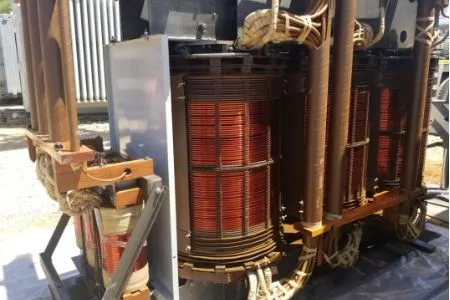
Power transformers require the use of copper conductors in order to avail electrical currents through transmission networks. Copper connections should be done reliably to avoid wastage of energy and overheating. According to research done by the Electric Power Research Institute (EPRI) and standards provided by IEEE, strong metallurgical joints are important in transformer windings and connectors. Modernized brazing techniques offer reliable and stable heating as well as control, hence manufacturers have been in a position to make copper joints that are highly reliable and can resist the harsh environment of the electrical power systems.
Brazing of Copper in Electric Motors
Copper windings and connectors are also used in the electric motors to provide an efficient conversion of power. Poorly connected copper parts may raise the electrical resistance, and thus cause loss of energy and inefficiency in the motor. The published materials research in Elsevier, MDPI, and Springer journals suggests that copper joints in motor assemblies can be improved in terms of their durability and conductivity using better brazing processes. Hydrogen-based brazing technologies have the advantage of even heating and less oxidation, which assist manufacturers to preserve the high-quality electrical connection in the small motor designs.
Innovation in the Future of Copper Brazing
The future of copper brazing is directly associated with the future trends of automation, clean technologies and intelligent manufacturing. The industrial manufacturers are considering automated brazing systems that encompass the robotics and digital monitoring devices to enhance accuracy and repeatability. Hydrogen-powered systems like brown-gas machines and oxyhydrogen gas generators could be more widespread as industries strive to cut down emissions and enhance the safety of the workplace. Also, in materials science research, new filler alloys and better brazing methods have been investigated in order to increase the strength and reliability of joints.
Conclusion
Brazing copper will continue to be an important manufacturing process throughout the production of HVAC, transformer, and electric motors. The need to have stable copper joints will keep on increasing as the industrial machinery grows more efficient and compact. Hydrogen welding, brown gas machine, oxyhydrogen gas generator are some of the technologies that are assisting manufacturers to make brazed connections that are very clean, strong and precise. These innovative techniques of brazing are driven by studies and standards of various organizations such as CDA, ASHRAE, AHRI, IEEE, EPRI, AWS, and IIW and they are driving the future of copper-based manufacturing in addition to developing more efficient and sustainable industrial systems.