The Future of the Earth: How Smart Infrastructure and Precision Excavation Are Reshaping Our Landscapes
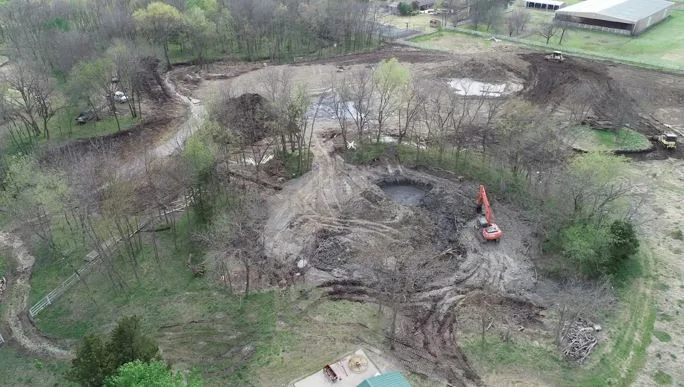
The world beneath our feet is moving—not just through the natural shifts of tectonic plates, but through a technological revolution that is fundamentally changing how we build, dig, and develop. For decades, excavation was viewed as a “brute force” industry, defined by heavy iron, loud engines, and manual measurements. However, we have entered a new era where data-driven precision meets heavy machinery. At the intersection of traditional grit and modern innovation, the way we prepare the ground for the future has been completely reimagined.
The Digital Dirt: How GPS and 3D Modeling Changed the Game
The most significant leap in recent years is the integration of Global Navigation Satellite Systems (GNSS) and 3D modeling into the excavating process. Gone are the days of relying solely on physical stakes driven into the mud. Today, precision is the name of the game. Advanced machinery is now equipped with sensors that communicate with satellites to provide real-time positioning within centimeters.
Engineers can now upload complex topographical blueprints directly into an excavator’s onboard computer. This creates a “digital twin” of the project site. As the operator moves the bucket, the system provides a visual guide on a screen, ensuring that every scoop of earth is moved according to the exact specifications of the plan. This eliminates the “dig and check” method of the past, drastically reducing fuel consumption and labor hours. When you work with a team like T&J Excavating, you are seeing this blend of high-tech accuracy and professional experience in action, ensuring that the foundation of any project is as close to perfection as modern science allows.
Autonomous Earthmovers: The Rise of the Robotic Fleet
If you think self-driving cars are impressive, wait until you see a forty-ton bulldozer operating with surgical precision via remote or autonomous control. While the industry still values the intuition of a seasoned human operator, autonomous technology is making sites safer and more efficient. In hazardous environments—such as steep slopes, unstable terrain, or areas with underground chemical hazards—remote-operated machinery allows for progress without putting human lives at risk.
Furthermore, semi-autonomous features act as a “co-pilot” for operators. These systems can automate repetitive tasks, such as leveling a specific grade or digging a trench to a uniform depth. This technology levels the playing field, allowing for high-quality results across the board. It turns a standard construction site into a synchronized dance of heavy metal, where every movement is optimized for speed and safety.
Sustainability Through Soil: The Science of Material Management
In the modern era, excavation isn’t just about taking dirt out; it’s about knowing where it goes and how it can be reused. Sustainability has become a core pillar of the industry. Innovation now allows us to analyze soil composition on-site to determine its structural integrity and potential for recycling. Instead of hauling waste to a landfill, modern excavators use screening and crushing attachments to process debris on-site, turning old concrete or rocky soil into usable backfill.
Effective material management is a logistical puzzle that requires both local knowledge and advanced planning. For those looking for specialized locations to manage these resources, utilizing a dedicated Tulsa Dirt Site is a prime example of how regional infrastructure supports large-scale development. By centralizing where clean fill is taken or retrieved, the industry reduces the carbon footprint associated with long-distance hauling, making the entire construction lifecycle more eco-friendly.
Ground Penetrating Radar: Seeing Through the Surface
One of the greatest challenges in excavation has always been the “unknown.” Beneath the surface lies a web of vintage utility lines, forgotten pipes, and geological surprises. Traditional “call before you dig” services are essential, but Ground Penetrating Radar (GPR) and Electromagnetic Induction have added a new layer of X-ray-like vision to the toolkit.
GPR sends high-frequency radio waves into the ground, which bounce off buried objects and return to a receiver. This creates a map of the subterranean world before a single blade touches the grass. By identifying obstacles ahead of time, contractors can avoid costly utility strikes and project delays. This proactive approach turns “guessing” into “knowing,” providing a level of professional certainty that was unimaginable thirty years ago.
The Human Element in a High-Tech World
Despite all the satellites, sensors, and software, the heart of the industry remains the people. Technology is a tool, but it requires the steady hand and seasoned eye of a professional to interpret the data. A computer can tell you where the grade should be, but a human expert understands how the local clay reacts to a week of heavy rain or how to navigate the unique quirks of a specific landscape.
The marriage of human intuition and technological innovation creates a fun, engaging atmosphere on the modern job site. There is a genuine sense of excitement when a complex project comes together ahead of schedule because the tech worked exactly as intended. It’s about building a legacy—one basement, one road, and one foundation at a time—using the best tools the 21st century has to offer.
Smart Foundations for a Smarter Future
As we look toward the future, the excavation industry will continue to evolve. We are seeing the early stages of hydrogen-powered heavy equipment to further reduce emissions and the use of Augmented Reality (AR) headsets that allow foremen to “see” underground utilities overlaid on their actual field of vision.
The goal of these innovations is simple: to build better, faster, and more safely. Whether it is a small residential clearing or a massive commercial development, the ground we walk on is the starting point for all human progress. By embracing these new technologies, we aren’t just digging holes; we are engineering the very stage upon which the future will be built. Precision, professional integrity, and a commitment to innovation ensure that the earth we move today stays exactly where it needs to be for generations to come.