
The Hidden Cost of Manual Inventory Management for Retailers
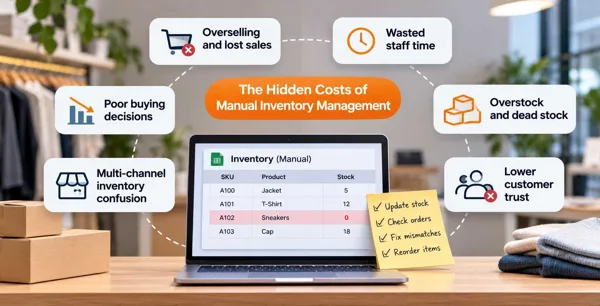
Most retailers know what their rent costs each month. Few know what their inventory process costs. That number rarely appears on a profit and loss statement. But the cost is real. It hides in lost sales, wasted hours, excess stock, and unhappy customers.
Many independent retailers still rely on manual inventory management. Employees count shelves, update spreadsheets, and adjust online stock when time allows. This is common for stores that sell in person through Lightspeed and online through Shopify but have no Lightspeed and Shopify integration linking thae two. That setup may work for a small store with a limited product range. But things change as the business grows.
Inaccurate Stock Records Lead to Overselling
Manual inventory records can easily become inaccurate.
A cashier forgets to record a damaged item. A delivery arrives but is not entered into the system. Sometimes, the same box gets counted twice.
Each mistake may seem small. But together, these errors make stock records unreliable.
Overselling is one common result.
Imagine a customer ordering a jacket online at 9 p.m. The last jacket was sold in the physical store that afternoon. Nobody updated the website.
Now the retailer must cancel the order and issue a refund. The customer is disappointed. The business also loses a potential sale.
The opposite can happen too. Records show zero stock, but products are still sitting in the stockroom. This means missed sales opportunities.
Repetitive Updates Waste Valuable Staff Time
Manual inventory management involves many repetitive tasks.
Employees count products, enter deliveries, update stock levels, and fix mismatched records. They may also need to check shelves to answer customer questions.
These tasks take time away from more important work.
Retail owners and managers could spend those hours improving customer service, planning purchases, or managing daily operations.
Repeated data entry also increases the risk of human error. One mistake can create more work for the team.
Poor Inventory Visibility Leads to Poor Buying Decisions
Retailers need accurate information to make better purchasing decisions.
They need to know which products sell quickly and which remain on shelves. They also need to understand when stock should be reordered.
When this information is spread across spreadsheets and notebooks, getting a clear picture becomes difficult.
As a result, retailers often depend on guesswork.
Consider a gift shop selling candles in ten different scents. The owner orders the same quantity of each scent every month.
But customer demand is not equal. Two scents sell much faster than the others. The popular ones keep running out, while slower products collect dust.
Multi-Channel Retail Makes Inventory More Complicated
Selling through physical stores, websites, and online marketplaces can grow sales.
It also makes stock management more challenging.
When each sales channel has separate inventory records, employees must update quantities manually.
For example, a pair of shoes sells in a physical store. Someone must then update the available quantity on the website and other sales channels.
Every additional channel creates another opportunity for mistakes.
Online stores also receive orders outside business hours. If stock updates happen only once a day, customers may see products that are no longer available. Marketplaces also tend to penalize sellers who cancel orders often.
Connecting a POS system with an eCommerce platform can help solve this problem. Inventory changes can sync automatically across connected channels.
Overstock and Dead Stock Tie Up Business Money
Inaccurate inventory records can also lead to overstocking.
When retailers are unsure about their actual stock levels, they may order more products than needed.
Extra inventory may feel like a safe option. But it ties up business money.
That money could be used for marketing, new products, or other business needs.
Some products may also remain unsold for months. Seasonal demand changes, trends fade, and customer preferences shift.
These products eventually become dead stock.
Regular stock reviews and accurate sales records can help retailers identify slow-moving products earlier. This gives them more time to plan discounts or other ways to clear inventory.
Inventory Errors Can Damage Customer Trust
Customers may never see how a retailer manages inventory. But they experience the results.
An online order gets canceled. A product marked as available is missing from the shelf. A staff member cannot provide a clear restocking date.
These experiences can frustrate customers.
Some shoppers may not complain. They may simply choose another retailer next time.
For small businesses, repeat customers are especially important. Maintaining accurate stock information helps protect customer trust.
Practical Ways to Reduce Manual Inventory Costs
Retailers do not need to change everything at once. A few practical improvements can help.
- Count stock regularly. Instead of waiting for an annual stock count, check smaller product groups every week. Pay extra attention to fast-moving and high-value items.
- Record stock changes immediately. Enter deliveries, returns, damaged goods, and transfers as soon as they happen. Delays often lead to inaccurate records.
- Make better use of your POS system. Many POS systems offer inventory tracking, sales reports, and reorder alerts. Use these features to reduce manual work.
- Connect POS and eCommerce systems. If your business sells online and in-store, look for ways to synchronize inventory automatically. This can reduce stock mismatches and overselling.
- Use sales data for purchasing decisions. Review recent sales before placing new orders. This helps you understand actual customer demand.
- Monitor slow-moving products. Review products that have not sold for a long time. Consider discounts, bundles, or other ways to clear excess stock.
Better Inventory Management Starts with Accurate Information
Manual inventory management may seem inexpensive. But its hidden costs can add up quickly.
Good inventory management is not about maintaining perfect records. It is about having reliable information to make better business decisions.
With regular stock checks, better processes, and connected business systems, retailers can reduce manual work and improve inventory accuracy. This frees staff to focus on customers and helps owners make smarter decisions as the business grows.