The Hidden Costs of Switching to Electric Industrial Heating
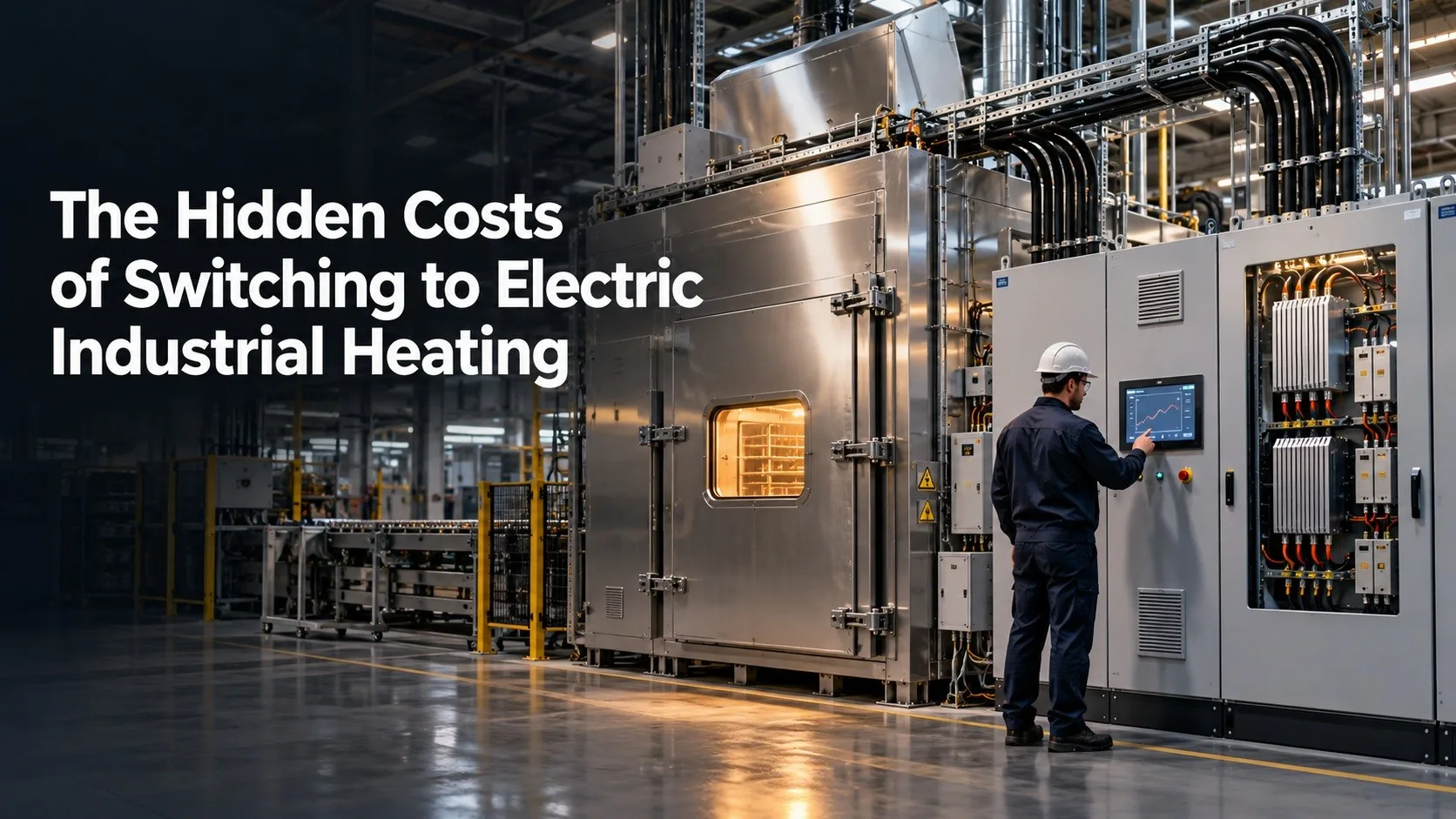
Many plant managers assume switching from gas to electric heating is as simple as plugging in a larger appliance. In reality, equipment purchase prices represent less than half of the total project expense. Upgrades require major electrical infrastructure overhauls, high-speed switching controls like solid state relays, utility peak demand penalties, and extended conversion downtime. Plant engineering teams must evaluate the total delivered cost per unit of usable heat before approving electrification budgets.
Upgrading the Factory Power Supply
Electric heaters draw continuous, heavy currents unlike intermittent motor loads. Even when a factory’s main transformer shows spare capacity, local distribution panels and cables rarely sustain continuous thermal duty. Under-sized cables overheat, breakers trip unexpectedly, and voltage drops disrupt nearby automation electronics.
Upgrading an incoming electrical service involves the local utility company. Installing larger substations or running dedicated service drops takes months of engineering review and carries substantial capital fees. Facility teams should contact power providers before placing equipment orders to prevent new industrial heaters from sitting idle on loading docks.
How Electricity Tariffs Shape Operating Costs
Calculating operating budgets by multiplying estimated kilowatt-hours by an average electric rate guarantees inaccurate projections. Industrial electricity bills consist of two separate components: total energy consumed and peak power demand.
Peak Demand Surcharges
Utilities bill peak demand using the single highest power draw recorded across rolling fifteen-minute windows. When electric heaters energize simultaneously with heavy air compressors or process lines, that brief power spike inflates the entire month’s utility bill. Staggering startup sequences delivers genuine savings only when delays extend past the fifteen-minute billing window. Staggering element activation by a few seconds provides zero relief on utility demand meters.
Off-Peak and Time-of-Use Traps
Running thermal operations during cheap overnight hours looks attractive on paper. Yet process chemistry, curing cycles, and shipping schedules rarely align with nighttime operating windows. Adding night shifts introduces overtime labor rates, supervisory overhead, and warehouse bottlenecks. These secondary operating expenses frequently cancel out direct energy savings.
The Real Cost of Equipment Retrofits
Electric elements react far faster than fuel burners, requiring redesigned temperature control loops. Standard mechanical contactors wear out quickly under continuous switching, making solid-state controls the standard choice for tight temperature regulation. However, power semiconductors generate internal heat during conduction. Control enclosures require dedicated heat sinks, cabinet air conditioning, and fast-acting semiconductor fuses to prevent premature component failure.
Control Wiring and Safety Hazards
Integrating electric heat creates distinct safety challenges. Power semiconductors typically fail in a short-circuited condition. When a relay fails shorted, electricity flows continuously, leaving heating elements on full power despite controller shutdown commands. Safe installations require independent electromechanical contactors or shunt trips to physically isolate line power during runaway temperature events. Collaborating with XURUI technical specialists ensures correct heat sink calculations, component clearances, and redundant safety interlocks before control panels are built.
Commissioning Downtime and Production Losses
Energizing heaters on an empty line never proves production readiness. Reaching uniform temperature distribution and tuning PID loops takes days of live product trials. This calibration process generates off-spec scrap and pauses revenue-generating lines. Plant teams should retain existing combustion systems or install temporary bypass loops as operational fallbacks during line conversions.
Thermal Energy Storage Realities
Thermal energy storage can buffer daytime demand spikes, but storing industrial heat requires insulated pressure vessels, circulation pumps, and substantial floor space. Storage units also lose heat steadily and deliver lower output temperatures as they discharge. Investing in storage solely for utility rate arbitrage rarely yields a sound financial return once parasitic pumping losses are counted.
What to Check Before Investing
Plant leadership should review four practical areas before signing equipment purchase contracts:
Thermal Baseline and Process Heat Demand
Measure actual heat absorbed by the product instead of burner nameplate ratings. Relying on oversized burner specifications leads to purchasing far more electrical capacity than the line truly requires.
Grid Capacity and Transformer Audits
Inspect cable gauges, switchgear fault ratings, and transformer headroom. Confirm utility interconnection lead times and grid upgrade fees well in advance of delivery.
Detailed Tariff and Peak Demand Simulation
Model operating costs using actual fifteen-minute utility billing intervals and factory shift schedules. Verify whether shift rescheduling yields genuine net savings after accounting for labor premiums.
Commissioning Benchmarks and Backup Plans
Define quantitative acceptance targets for temperature uniformity, tuning scrap limits, and failsafe shutoffs. Maintain legacy heating assets as offline contingencies to protect ongoing production.
Conclusion
Electric industrial heating is a plant-wide infrastructure project rather than a simple hardware replacement. Long-term profitability requires verified power capacity, realistic utility tariff modeling, active thermal protection, and planned commissioning windows. Addressing these hidden factors early turns electrification into an efficient, predictable investment.