The Hidden Places That Make a City Feel Like Home
During the mid-1980s, American sociologist Ray Oldenburg coined the term “third spaces.” These are the cafés, libraries, and other social settings where informal, free interactions can take place. What he missed was the thousands of years of heritage across the globe, where hidden hideaways, alleys leading to unique spaces, and spots that quietly enter your routine hold more value. These are the hidden places in a city that turn a destination into something that feels like home.
When most visitors come to a new city, they look outward. The focus is on popular landmarks or high-value attractions. That makes it easier for someone to get their bearings in London, Bangkok, or Tokyo.
The real connection of heart to home comes from repetition. It is the familiarity of a specific cup of coffee from a local shop or the emotional attachment to how the sun catches the architecture of a long-forgotten park that appeals to those who return time and time again.
Why Small Places Matter More Than Popular Ones
Caption: Agrippa’s inscription still crowns the Pantheon’s timeless facade. Beneath its columns, centuries of footsteps echo—philosophers, pilgrims, and dreamers alike drawn to the dome that defies gravity and welcomes wonder.
It’s easy to define a city by its most recognizable feature. The Statue of Liberty in New York, the Arc de Triomphe in Paris, or the statue of Christ the Redeemer in Rio de Janeiro are all high-traffic destinations. While those serve a purpose, they do not necessarily cultivate a lasting impression.
The meaningful places in a city develop over time. The importance of those hidden gems is not apparent at first glance, but only through use. A private bakery is more meaningful when it’s where you stop each morning before traveling for the day. The park you take your kids to get away from the crowds or the bookstore that always takes the time to guide you to your next read, are what help you slow down and take notice.
These are the places that hold context. They reflect patterns in your life and hold the emotional layers of a city. It is easy to capture your trip to Rome on Tagzora by focusing on the larger monuments, but the photos you put on your wall are of an intimate dinner in the Jewish Ghetto or of learning about the ancient aqueducts from a local you met at a tiny bar. That is when the destination transforms from a pin on the wall into how a city feels like home.
With emotional geography comes the mapping of lived experience. Two people can share the same neighborhood and experience it in unique ways, depending on how they spend their time. A quiet bench under a shady tree where two lovers kissed for the last time takes on a different meaning for someone who proposed to a future bride. Yet, the destination remains the same fixed space.
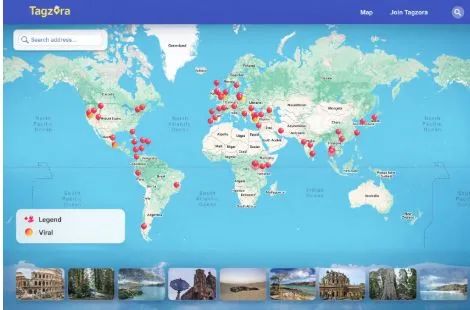
Platforms like Tagzora introduce these spaces to more people. Instead of solely focusing on where people should go, Tagzora captures why certain places matter. It brings more attention to the emotional layers in your next destination.
How Repetition Turns Places into Memory
Caption: Canal of Stillness: Boats drift beneath gabled facades and spring-green trees. A moody sky frames the quiet rhythm of Amsterdam’s waterways.
The hidden places in a city with the most meaning are those that serve as “daily anchors.” They provide a sense of consistency amid the rest of the world’s rush. It’s where you build routine and familiarity and find intriguing interactions.
Green spaces long forgotten by the masses are perfect examples. They are the private parks in Boston, USA, or the vintage pathways of Amsterdam’s canals that build heritage in your memories. It’s the difference between walking down the legendary bookstores of Cecil Court in London for a quick snapshot or turning a corner into a private café where all the owners come to decompress after the tourists go home for the day.
Where most digital tools focus on travel efficiency, a platform like Tagzora celebrates taking your time. It captures the meaning for someone who experienced something unique that took place “off the beaten trail.” Users can document meaningful places in a city based on personal experience rather than popularity, thereby expanding a destination’s resonance.
Preserving the Hidden Places That Matter
Caption: Newtowne Echoes: From Colony to City Lights: Once the heart of a Puritan settlement in 1630, Newtowne became Cambridge—home to ideas, resistance, and pizza nights. This cracked marker whispers of origins beneath the glow of The Garage and holiday garlands. Tag the stone, bundle the legacy.
Tagzora is a digital time capsule. A single photo can record not only the specific location but also what it represents. A memory, routine, or moment in time can be tied forever to a bench, walkway, bookstore, café, diner, or theater. This approach to mapping the world moves attention from discovery to preservation.
We need to find a way to enable personal archiving of experiences. These hidden places create a richer understanding of a city, culture, or tradition. It isn’t attending the running of the bulls to escape death that is magical. It’s watching the mozos prepare in their perfectly pressed white linens beforehand in a park and then sharing a drink when the adventurers meet at a local pub the next day.
This change in mapping helps build trust. It ensures people will revisit places differently, even if the location changes or disappears, the meaning is preserved and shared. Small places create belonging. They provide the stability we need to measure time. The hidden places in a city are foundational to personal connection for locals, visitors, and anyone else lucky enough to see their value.
Seeing Your City Through a Different Lens
The places that feel like home can be large attractions or well-known spaces, but small local favorites hidden away from public view are just as important. These are the routines that build character you might associate with Paraguay, Spain, Italy, China, Canada, or the Bahamas.
Using a tool like Tagzora helps shift how we view the world by providing deeper connections to the city itself. It helps everyone from all places value experience over visibility and meaning over popularity. The places that make a city feel like home are not the ones first on a map. They are the ones that become ingrained in a person’s life over time. That is what Tagzora captures, the places that stay with you, no matter where you go next.