
The Importance of Machine Images in Building Scalable Cloud Environments
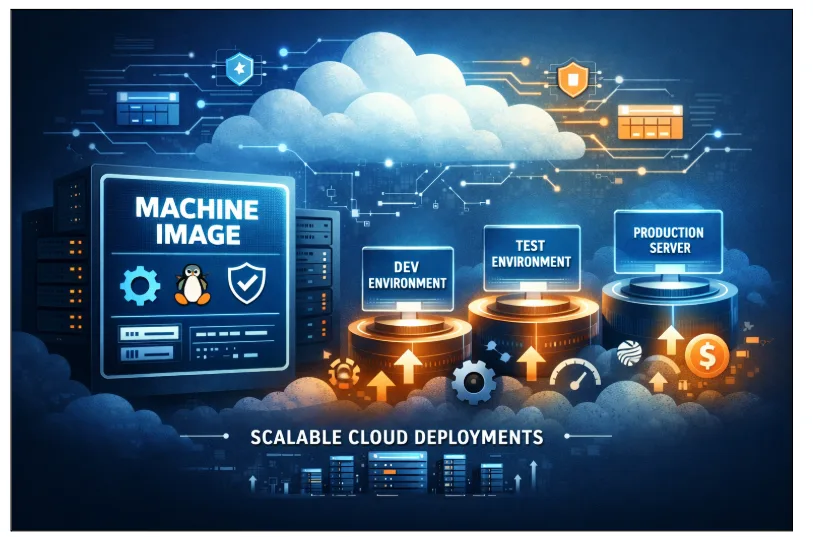
Cloud computing has fundamentally changed how organizations design, deploy, and scale IT infrastructure. Instead of manually configuring servers one by one, modern cloud environments rely on automation, repeatability, and standardization. At the center of this transformation lies a critical but sometimes underestimated concept: machine images.
Machine images—such as virtual machine images (VM images), cloud images, or system templates—serve as the blueprint for creating compute instances in the cloud. Whether you are deploying a single virtual machine or scaling thousands of instances across multiple regions, machine images provide the consistency and reliability required for modern cloud architectures.
In this article, we explore why machine images are essential for building scalable cloud environments, how they support automation and governance, and how they enable organizations to move faster while maintaining control. As cloud adoption matures, concepts like Azure Images become not just operational tools, but strategic assets in cloud-native and hybrid architectures.
What Are Machine Images?
A machine image is a preconfigured snapshot of an operating system and its associated software, settings, and configurations. It typically includes:
- The operating system and kernel
- Installed system packages and libraries
- Security configurations and policies
- Runtime dependencies
- Cloud-specific agents and drivers
When a new virtual machine is launched in the cloud, it is created from a machine image. This ensures that every instance starts from a known, predictable state.
In major cloud platforms such as Amazon EC2, Microsoft Azure, and Google Compute Engine, machine images are a foundational construct that underpins nearly all compute services.
Why Machine Images Matter in Scalable Architectures
Scalability in the cloud is not just about adding more servers. It is about doing so quickly, consistently, and safely. Machine images enable all three.
Consistency Across Environments
One of the biggest challenges in traditional IT environments was configuration drift—servers that were supposed to be identical slowly diverged over time. Machine images eliminate this problem by enforcing a single source of truth.
With images:
- Development, testing, and production environments can use the same base image
- Configuration differences are intentional and version-controlled
- Bugs caused by “it works on my machine” scenarios are significantly reduced
This consistency becomes critical when scaling from tens to hundreds or thousands of instances.
Machine Images and Infrastructure Automation
Modern cloud environments are built using Infrastructure as Code (IaC) tools such as Terraform, ARM templates, CloudFormation, or Bicep. Machine images integrate seamlessly into these workflows.
Faster Provisioning Times
Launching a virtual machine from a prebuilt image is significantly faster than:
- Installing an OS from scratch
- Applying updates
- Installing dependencies
- Configuring services at boot time
In auto-scaling scenarios, where instances must be created in seconds to handle traffic spikes, machine images are indispensable.
Predictable and Repeatable Deployments
When machine images are versioned and immutable:
- Every deployment is reproducible
- Rollbacks become trivial (simply deploy a previous image version)
- Debugging is easier because the runtime environment is known
This predictability is a cornerstone of reliable scalability.
The Role of Machine Images in Cloud Security
Security in scalable cloud environments must be proactive, not reactive. Machine images play a central role in enforcing security baselines.
Security Hardening at Build Time
Instead of securing servers after deployment, organizations can bake security controls directly into images:
- Hardened OS configurations
- Disabled unnecessary services
- Preconfigured firewalls and SELinux or AppArmor policies
- Compliance-ready settings (e.g., CIS benchmarks)
This approach shifts security left, reducing attack surfaces before instances ever go live.
Immutable Infrastructure and Reduced Risk
In image-based environments:
- Servers are not modified in place
- Updates are applied by building new images
- Compromised or outdated instances are replaced, not patched manually
This model dramatically reduces configuration drift and long-lived vulnerabilities.
Machine Images and Horizontal Scalability
Horizontal scaling—adding or removing instances based on demand—is a defining feature of cloud computing. Machine images make this possible in practice.
Auto Scaling Groups and Image-Based Scaling
Auto scaling systems rely on machine images to:
- Launch identical instances under load
- Replace unhealthy instances automatically
- Scale across multiple availability zones
Without standardized images, auto scaling would introduce inconsistencies and unpredictable behavior.
Stateless and Stateful Workloads
Machine images support both:
- Stateless services, where instances can be freely added or removed
- Stateful systems, where images define the base environment while data lives in external storage or managed services
In both cases, scalability depends on reliable, image-driven provisioning.
Multi-Cloud and Hybrid Cloud Enablement
As organizations adopt multi-cloud and hybrid strategies, machine images become even more valuable.
Cross-Platform Standardization
While each cloud has its own image format, the underlying concept remains the same. By using automated image pipelines:
- The same OS and configuration standards can be applied across clouds
- Operational practices remain consistent
- Teams avoid vendor-specific silos
This is particularly important for enterprises running workloads across AWS, Azure, on-premises virtualization, and edge environments.
Hybrid Cloud Use Cases
In hybrid setups:
- On-premises VM templates mirror cloud images
- Disaster recovery becomes simpler
- Workloads can be moved or extended with minimal friction
Machine images act as the glue between environments.
Machine Images in DevOps and CI/CD Pipelines
Machine images are a natural fit for DevOps practices.
Image Pipelines as First-Class Citizens
Instead of treating images as static artifacts, modern teams build them continuously:
- Source-controlled image definitions
- Automated builds triggered by OS or dependency updates
- Automated testing of images before release
This transforms images into versioned, auditable components of the delivery pipeline.
Reduced Deployment Complexity
By embedding dependencies and runtime configurations in images:
- Application deployment becomes lighter
- Startup scripts are simpler
- Failure modes are reduced
This simplicity directly supports scalability by minimizing moving parts.
Cost Efficiency Through Image Optimization
Scalable environments must also be cost-efficient. Machine images contribute to this goal in several ways.
Smaller, Leaner Images
Well-designed images:
- Include only necessary packages
- Reduce disk size and boot time
- Lower storage and snapshot costs
Faster boot times also mean that auto-scaled instances become productive more quickly.
Better Resource Utilization
When instances start in a clean, optimized state:
- CPU and memory are used more efficiently
- Less overhead is spent on initialization tasks
- Scaling decisions are based on actual workload demand
Governance, Compliance, and Auditing
In regulated industries, scalability must coexist with strict governance requirements.
Image Versioning and Traceability
Machine images can be:
- Versioned
- Tagged
- Documented with metadata
This makes it easy to answer questions like:
- Which OS version is running in production?
- When was this image built?
- What security updates are included?
Policy Enforcement
Organizations can enforce policies such as:
- Only approved images may be used
- Deprecated images are blocked
- Compliance scans are mandatory before release
This level of control is essential in large-scale environments.
Common Pitfalls Without Proper Image Strategy
Organizations that neglect machine image strategy often face:
- Long provisioning times
- Inconsistent environments
- Security gaps
- Difficulty scaling reliably
- High operational overhead
Manual configuration and ad-hoc server builds simply do not scale in modern cloud environments.
Best Practices for Using Machine Images at Scale
To fully leverage machine images, consider the following best practices:
- Treat images as immutable artifacts
- Automate image creation and testing
- Minimize image size and complexity
- Separate base images from application configuration
- Version and document every image release
- Regularly rebuild images to include updates
These practices ensure that scalability remains sustainable over time.
Conclusion
Machine images are far more than a technical convenience—they are a foundational element of scalable cloud environments. By enabling consistency, automation, security, and governance, machine images allow organizations to grow their infrastructure without losing control.
As cloud architectures evolve toward multi-cloud, hybrid, and cloud-native models, the strategic importance of machine images continues to increase. Whether launching a handful of instances or scaling globally in response to real-time demand, a well-designed image strategy is essential for building reliable, secure, and scalable cloud platforms.