
The Kidult Christmas: Why So Many Grown-Ups Are Buying Dolls for Themselves This Year
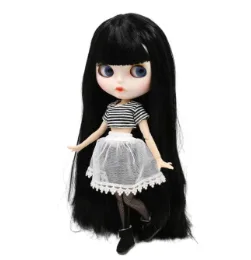
There is a quiet change happening under Christmas trees this year, and it has nothing to do with gadgets. Adults are buying toys. Not for their children, not for their nieces, but for themselves. And one of the most surprising winners is a doll with an oversized head, enormous eyes and a history of being a commercial flop.
If that sounds strange, the numbers say otherwise.
The numbers behind the “kidult” boom
On October 29, EY-Parthenon published its 2026 holiday consumer sentiment survey. Two findings stood out. First, 62% of shoppers plan to spend the same or more than last year, even though 42% say they feel more stressed about affording gifts. Second, 41% of people plan to buy at least one Christmas gift for themselves, rising to 53% among people aged 19 to 34.
Put simply: people are buying fewer things, but they want the things they buy to mean something. And a growing share of that meaning is landing in the toy aisle.
The toy industry has a name for these shoppers: kidults. According to market research firm Circana, collectibles grew 32% in 2025 and now make up roughly a fifth of all toy sales, with adults buying for adults driving much of that growth. In Europe, nearly four in ten adults say they have bought a toy for another adult.
You have probably seen the most famous example clipped to a handbag. Labubu, the grinning blind-box monster from Pop Mart, helped the company report close to 2 billion dollars in revenue in the first half of 2025 alone. Labubu showed the world that grown-ups will happily collect something cute, as long as it feels personal and a little bit rebellious.
But blind boxes have a limit. You never know what you will get. Which is exactly why a much older collector doll is having a moment.
The doll that failed, then won
Blythe was first sold in 1972 by the American toy company Kenner. She lasted exactly one year. Children found her big head and giant eyes a little unsettling, and she quietly disappeared from shops.
Decades later, photographers and artists rediscovered her. They loved the very things children had found strange: the oversized face that works like a blank canvas, and the eyes that change colour and direction with a pull of a string at the back of her head. Four looks in one doll.
Today Blythe is one of the most customised dolls in the world. Artists repaint her face, sand her lips into a pout or a smile, add freckles and blush, reroot her hair in any colour imaginable, and dress her in tiny handmade outfits. A custom Blythe is closer to a small portrait than a toy, which is why so many adults now buy one for themselves, or for someone they love.
“The most common message we get in December is not about prices or shipping,” says Jenna Anderson of This Is Blythe, a studio that has been hand-finishing custom Blythe dolls since 2000. “It is: can you make one that looks like my daughter? And quite often, quietly: can you make one that looks like me?”
Why a doll, and why now?
Ask collectors why they started, and the answers are surprisingly similar.
It is a creative hobby that fits on a desk. You do not need talent, a studio or hours of free time. Styling a doll, changing her outfit or photographing her by a window is a small creative act you can do in ten minutes after work.
It may be good for you. In 2024, researchers at Anglia Ruskin University analysed data from more than 7,000 adults in England, in a study published in Frontiers in Public Health. People who took part in arts and crafts reported higher life satisfaction and happiness, and a stronger sense that their lives were worthwhile. The study shows a link rather than proof of cause, but it matches what many collectors describe: a sense of calm, focus and play that is hard to find on a screen.
It connects people. Doll collecting has a busy online community where collectors swap styling tips, share photos and trade tiny outfits. For many adults, that community is as much of the appeal as the doll itself. It is also a hobby that crosses generations: grandmothers, mothers and daughters often end up collecting together, each with a doll that reflects her own style.
It is personal in a way most gifts are not. A candle or a gift card is forgotten by February. A doll with your sister’s hair colour, your mum’s freckles or your best friend’s signature glasses tends to stay on a shelf for decades.
One mother summed it up in a review she left after buying a custom doll for her daughter: “This was a gift for my daughter who is 18 and collects dolls. She is so beautiful it brought tears to my eyes.”
How to choose a doll that feels like a person
If you are thinking of giving a custom doll this Christmas, doll artists tend to agree on a few rules.
Start with the face, not the hair. Blythe faces usually come in three expressions. A cute face feels warm and gentle. A pouty face has a little attitude and suits teenagers and anyone cool. A smiling face is pure joy. Choose the face that matches the person, then pick the hair.
Think about where she will live. A matte face looks soft and natural in daylight. A shiny face catches the light like porcelain and glows under fairy lights, which is why many artists recommend shiny finishes for Christmas gifts.
Get the details right. Hair colour is the first thing the eye reads, then hair shape, then skin tone. Freckles, glasses and a favourite colour do more to make a doll feel like someone than any exact facial feature.
Add the story. The doll is only half the gift. A handwritten card that explains why you chose her, “she has your freckles” or “you said you always wanted one of these”, is often the moment people cry.
If you want to go further, this guide compares every way to get a custom doll that looks like you, from photo-based doll makers to hand-painted art dolls.
How to buy safely online
Popular dolls attract copycat websites, and every December collectors share stories of orders that never arrived. A few simple checks help:
- Reverse-search the product photo. If the same photo appears on ten different shops, be careful.
- Look for reviews the shop cannot edit, such as marketplace reviews where only paying customers can post.
- Check for a tracking promise and a real way to contact the seller before you buy.
- Be wary of impossible prices. A hand-finished, dressed custom doll that costs less than its outfit is not a bargain.
It is also worth reading what real buyers say, with photos taken in their own homes rather than in a studio. For example, collectors who want to see that side of one studio can read This Is Blythe reviews with real buyer photos, including the honest complaints.
Order early
Carriers get busier every year. In the United States, USPS has set December 17 as its Ground Advantage cut-off for domestic parcels to arrive before Christmas, and international parcels need more time than that. Because custom dolls are finished by hand, ordering in November or the first days of December gives you the most breathing room.
If time does run out, many shops offer digital gift cards that arrive instantly by email, letting the person choose her own doll in January. For a collector, half the joy is in the choosing.
The bottom line
The kidult boom is not really about toys. It is about adults giving themselves permission to enjoy something small, beautiful and a little bit silly, in a year when many people feel stretched. A doll that was once too strange for the toy shop has become a symbol of exactly that.
So if someone in your life has ever mentioned a doll they wanted as a child and never got, this might be the year. And if that someone is you, you are in very good company.