
The Last-Day Desk Drop Is Gone. Remote Offboarding Needs a Laptop Retrieval Service
For a long time, getting a company laptop back was barely a process. It was a last-day habit. The departing employee walked to the IT desk, handed over the machine, turned in a badge, and left. Someone in IT checked the serial number, glanced at the condition, and put the device on a shelf. Offboarding felt finished because the laptop was already in the building.
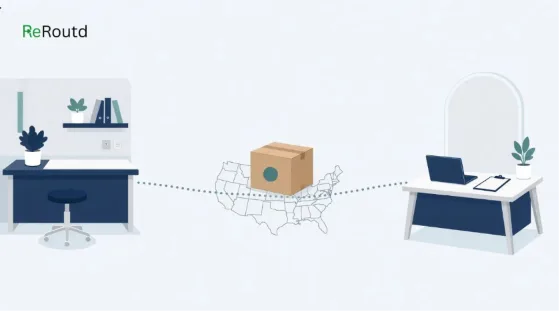
Remote work deleted that moment, and most companies never replaced it. Access can still be shut off in minutes. The laptop, though, is often sitting on a kitchen table in another state, waiting for a box that nobody sent.
That gap is what a laptop retrieval service is for. It does the job the desk drop used to do, only now the employee and the office are no longer in the same place.
What the office quietly handled for you
The old last day accomplished several things at once, so quietly that they almost never appeared on a checklist. IT saw the device in person, matched the serial number, and noted the condition. Chargers and badges came back in the same walk. There was no label to print, no argument about who paid for postage, and no week of follow-up notes. The physical return and the employment end date happened on the same afternoon, in the same building.
When work moved out of the office, companies rebuilt the digital side of offboarding with real care. HR systems, identity tools, and device management can now close accounts, revoke credentials, and lock a machine from afar. The physical return did not get the same attention. It shrank to a line in an exit email: “please ship the laptop back.”
That line asks a departing employee to find packaging that will protect a work laptop, figure out the return address, pay for a shipment or wait to be reimbursed, and remember to do it after they have already left. Some people will handle all of that carefully. Many will mean to, and then the box never quite happens.
Remote offboarding is not finished when access is off
This is where the definition of “done” starts to matter.
If an offboarding ticket closes on the last day, or when accounts are disabled, the laptop can stay outstanding for weeks without anyone treating it as an open task. Finance still has an asset on the books. Security still has a device that left company hands. The former employee is no longer watching work email, so a late request is harder than an early, clear one.
A more useful rule is simple: remote offboarding is complete when the laptop is back, the serial number has been checked, and the asset record is closed. The last day is a milestone on the way there, not the finish line.
That change also fixes the timing. The return should start when notice arrives, not on the last afternoon. Confirm the shipping address while the person is still reachable. List the exact devices and accessories you expect. Get packaging moving early enough that the employee can pack before they mentally clock out. After the last day, you should be following a shipment, not starting a conversation.
Make the return as easy as the old walk to IT
Most failed returns are not refusals. They are friction.
The employee does not have a box that actually fits a 15-inch or 17-inch laptop. They are unsure which office address to use. They would rather not pay for shipping and wait to be reimbursed. They get one polite note from HR and a different one from IT, and neither includes a prepaid label. After the last day, the request competes with a new job, a move, or simply the relief of being done.
A good laptop retrieval service removes that friction the way the IT desk once did. The employee receives custom-fit packaging, a prepaid label, and simple packing instructions. They do not have to buy supplies or guess the address. A tracking dashboard lets HR and IT see that the kit went out, that the return is in transit, and that it arrived. Automated notifications keep the steps from depending on someone remembering to send another nudge. A tamper-evident seal gives you a cleaner record of how the device traveled.
You can assemble a version of this yourself: stock the right boxes, print labels, assign an owner, and keep a shared tracker. Many teams do that for a while, then notice that returns still stall when someone has to build each shipment from scratch. A prepaid kit helps because the packaging, label, tracking, and notifications arrive together, for one return at a time, without a subscription.
What to look for in a laptop retrieval service
Once custom-fit packaging, a prepaid label, visible tracking, and automated notifications are in place, check a few practical points.
The service should work across the US, because remote leavers are rarely all in one city. Insurance is worth having as an option on higher-value machines. Intake should include a serial check, so “a laptop arrived” and “this person’s laptop arrived” are not treated as the same event. And the pricing should match how often you actually have exits. Paying only when someone leaves is usually a better fit than a platform you keep paying for in quiet months.
Put retrieval on the offboarding checklist this month
You do not need a perfect program to stop losing laptops in the space between last day and “we should follow up.” Add five lines to the checklist you already use:
- The ticket stays open until the device is received and the serial is matched.
- One person owns the return, even if HR starts the request and IT does the intake.
- The shipping address is confirmed as soon as notice comes in.
- Packaging goes out early, with a clear list of what should go in the box.
- When the shipment arrives, the asset record closes the same day. Note the condition separately, so a scuff does not keep the return hanging.
The office used to finish those last steps in a short conversation at a desk. Remote work took the desk away. The teams that get laptops back consistently are the ones that replaced it on purpose, with a clear definition of “done” and a laptop retrieval service that makes the return easy to complete.
If you want a prepaid kit that already includes custom-fit packaging, a prepaid label, a tracking dashboard, automated employee notifications, and a tamper-evident seal, ReRoutd is built for that job. A Laptop Kit is $89, or $79 each when you order five or more, and fits laptops up to 17 inches. Tablet kits are $69, or $64 each for five or more, and fit devices up to 12 inches. Phone kits are $59, or $54 each for five or more, and fit devices up to 7 inches. Optional insurance is available up to $5,000. There is no subscription.