The Most Common Car Problems (And the Cheapest Way to Fix Them)
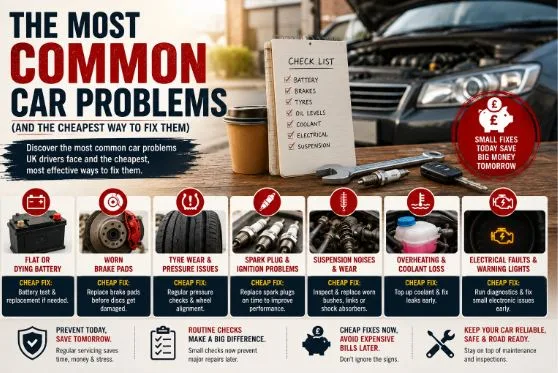
Discover the most common car problems UK drivers face and the cheapest, most effective ways to fix them before costs spiral.
Every car develops quirks over time. A slightly hesitant start on a cold morning. A faint squeak when braking. A dashboard light that appears, then vanishes. Most of these issues are common, predictable, and, if caught early, surprisingly inexpensive to resolve.
The trouble starts when small faults get ignored. What could have been a quick, low cost fix often turns into a much bigger job simply because it was left too long. This guide walks through the car problems drivers encounter most often, along with the cheapest and most sensible way to deal with each one.
Flat or Dying Battery
A battery that struggles to start the car is one of the most common complaints drivers report, particularly during colder months. Cold weather reduces a battery’s chemical efficiency, which is why so many failures happen in winter.
Typical warning signs include:
- Slow or sluggish engine cranking
- Dashboard lights dimming when starting the car
- Electrical components, such as windows or the radio, behaving inconsistently
The cheapest fix here is prevention. A battery health check takes only a few minutes and is often included as part of routine car servicing in Aldershot. Catching a weakening battery early means a straightforward replacement, rather than an unexpected breakdown that may also require recovery.
Worn Brake Pads
Brakes wear gradually, which is exactly why so many drivers miss the warning signs until the problem becomes obvious, and expensive.
Signs of worn brake pads include:
- A high pitched squeal when braking, caused by a built in wear indicator
- A grinding noise, which usually means the pads have worn down completely
- The car pulling slightly to one side when braking
- A brake pedal that feels softer or needs to be pressed further than usual
Replacing brake pads early is a relatively affordable job. Waiting until grinding begins often means the brake discs have also been damaged, turning a simple pad replacement into a more expensive disc and pad combination.
Tyre Wear and Pressure Issues
Tyres are one of the few parts of a car in constant contact with the road, yet they are frequently overlooked until a problem becomes visible or a tyre fails outright.
Common tyre related issues include:
- Uneven tread wear, often linked to incorrect wheel alignment
- Under inflation, which increases fuel consumption and accelerates wear
- Cracking or bulging on the sidewall, usually caused by age or impact damage
Checking tyre pressure monthly costs nothing and takes only a few minutes. Rotating tyres periodically also helps even out wear, extending their lifespan considerably. Left unchecked, poor tyre condition not only costs more in replacements but can also affect handling and safety.
Spark Plug and Ignition Problems
A car that struggles to start, idles roughly, or feels noticeably less powerful than usual may be dealing with worn spark plugs or an ignition coil fault.
Typical symptoms include:
- Rough idling or a noticeable vibration when the engine is running
- Reduced fuel efficiency
- Hesitation or a lack of power when accelerating
- An illuminated engine warning light
Spark plugs are inexpensive to replace and are usually included as part of scheduled maintenance. Ignoring these symptoms, however, can place additional strain on the ignition coil and catalytic converter, both of which are considerably more expensive to repair than a simple spark plug swap.
Suspension Noises and Wear
A clunking or knocking sound over bumps is one of the most common complaints raised in online driver communities. Suspension components, such as bushes, shock absorbers, and anti roll bar links, naturally wear over time.
Ignoring suspension noise does more than affect comfort. It can also lead to uneven tyre wear and reduced control, particularly during braking or cornering. Addressing worn components early, often a modest parts and labour cost, prevents a much larger repair bill involving multiple suspension parts later on.
Overheating and Coolant Loss
Engines rely on a consistent temperature to operate safely. A coolant leak, however small, can gradually push the engine toward overheating if left unaddressed.
Warning signs include a temperature gauge that sits higher than usual, a sweet smell from the engine bay, or coolant levels that keep dropping without explanation. A small hose or seal replacement is a low cost fix. Left ignored, sustained overheating can damage the head gasket, turning a minor repair into a major one.
Electrical Faults and Warning Lights
Modern cars are filled with sensors, and a warning light on the dashboard does not always mean something serious. That said, ignoring it entirely is rarely the right approach.
A quick diagnostic check can usually identify the cause within minutes, whether that is a loose connection, a failing sensor, or something requiring closer attention. This is far cheaper than guessing, replacing parts unnecessarily, or waiting until the underlying issue worsens.
Why Routine Servicing Is the Cheapest Fix of All
Almost every issue listed above shares one thing in common. Each becomes significantly more expensive the longer it goes unnoticed. Routine servicing exists specifically to catch these problems early, when they are still small, manageable, and affordable to fix.
A full service typically checks the following:
- Engine oil and filter condition
- Brake pads, discs, and fluid levels
- Battery health and charging system performance
- Tyre condition and pressure
- Suspension components for wear or damage
- Coolant and other essential fluid levels
For a clearer picture of exactly what gets checked, this breakdown of what’s included in a full car service covers each stage in detail. Many of these same checks also align closely with what inspectors look for during an annual MOT test in Aldershot, which is why staying on top of servicing often means fewer surprises come test time.
The Link Between Common Faults and MOT Failures
It is not a coincidence that many of the issues covered here, worn tyres, weak brakes, faulty lights, and fluid leaks, are also among the most frequent reasons vehicles fail their annual test. Addressing these faults through regular maintenance does more than avoid breakdowns. It also reduces the likelihood of an unexpected MOT failure.
For drivers wanting a fuller picture of what inspectors check most closely, this guide to the top 10 MOT failure reasons highlights exactly where vehicles most commonly fall short.
Keeping up with regular maintenance is one of the easiest ways to reduce repair costs and improve long-term reliability. Whether you need routine servicing, diagnostics, MOT testing, or general vehicle maintenance, GForce Tyres provides professional automotive services to help keep your car safe, efficient, and roadworthy.
A Few Habits That Save Money Long Term
Beyond scheduled servicing, a handful of simple habits go a long way toward preventing common faults from developing in the first place.
- Check tyre pressure and tread depth monthly
- Listen for unusual noises and investigate them promptly rather than waiting
- Keep an eye on dashboard warning lights instead of dismissing them
- Top up fluids as needed, but always ask why a level is dropping rather than simply refilling it
- Stick to recommended service intervals rather than stretching them out
None of these habits take long, yet together they prevent the vast majority of costly repairs drivers encounter.
Knowing When a DIY Check Isn’t Enough
Some faults are safe to monitor at home for a week or two. Others need professional eyes straight away, and knowing the difference matters just as much as spotting the problem in the first place.
A slightly worn tyre tread or a battery that seems a little sluggish on a cold morning can usually wait for a scheduled check. But certain signs should never be left to chance:
- A brake pedal that suddenly feels spongy or sinks closer to the floor
- Grinding sounds when braking, rather than a squeal
- A warning light that stays on rather than flickering intermittently
- Any smell of burning, whether electrical or from fluid contact with a hot surface
- A noticeable loss of power or the engine cutting out unexpectedly
These are not the kind of issues to troubleshoot with a quick online search. They point to faults that affect safety directly, and driving on regardless, even for a short journey, carries real risk. In these cases, the cheapest fix is not a home remedy or a wait and see approach. It is getting the car looked at by someone qualified before the fault has a chance to worsen or cause a breakdown at the worst possible moment.
The confidence to tell the difference between a minor niggle and a genuine warning sign comes with experience, but the rule of thumb is simple. If a symptom affects braking, steering, or how the engine sounds under load, it belongs in a garage, not on a maintenance to do list for next month.
Final Thoughts
Cars rarely break down without warning. They tend to speak up long before anything serious happens, through a squeal here, a flicker there, a slightly softer brake pedal, a tyre that looks just a touch more worn than last month. The real cost of car ownership is not usually decided by the fault itself, but by how quickly that fault gets noticed and acted on.
What makes this list of common problems so worth knowing is how predictable it all is. Batteries fade in the cold. Brake pads wear down with every mile. Tyres lose pressure slowly, almost invisibly. None of this is random, and none of it needs to end in a hefty repair bill. The pattern holds true across nearly every fault covered here, the earlier it is caught, the smaller and cheaper the fix.
This is really the heart of preventative maintenance. It is not about spending more money more often, it is about spending small amounts consistently so that larger, avoidable costs never have the chance to build up. A ten minute tyre check costs nothing. A rough idle investigated early might cost the price of a spark plug. Left unattended, either of these can escalate into repairs involving far more labour, far more parts, and far more inconvenience.
For drivers across Aldershot, Farnborough, Fleet, Farnham, Ash Vale, Tongham, and North Camp, the takeaway is straightforward. Staying attentive to the small stuff, sticking to service intervals, and not brushing off strange noises or warning lights is what separates a car that stays reliable for years from one that becomes an ongoing expense. The cheapest repair is always the one caught early, and more often than not, that comes down to nothing more than paying attention.
Frequently Asked Questions
How often should a car be serviced to avoid common problems?
Most manufacturers recommend a service every 12 months or 10,000 to 12,000 miles, whichever comes first, though this can vary depending on the vehicle and driving conditions.
Are strange noises always a sign of a serious problem?
Not always, but they should never be ignored. A squeak or knock is often an early warning sign that is far cheaper to address than the fault it eventually leads to.
Can I check some of these issues myself before booking a service?
Yes. Tyre pressure, oil level, and a visual check for leaks are all things drivers can safely do at home between services.
Why do small faults often turn into expensive repairs?
Most components are interconnected. A worn part placed under continued strain often causes damage to nearby components, which increases both the scope and cost of the eventual repair.
Is it cheaper to fix small issues immediately or wait until the next scheduled service?
In almost every case, addressing a fault immediately is cheaper. Waiting allows minor wear to progress, often affecting other parts in the process.