The New Trust Gap: Why People Are Getting Fooled by Content They Should Question
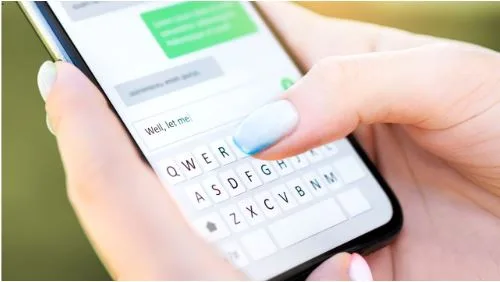
There’s a concept in psychology called “truth bias” — the tendency humans have to assume, by default, that what they’re being told is accurate. It’s an evolutionary holdover. In small communities where most communication happened face to face, lying was costly and detectable. The bias made sense.
It doesn’t make much sense anymore.
The digital environment we communicate through every day has quietly removed most of the friction that made deception hard. You don’t need technical skills. You don’t need access to specialized software. You don’t need time. The tools are free, fast, and polished — and the outputs look exactly like the real thing.
Two categories of fake content are driving the bulk of real-world harm right now: fabricated written work passed off as human-authored, and fabricated chat screenshots passed off as genuine conversations. Both are solvable. Neither is being addressed seriously enough at the institutional level.
When the Conversation Never Happened
Instagram DMs have become one of the primary surfaces where reputation damage plays out in 2025. A screenshot circulates. Someone said something awful, or something incriminating, or something embarrassing. People share it. People react. The subject of the screenshot denies it — but denial looks like guilt, so the cycle continues.
What most people in that crowd haven’t considered is how easy it is to produce a fake Instagram Messages mockup that is visually identical to the real application. The profile picture, the verified badge, the message thread, the timestamps — all configurable. All designed to look exactly like what you’d see if you opened the app yourself. The use cases for this kind of tooling are entirely legitimate: app developers need UI mockups, filmmakers need prop screens, educators need demonstration materials. But the same output, stripped of context and posted as “evidence,” is a different thing entirely.
The uncomfortable reality is that visual authenticity no longer implies factual authenticity. A screenshot that looks real might be real. Or it might have taken someone four minutes to put together. Without access to the originating device and its metadata, you can’t tell the difference by looking.
This isn’t theoretical. Schools have handled disciplinary proceedings based on fabricated message screenshots. Relationships have ended. People have been fired. In each case, the screenshot looked like evidence, was treated like evidence, and turned out not to be evidence at all.
The Other Forgery Problem
Across a different part of the digital landscape, a quieter but equally significant reliability problem is unfolding in academic institutions, content operations, and anywhere that written output is submitted for evaluation.
AI writing tools have matured rapidly. The outputs are coherent, well-structured, topically accurate, and largely indistinguishable from human writing to an untrained reader. A student who submits an AI-generated essay isn’t handing in something that reads like a machine wrote it — they’re handing in something that reads like a reasonably competent human wrote it, quickly, without particularly strong opinions.
This is where an AI checker becomes a practical necessity rather than a nice-to-have. The detection methodology has developed significantly: modern tools look beyond surface-level patterns and analyze statistical distributions in how language is constructed — the kind of subtle regularities that AI models produce and humans don’t, and vice versa. The better platforms combine multiple signals and return confidence scores rather than binary verdicts, which is the right approach given that edge cases genuinely exist.
The adoption gap is the real problem. Detection tools exist and work reasonably well. But many institutions still aren’t using them systematically. The result is an uneven playing field: students who use AI and submit without modification are getting away with it at institutions that haven’t implemented checks, while students at more rigorous institutions face the same tools being used against them unfairly when borderline cases are misclassified.
The answer isn’t to abandon detection — it’s to use it more thoughtfully, as one part of a broader integrity process.
The Pattern Underneath Both Problems
Both fabricated chats and AI-generated text share a structural feature: they exploit the gap between how authentic content looks and how it actually came to exist. A real Instagram conversation and a fake one look identical because the fake one was built to spec. A human-written essay and an AI-written one can read similarly because the AI was trained on human writing.
The forgeries aren’t sloppy. That’s the point. They’re not distinguishable by casual inspection, which is precisely why casual inspection has become an unreliable first line of defense.
What’s required instead is a shift in institutional posture — from assuming authenticity until something looks obviously wrong, to building verification into standard workflows. Not as an accusatory measure, but as a neutral process applied consistently. The same way financial audits aren’t accusations of fraud — they’re just how you maintain system integrity when the stakes are high enough to matter.
Building Better Habits Without Losing Trust
None of this should translate into blanket suspicion of every message or document you encounter. That’s not a functional way to operate. The goal is calibrated skepticism: knowing which categories of content are easy to fake, and applying appropriate verification when those categories show up in high-stakes contexts.
High-stakes context is the key phrase. A funny screenshot shared between friends doesn’t need forensic analysis. A screenshot submitted in a formal complaint does. A blog post on a low-traffic site doesn’t need an AI detector run on it. A 3,000-word essay submitted for a graded university course probably does.
The tools are available. The friction is low. The cost of being wrong — when the stakes are real — is high. That’s a straightforward case for using them.