The Quiet Power of Permanent Identity: Why Industrial Marking Still Matters in a Digital Age
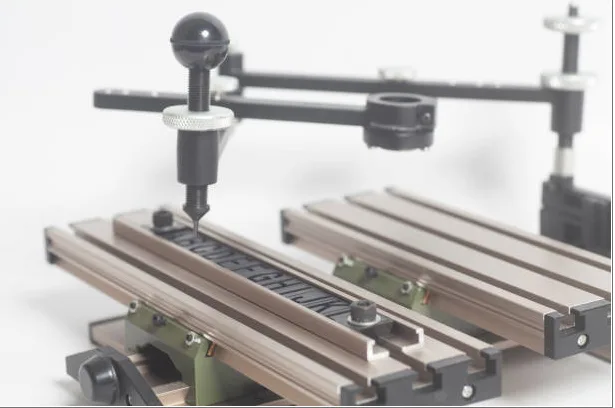
In factories, shipyards, and workshops around the world, the most important information a product carries is often the least glamorous. A serial number. A VIN. A batch code. A logo that must survive heat, abrasion, solvents, and decades of use. These marks are not decoration. They are the product’s permanent identity, the thread that connects a component to its origin, its quality history, and its future accountability.
HT Marker has built its business around this unglamorous but essential need. The company supplies industrial marking systems that create durable, readable marks on metal, plastic, and even inside crystal. Its range includes pneumatic, electric, and battery powered dot peen machines, fiber and CO₂ laser systems, handheld units for large or installed parts, metal tag engravers, and subsurface 3D crystal engravers. The common thread is permanence: marks that remain legible after the part has left the controlled environment of the factory floor.
Why permanence still wins
Digital tracking systems, RFID tags, and cloud databases have transformed supply chain visibility. Yet they remain dependent on a physical link to the real object. A barcode that wears off, a sticker that peels, or a painted number that fades under ultraviolet light breaks that link. In regulated industries automotive, aerospace, oil and gas, medical devices, heavy equipment traceability is not optional. It is a legal and safety requirement. A mark that can be scraped, sanded, or corroded away is a liability.
Dot peen marking solves this by driving a carbide stylus into the surface, creating a series of indentations that form characters or codes. The resulting mark has depth. Even after paint or powder coating is applied, the underlying deformation remains readable. Laser marking achieves permanence differently: by altering the surface chemistry or topography with focused light, it creates high contrast marks without significant material removal in many cases. Both approaches have their place. The choice depends on material hardness, required depth, surface finish, production volume, and whether the part can be brought to a stationary machine or must be marked in place.
HT Marker’s portfolio reflects these practical distinctions. Pneumatic systems deliver deeper marks when compressed air is available. All electric handheld units eliminate the need for an air compressor, simplifying deployment in smaller shops or mobile teams. Battery powered models extend the same capability to remote sites pipeline sections, construction equipment, or large fabrications where power and air lines are inconvenient. Fiber lasers handle fine detail and high speed coding on metals; other laser wavelengths address plastics, coated surfaces, or specialized applications such as subsurface images inside optical crystal.
Matching technology to the job, not the brochure
Experienced production managers know that the “best” machine is the one that fits the actual part and the actual workflow. A high resolution fiber laser is unnecessary if the requirement is a deep, rugged serial number on a cast iron housing. A powerful pneumatic head is overkill for delicate stainless steel nameplates that must remain cosmetically clean. Portability becomes decisive when the part is a vehicle chassis already assembled or a structural beam too large to move to a fixed station.
This is where application knowledge separates useful suppliers from pure catalog sellers. Free sample testing sending actual material or representative parts and receiving marked samples with recommended parameters removes guesswork. It also surfaces secondary requirements early: fixture needs for curved surfaces, rotary axes for tubes, depth targets after coating, or readability under specific lighting conditions. HT Marker emphasizes this testing step, along with extended burn in of machines before shipment. In industrial equipment, reliability is not an afterthought; it is the difference between a tool that earns its keep and one that becomes a source of downtime.
Beyond metal: the unexpected reach of marking technology
While the core market remains industrial identification, the same underlying technologies serve other purposes. Subsurface laser engraving inside crystal or glass creates three dimensional images that appear suspended within the material. The technique has found a commercial home in awards, corporate gifts, and personalized keepsakes. The precision required is high, and the aesthetic standard is unforgiving, yet the physics is related to the same controlled energy delivery used for industrial coding.
This crossover is instructive. Marking technology is ultimately about controlled, permanent change to a surface or volume. Whether the goal is compliance or beauty, the engineering principles beam quality, pulse characteristics, mechanical stiffness of the marking head, software that manages serial numbers and data matrices remain the same. Companies that understand both the industrial and the creative applications tend to develop more robust systems overall.
Practical considerations that determine long term value
Several factors consistently influence whether a marking system delivers value over years of use.
First is the match between mark type and post processing. If parts will be painted, plated, or powder coated, depth becomes more important than surface contrast. If the mark must be scanned by automated vision systems, contrast and edge definition matter more. Testing under the actual finishing process is the only reliable way to confirm results.
Second is the total cost of ownership. A lower purchase price can be erased by frequent stylus replacement, air compressor energy costs, or the need for external computers and complex software. Integrated touchscreens on many modern handheld and desktop units reduce setup time and eliminate one more piece of equipment that can fail. Battery systems remove the tether of cables, but battery life and charge infrastructure then become part of the operating equation.
Third is support and documentation. Industrial buyers increasingly require CE or equivalent documentation for their markets. Clear parameter guidance, accessible software, and responsive technical help reduce the learning curve and the risk of incorrect use. Sample testing before purchase is one of the strongest risk reduction tools available.
The larger context
Industrial marking sits at the intersection of manufacturing discipline and information integrity. As products grow more complex and supply chains more global, the ability to place a durable, machine readable, and human readable identity on a physical object remains foundational. Software can track the data; only a physical mark can guarantee that the data still belongs to that specific part after years of service, repair, or secondary markets.
HT Marker’s focus on practical permanence across portable dot peen systems, precision lasers, and specialized engravers addresses a need that technology trends have not eliminated. The tools evolve. Battery power replaces air lines. Touchscreens replace separate computers. Laser sources become more compact and efficient. The underlying requirement does not change: the mark must still be there when someone needs to know exactly what they are looking at.
In an era that celebrates digital transformation, the most reliable identities are still the ones that can be felt with a fingertip or read after the surface has been worn by real use. That is the quiet power of industrial marking, and it is the domain in which companies like HT Marker continue to operate.