The Real Value Hiding in Your Old Scrap Car
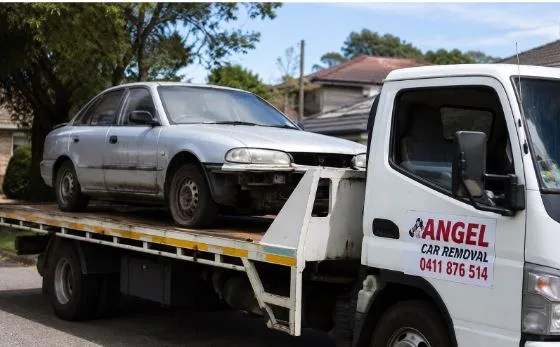
There’s a car sitting in a driveway somewhere right now that hasn’t moved in months. The registration lapsed a while back, the engine light came on and stayed on, and the owner has written it off as junk. What most people in that situation don’t realise is that “junk” and “worthless” are two very different things.
A car that no longer runs can still carry hundreds, sometimes thousands, of dollars in recoverable value. The trouble is that value isn’t visible from the driveway. It shows up in the engine bay, in the wiring, in the metal frame, and in parts most owners never think of checking. This article breaks down where that value comes from, and why scrapping a car properly is worth more thought than most people give it.
Why “Scrap” Doesn’t Mean “Worthless”
Picture a family with an old sedan parked out back, unused since the transmission gave out two winters ago. To them, it’s dead weight taking up space. To someone who knows how to assess a vehicle properly, that same car might still have a working alternator, an intact catalytic converter, a usable set of tyres, and a body full of recoverable steel and aluminium.
The confusion between “broken” and “worthless” costs owners money every single week. A non-running car isn’t automatically scrap metal and nothing more. Plenty of vehicles that can’t be driven still have components in perfectly good condition, and those components are exactly what buyers of scrap cars for cash are actually paying for.
What Actually Determines the Payout
Three things drive the value of an old or damaged car: the parts that can be resold, the metal that can be recovered, and how much demand exists for that specific make and model.
Common, high-demand models tend to be worth more in parts than rare ones, simply because there’s an active market for their components. A widely driven sedan or ute will usually attract stronger offers than an obscure model nobody’s actively hunting parts for, even if the two cars are in similar condition.
Metal recovery adds another layer. Steel, aluminium, and copper all carry real market value, and a heavier vehicle generally yields more recoverable metal than a smaller one. This is one reason two cars that look equally “dead” from the outside can be worth noticeably different amounts once properly assessed.
The Parts Most Owners Overlook
Consider a ute that’s been sitting for a year after a gearbox failure. The engine might still run fine. The transmission could be the only real problem. In a case like that, the engine alone might be worth reselling as a used unit, something that could easily be worth more than the rest of the vehicle combined.
Batteries, tyres, and even glass carry recyclable value, though usually modest compared to engines, transmissions, and catalytic converters. Catalytic converters in particular contain small amounts of precious metals and are often worth more than owners expect, which is exactly why it pays to get a proper assessment rather than assuming a stationary car is only worth its weight as scrap metal.
Where People Lose Money Without Realising It
The most common mistake is accepting whatever number comes up first, without asking what it’s based on. A quote priced purely on scrap weight is almost always lower than one that accounts for resalable parts, and most owners never think to ask which method is being used.
Another mistake is assuming age determines value. An older vehicle with a still-common engine and strong parts demand can sometimes be worth more in components than a newer car with an unusual model line that nobody’s stocking parts for. It comes down to what the market actually wants, not how many years are on the odometer.
Location matters too. A car parked well outside a buyer’s usual collection area may attract a lower offer once transport is factored in, which is why it’s worth checking whether a service genuinely covers your area before assuming every quote is comparable.
Getting the Number Right
The safest way to land on a fair price is simple: get more than one quote, and ask what’s behind each figure. A buyer who takes the time to note the make, model, mechanical condition, and location tends to land on a more considered number than one working off a two-line phone description.
For anyone weighing up whether an old vehicle is worth anything at all, working with genuine scrap car buyers rather than guessing is the difference between a fair outcome and leaving money on the table. Likewise, checking with local junk car buyers near you before assuming a car is a lost cause often turns up a better result than expected, since local operators typically factor in parts demand and metal recovery rather than offering a flat, one-size-fits-all figure.
What Happens to the Car Next
Once collected, a scrap vehicle typically goes through inspection, parts recovery, fluid removal, and metal separation, a process governed by environmental regulations that licensed operators are required to follow. Fluids like oil, coolant, and brake fluid are classified as hazardous waste and need to be handled correctly, not tipped out or left to leach into soil.
This is part of why offers can differ so much between operators. A properly licensed recycler factoring in compliant handling isn’t cutting corners, and that diligence is sometimes the difference between a slightly lower offer that’s the more honest one, and a slightly higher offer from someone who isn’t following the rules at all.
Turning a Dead Car Into Real Cash
An old, broken-down, or written-off car is rarely as worthless as it looks. The parts market, the metal recovery value, and even the specific make and model all play a role in what it’s genuinely worth, and none of that is obvious just by looking at a car that hasn’t started in months.
Get Cash for Your Scrap Car with Angel Car Removal
If there’s a scrap car sitting unused and taking up space, it’s worth finding out what it’s worth before writing it off completely. Angel Car Removal assesses vehicles properly, factoring in parts demand, metal recovery, and genuine market value, rather than defaulting to the lowest possible number. Get your quote today and find out what your old car is worth.